


What Decagon understood before the market. It would be easy to assume a company valued in the billions sells the disappearance of the human. It sells the opposite. And above all, it sells an architecture lesson that applies to any operational area.
- USD raised across four rounds
- $481M
- valuation · Series D Jan 2026
- $4.5B
- volume resolved by the agent
- 70–90%
- WhatsApp penetration in Mexico
- 93%
In 30 seconds
Capture where the action happens. Centralize in a single record. Automate the repetitive. Escalate doubt as a ticket. The agent is the door. The ticket system is the house.
Decagon in numbers
Decagon raised $481 million across four rounds. The latest, a $250 million Series D closed in January 2026, valued it at $4.5 billion. Its agents serve customers at Hertz, Duolingo, Notion, and Chime. Its founder, Jesse Zhang, has competed in public against companies ten times larger.
What Decagon already measured
They do not sell total autonomy. They sell coverage with a ticket.
$4.5B
reported valuation
70–90%
resolved by the agent
10–30%
ticket to human with a file
It would be easy to assume a company like that sells the disappearance of the human. It sells the opposite. And it sells an architecture lesson that transcends support and applies to any operational area of any company.
Go where the action happens
The first design decision is where the conversation happens. Decagon does not force the customer into a portal. It goes where the customer already is. Chat, email, voice, messaging. It is the same decision that in Mexican logistics has an obvious and underused answer.
The action happens on WhatsApp, with 93% penetration in Mexico, more than 2 billion daily users worldwide, and a 98% open rate versus 21.5% for email. The operator who sends proof of delivery through the chat already in their pocket needs no training, license, or portal. The system that knows how to collect that evidence and archive it in a central record has just eliminated the clerk without eliminating the data.
Where action happens (and where the data must come from)
WhatsApp, GPS, email, and systems already exist. The portal should not ask for them again.
POD photo · status · exceptions
GPS
Geofence · route · dwell
Rate · dispute · attachments
ERP / TMS
Folio · rate · payment
What the human does
The second decision is what the human does. Zhang has been explicit: human agents will be a central part of the product, with new work around the machine. Supervise the AI. Sample conversations for quality control. Build the logic that governs when the agent acts and when it escalates. The human does not disappear from the org chart. They level up inside it.
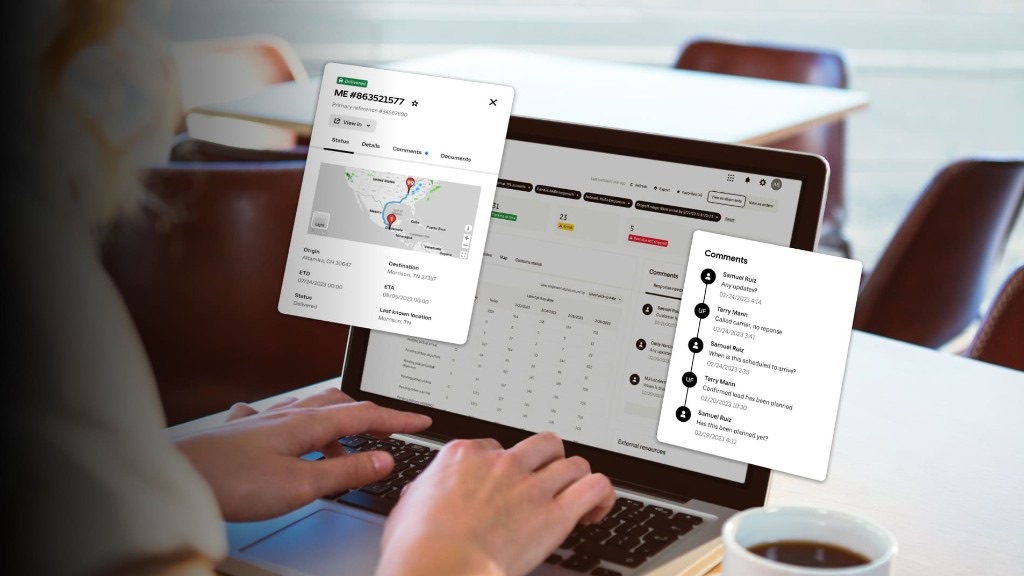
Who configures the system
The third decision is who configures the system, and here is where the old transport software industry should blush. Decagon's mechanism is called Agent Operating Procedures. Operations teams write the business rules in natural language and the system compiles them into executable logic with the rigor of code.
Agent behavior changes without waiting for a development sprint. Compare that with the previous category standard, where changing a rate or a routing guide requires opening a ticket to IT and adapting the system requires consultants for months. One architecture puts logic in the hands of whoever operates. The other sequesters it behind a professional services contract.
Agent Operating Procedures (AOPs)
From plain-language instruction to logic you can audit.
Step 1
Natural language
The rule is written the way Finance operates
Step 2
Executable logic
The agent applies it against evidence
Step 3
Regression
Every change is tested against prior cases
Step 4
Deploy
The automation frontier moves with proof
Structure is speed
Here comes the speed argument, the one most often misunderstood. Intuition says that putting humans, gates, and procedures in makes the system slow. Decagon's experience says the opposite.
Zhang describes a regime of standard evaluations and regression tests where full conversations are simulated before every change, the way code is tested before deploy. Real-time visibility lets teams identify problems and experiment safely. When the company launched its certification program, teams like ClassPass explained that training their people to build and adjust agents gave them exactly that: move faster with consistency. Structure is not the brake. Structure is the speed.
Velocity loop: adjust without breaking
A loose agent improvises. An AOP system iterates with a brake.
Adjust rule
Scoped change
Regress
Prior cases
Verify
Human on a sample
Deploy
New frontier
The general pattern
And there is a fourth idea, the most ambitious. When the agent resolves most of the volume and the rest flows as tickets, the platform becomes the record of those cases. But the value is not storing tickets. It is that the logic of how an agent should behave in that company ends up living there. Zhang calls it the intelligence system. The place where judgment accumulates.
Put the four decisions together and you get a general pattern that never says "customer support" anywhere. Capture where the action happens. Centralize in a single record. Automate the repetitive with AI. Escalate doubt as a ticket to a human whose decision retrains the system. It is the modern help-desk architecture applied to the rest of the company: accounts payable, freight audit, reconciliation, supplier care. Every process with high volume, expressible rules, and expensive exceptions fits the mold. At OCL that money-exception layer operates as Finance.
Pattern
Four decisions
Channel
Where they already are
Record
One shipment
Routine
AI
Ticket
Human judgment
What it means for Mexican logistics
For Mexican logistics the conclusion is uncomfortable and liberating at once. The value is not in the system with more modules or in the agent that promises to resolve everything. It is in the layer where rules accumulate, exceptions resolved by people who know Carta Porte, demurrage, and each retailer's criteria, and the evidence of each decision.
Models are rented by token and improve for everyone at the same time. Accumulated judgment is not rented. A $4.5 billion company just showed where the business is. The agent is the door. The ticket system is the house.
At OCL Cargo that house is the voyage file: capture at source, agents that match, tickets to Finance, and a log that retrains. It can stamp invoice and Carta Porte. Typical pilot: 6 to 8 weeks.
Key takeaways5 points
- Decagon: ~$481M raised; Series D ~$250M (Jan 2026); valuation ~$4.5B. Sells human escalation, not total autonomy.
- First decision: go to the channel (chat, email, voice). In Mexico: WhatsApp.
- Second: the human levels up (supervise, sample, write rules).
- Third: AOPs in natural language compiled to executable logic.
- Fourth: the ticket system accumulates the company’s judgment.
Where does judgment accumulate in your operation?
Sources
- Business Wire: Decagon funding announcements (Series C / D)
- Amplify Partners: technical interview with Jesse Zhang
- Founders in Arms / public profiles on valuation and customers.
Related reading
- The math vendors do not multiply
- The Bainbridge irony in transport
- Human escalation is no longer optional
FAQ
Not the disappearance of the human. It sells human escalation: the agent resolves 70 to 90% of volume; the rest lives as a ticket. The valuation (~$4.5B) follows that architecture, not total autonomy.
Where the operator already is. WhatsApp has ~93% penetration in Mexico and open rates near 98% versus ~21.5% for email. The system should go to the channel, not the other way around.
Business rules written in natural language by operations teams, which the system compiles into executable logic. Agent behavior changes without waiting for a development sprint.
Because it enables simulations, regressions, and verifiable changes before touching production. A loose agent fails live, everything is shut off, and investigation happens blind.
By Gibrán Ramírez, CEO of OCL Cargo.