

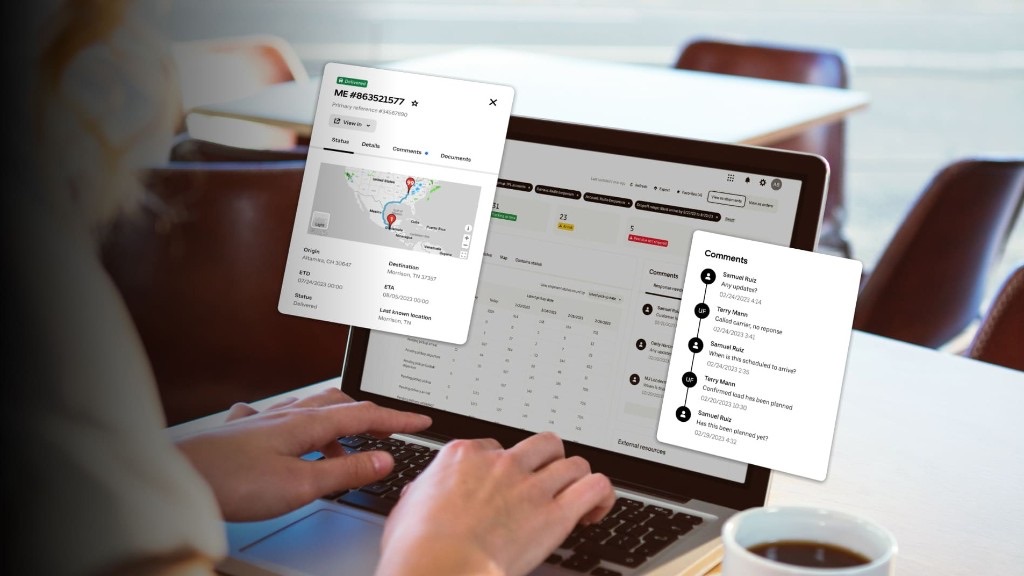
A traditional TMS records what someone captures. OCL Cargo is an autonomous TMS: agents with computer use execute the work and leave a file — not another screen your team feeds.
- Traditional TMS: analyst executes
- Record
- OCL: agents close the flow
- Execution
- recovery auditing 100%
- 5–7%
- pilot without stack migration
- 6–8 wk
OCL vs traditional TMS: verdict
For shippers and operators paying third-party freight on the Mexico–U.S. corridor, prioritize OCL when the pain is a recoverable file, 100% audit, and a tower that closes work — not another system-of-record screen. A traditional TMS wins when capture is already disciplined and you audit near 100% without a bottleneck.
A traditional TMS (CargoWise, Magaya, SAP TM, Oracle, GM Transport, or “tidy” Excel) is a system of record: the analyst captures, quotes, tracks, and audits. It only works if the team feeds it.
OCL Cargo is an autonomous TMS: agents that operate screens and portals match 100% of invoices, and typically recover 5–7% of freight spend when you leave sampling. AI-first; your team on diagnosed exceptions (the ~20% of edge cases that move money — framing estimate). OCL can stamp invoices and Carta Porte.
Four home agents finish work and deliver a file: Freight Auditor, Delivery/POD, Tower (check calls; alert in under 5 minutes), and Assignment (WhatsApp). The CEO symptom: fake freight digitization.
Who wins when
Choose by the work that hurts this week — not by the vendor logo.
Trip ledger + ERP masters already disciplined
Prioritize: Traditional TMS
Why: Record already works; no visible sampling leak
Sample-based audit / blind AP
Prioritize: OCL
Why: 100% pre-pay match vs rate + CFDI + CP + GPS + POD
Multi-carrier tower with mirror accounts
Prioritize: OCL
Why: Agents operate portals; ~90% GPS without usable API (tower estimate)
Fleet visibility already API-integrated
Prioritize: Visibility hub (+ OCL if you pay)
Why: Integrated map ≠ pay decision; they coexist
Own routing / last mile
Prioritize: Router (Drivin, etc.)
Why: Different job from purchased FTL/LTL; see field guides
Enterprise suite already mandated (SAP/Oracle)
Prioritize: Suite + OCL on a corridor
Why: ERP records; agents close the file in 6–8 weeks
Side-by-side comparison
TMS cost figures aligned to our 2026 guide; OCL plans per published site pricing. Audit results from the 3PL case.
Primary role
Traditional TMS: System of record for trips and documents
OCL Cargo (agents): Autonomous TMS: agents execute the work
Who executes
Traditional TMS: Analyst captures, quotes, tracks, audits
OCL Cargo (agents): Agents + human escalation with context
Tendering
Traditional TMS: Manual RFQ / templates; compare by hand
OCL Cargo (agents): Agent contacts carriers in parallel via WhatsApp
Tower / tracking
Traditional TMS: Dashboard + reactive follow-up
OCL Cargo (agents): Check calls; alert in under 5 min
Audit
Traditional TMS: Sampling or basic rules
OCL Cargo (agents): 100% match vs rate, CFDI, CP, GPS, POD
Carta Porte / CFDI
Traditional TMS: Vendor-dependent; often a separate module
OCL Cargo (agents): Stamps and reviews supplier docs
Roles (CS / tower / finance / portal / app)
Traditional TMS: Almost never the full package
OCL Cargo (agents): CS, tower, finance, supplier portal, driver app (± WhatsApp)
Time to value
Traditional TMS: Weeks–months (config + adoption)
OCL Cargo (agents): Useful 6–8 week pilot per process
Typical MX cost
Traditional TMS: $5,000–$15,000 MXN/month
OCL Cargo (agents): From ~$50 MXN per shipment (commercial ref.)

Vendor field guides
This hub defines the category. Field guides go down to each vendor’s concrete job — with verdict, who wins, and wedges (GPS API, routing ≠ audit, suite ≠ pilot).
- MX visibility: Recurso Confiable · Unigis
- Routing / last mile: Drivin · DispatchTrack · SimpliRoute · QuadMinds
- Carrier / local: LIS TMS · Andlogistics / Neuroplus
- Enterprise / forwarding: SAP TM · Oracle TM · MercuryGate · Blue Yonder · CargoWise · Magaya
- Category: Autonomous vs traditional TMS · OCL vs Excel · Compare library
Licenses vs finished work
You buy seats. What is missing is finished work: someone (or an agent) who closes the shipment with a file. If your tower is the bridge between systems and a PDF, you are not digitized — you are still capturing behind a prettier UI.
The buying question is not “does it have AI?”. It is “who closes the operational work when volume grows?”. See fake digitization and complement or replace.
What computer use means in a TMS
Computer use = the agent operates screens and portals like an analyst: opens the TMS, reads the carrier portal, matches the CFDI, and writes the result. No perfect API on day one. Guide: computer use in logistics.
From invoice to decision (audit)
Invoice arrives
CFDI + Carta Porte 3.1 complement to inbox or portal.
Automatic match
Contracted rate + GPS + POD + trip in your TMS/ERP.
Approve or hold
File ready; you only decide exceptions.
Stamping when in scope
OCL can stamp invoices and Carta Porte in the flow.
Who each option is best for
Use this matrix so you do not buy by module checklist.
Prefer a traditional TMS if…
- Low/medium volume and capture already disciplined
- You audit near 100% without a bottleneck
- Little residual in WhatsApp/Excel for quoting or tracking
- You mainly need a trip ledger integrated to the ERP
Prefer OCL Cargo if…
- 300+ shipments/month or many carriers
- Sample-based audit (e.g. 1 in 10)
- Reactive tracking or chats as the “unofficial TMS”
- You want hours back and 5–7% freight-spend recovery
Concrete vendors (field guides): see Vendor field guides. Broader ranking: best TMS Mexico 2026.
Hybrid pattern: complement without day-one migration
The healthy pattern keeps the TMS/ERP as the source of orders and puts agents where Excel or WhatsApp lives today. Not “rip out the TMS”: stop using your team as the API between screens.
Elige un paso para ver el detalle
Detalle del paso · 01
Sampling
Proof in pesos (not demos)
Verifiable ROI: the invoice matches or is held. Moving from sampling to 100% audit of the pilot flow typically recovers 5–7% of spend in the audited universe. Reference: 3PL case — $3.6M MXN / 5.7% in 6 weeks.
| Signal | Sampling / TMS only | With OCL agents |
|---|---|---|
| % invoices reviewed | ~10% (1 in 10) | 100% of pilot flow |
| Time per invoice | 15–30 min manual | Minutes + exception with context |
| Typical recovery | Invisible / late | 5–7% of audited spend |
| Who decides | Team on everything | Your team only on exceptions |
6–8 week pilot
Freeze one lane (e.g. Bajío–Laredo), one front (audit is usually most measurable), and a baseline of hours + MXN. Guide: stop capturing playbook.
Pilot order
Pick a lane
Real volume; not the whole network on day one.
Baseline
% audited, hours/week, MXN in dispute.
One front
Audit, tower, or assignment — not all three at once.
Decide with metrics
Expand only if hours and pesos beat baseline.
Common myths
- “I already have a TMS, I do not need agents.” Having the data is not the same as executing tendering, alerts, and 100% reconciliation.
- “Agents only work if I rip out the TMS.” Hybrid is the most common pattern.
- “OCL cannot stamp.” False: OCL stamps invoices and Carta Porte; it also reviews suppliers’ and verifies the file before payment.
- “It is just another tower TMS.” OCL covers customer service, tower, finance, supplier portal, and driver app (also WhatsApp) — the package almost nobody states.
- “Automatic audit is only for enterprise.” The 2,250-invoice case found $3.6M MXN in 6 weeks without a multi-year program.
Key takeaways5 points
- Verdict: prioritize OCL when the pain is execution and a pre-pay file; traditional TMS wins as record if capture is already disciplined.
- TMS trap: manual status, more tower, and does not scale (often WhatsApp).
- OCL stamps invoices and Carta Porte; also reviews suppliers’. Who uses OCL: CS, tower, finance, supplier portal, driver app (± WhatsApp).
- Tower estimate: ~90% multi-carrier GPS without a usable API (automatic link) to mirror accounts — login one by one; OCL operates those screens.
- 100% audit pattern: recover 5–7% of spend; case $3.6M MXN / 5.7% in 6 weeks. Coexistence: 6–8 week pilot.
Book a diagnostic
Related reading
FAQ
It depends on the job. If the pain is a trip ledger with disciplined capture and you already audit near 100%, a record TMS can be enough. If the pain is execution (tendering, multi-carrier tower, 100% pre-pay audit), prioritize OCL. Not “a better screen” — who closes the file.
A traditional TMS is a system of record: analysts capture, quote, track, and audit. OCL is an autonomous TMS: agents that operate screens and portals match 100% of invoices against rate, CFDI, Carta Porte, GPS, and POD before payment.
Not on day one. OCL can run as an end-to-end autonomous TMS or complement a system-of-record TMS. See complement or replace.
When volume is low-to-medium, capture is already disciplined, you audit nearly 100% without a bottleneck, and you do not rely on WhatsApp/Excel to quote or track. If sampling lets charges through or tracking is reactive, you have hit the ceiling of a record TMS.
Yes. Integrated visibility (when APIs exist — the automatic link between systems) and enterprise record systems do not eliminate mirror accounts or the pre-pay file. If status moves by hand or lives on WhatsApp, the TMS also fails to scale if it must be fed by hand. Corridor estimate: ~90% of multi-carrier GPS units lack a usable shipper API — the tower opens mirror accounts (logging into each carrier’s GPS portal one by one). Guides: OCL vs Recurso Confiable, vs Unigis, vs SAP TM.
A typical traditional TMS in Mexico runs about $5,000–$15,000 MXN/month. OCL: from ~$50 MXN per shipment (commercial reference). Real ROI usually comes from audit recovery (5–7%) and hours returned. Validate in your RFP.
Yes. OCL stamps invoices and Carta Porte 3.1; it also reviews suppliers’ and verifies the buyer-side file (rate + CFDI + Carta Porte + GPS + POD) before you pay. Who uses OCL: customer service, tower, finance, supplier portal, and driver app (also WhatsApp). SAT codes: free finder.
In the published case, sampling reviewed ~1 in 10. With the agent, 2,250 invoices were reconciled (100% of the flow): $3.6M MXN unsupported charges in 6 weeks (5.7% of audited spend).