

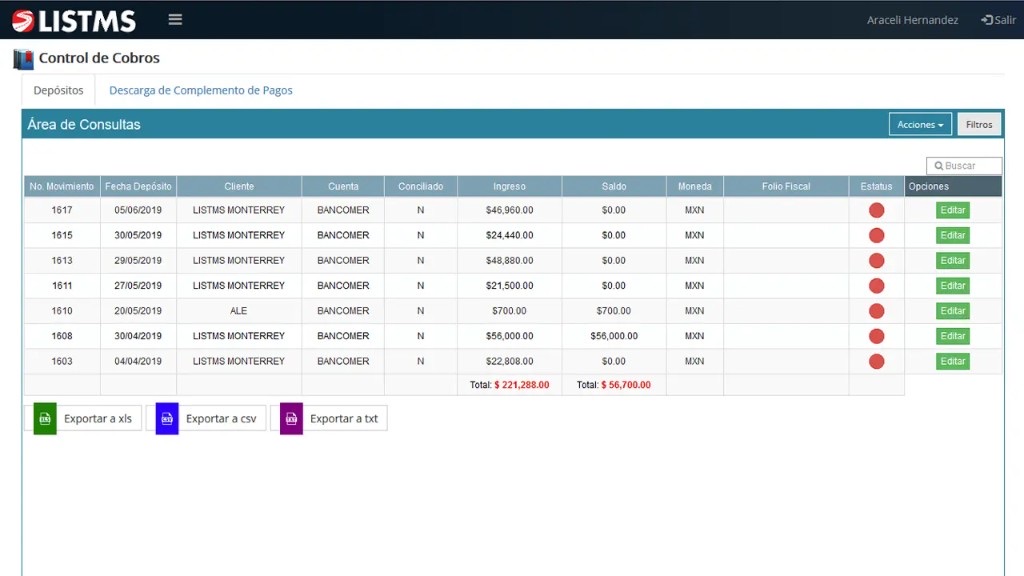
A practical guide for teams evaluating LIS TMS (carrier side) alongside a recoverable freight file for the shipper who pays.
OCL vs LIS TMS: verdict
OCL Cargo administers own fleet, workshops, dynamic last-mile routing, third-party freight, and multimodal — with agents and a pre-pay file. LISTMS is a mature cloud TMS/ERP for Mexican trucking: settlements, fuel, maintenance, Carta Porte, owner-operators. ComparaSoftware/Capterra-class: 0 useful public reviews. If you are already deep on LIS as a carrier and only need that ERP, LIS can stay; if you want agents, 100% audit, WhatsApp for externals, and multimodal, prioritize OCL.
OCL vs LIS TMS: who wins when
First answer: do you need a live carrier ERP, or a stack with agents + multimodal?
Carrier already deep on LIS (legacy settlements/shop)
Prioritize: LIS TMS
Why: Documented maturity in Mexican trucking ERP.
Own fleet + workshops + last-mile routing + pre-pay audit + multimodal
Prioritize: OCL Cargo
Why: Same operational scope with agents and a recoverable file.
Shipper / 3PL with mixed panel (own + third parties)
Prioritize: OCL Cargo
Why: WhatsApp for externals + 100% audit + tower with tickets to the team.
Carrier on LIS + buyer that needs agents
Prioritize: Coexistence
Why: LIS can stay on the carrier; OCL closes the group or payer stack.
Stamp CFDI/Carta Porte and review supplier docs before pay
Prioritize: OCL Cargo
Why: LIS can stamp on the carrier side. OCL stamps when applicable on the shipper side and reviews supplier invoices/Carta Porte before pay.
Sales/CS desk, tower, finance/AP; own fleet, workshops, dynamic last-mile routing; supplier portal and driver app (WhatsApp if external cannot use app); multimodal
Prioritize: OCL Cargo
Why: LIS documents carrier fleet/settlement/shop. OCL also administers own fleet and workshops — plus agents, pre-pay audit, last-mile routing, multimodal, and WhatsApp for external providers.
Start from the role: who runs the fleet, and who pays the freight?
LIS Software Solutions documents a TMS/ERP for carriers: fleet ops, settlements, shop, fuel, and carrier-side tax compliance. Useful if you are researching the owner-operator’s tool. It does not decide which file the shipper must recover before releasing pay.
The practical question for the freight payer is different: after the carrier invoiced, can AP cross rate, CFDI, Carta Porte, GPS, and POD at 100%? Is there a diagnosed exception or only a PDF in email? That is tested in the field — not inferred from the vendor site.
This page is not a specs sheet, pricing card, certification list, or a feature verdict for OCL or LIS TMS. It is a field guide to test one normal trip/invoice and one normal exception before a buying decision.
LISTMS vs OCL: both touch fleet/shop — different agent depth and multimodal
It is not “LIS = fleet, OCL = pay only.” OCL also runs fleet and workshops; it fights the full stack.
- LIS (docs): 100% cloud TMS for trucking — driver settlements, shop, fuel, invoicing/Carta Porte, KPIs, owner-operators. Site cases (RLT Cargo, Cherokee Logistics).
- No useful independent marketplace review corpus (ComparaSoftware: 0). Contrast by scope and agents — not invented stars.
- OCL: own fleet + workshops + dynamic last-mile routing + third-party freight + multimodal (road, ocean, air). Agents cross rate–CFDI–Carta Porte–GPS–POD. Native app; WhatsApp if the external provider cannot use the app.
- If status toward the buyer lives in a loose chat, the file dies — even if the shop settles perfectly. OCL ties WhatsApp to the trip ID.
- Stamps and reviews invoices and Carta Porte. Not only generating your own docs.
- Sales, ops, Finance, fleet, and suppliers in one flow. Contrast: LIS documents carrier fleet/settlement/shop. OCL also administers own fleet and workshops — plus agents, pre-pay audit, last-mile routing, multimodal, and WhatsApp for external providers.
Tower and mirror-account depth: GPS mirror accounts · OCL control tower · Auditor agent.
Questions to run in both evaluations
Same test on both vendors. The OCL column describes the recoverable file; the vendor column describes what to ask in their demo.
Initial case
OCL Cargo: Bring a third-party paid shipment with the reference AP already searches (invoice + trip)
LIS TMS evaluation: Bring the same shipment into the proposed LIS TMS flow as system of record/ops
Evidence check
OCL Cargo: Name rate, CFDI, Carta Porte, GPS, and POD that must survive the pre-pay handoff
LIS TMS evaluation: Ask which fields LIS TMS operates and which fall outside a 100% pre-pay cross-check
Routine exception
OCL Cargo: Force an accessorial or tax/ops mismatch; ask for diagnosis and owner
LIS TMS evaluation: Run the same exception and see whether LIS TMS leaves a useful next choice without retelling the story
Later lookup
OCL Cargo: Ask a second reviewer (AP) to recover the file with the ordinary reference
LIS TMS evaluation: Ask the equivalent LIS TMS role to recover the same event away from the original capture
Commercial conversation
OCL Cargo: Bound a 6–8 week pilot, metrics, and coexistence before talking rip-and-replace
LIS TMS evaluation: Clarify local modules, MX compliance, support, and how the handoff to freight audit is tested
Run a routine case and a case the floor cannot ignore
Start with a real carrier invoice from a team on LIS (or equivalent) and the trip the shipper must pay. Use AP’s ordinary reference. Then add a known mismatch: detention, weight, or a complement that does not square.
The goal is to see whether the payer gets a recoverable file without asking carrier dispatch to retell WhatsApp.
Separate the operational record from the pay decision
Settling a fleet and invoicing a trip are carrier jobs. Approving payment is the shipper’s job. Separating them avoids fake “TMS vs TMS” wars. LIS can win on fleet while OCL is judged on the pre-pay cross-check.
Consider OCL if:
- ✓You buy third-party freight and AP does not cross 100%
- ✓The evaluation must start from the recoverable file — not shop modules
- ✓You need a 6–8 week pilot with 5–7% recovery metrics
- ✓You want to coexist with the carrier TMS, not replace it
Keep LIS TMS on the shortlist if:
- ✓You are a trucking company managing your own fleet
- ✓LIS is already shortlisted for settlements, shop, or carrier stamping
- ✓You can run the same normal-trip and exception test in the proposed LIS setup
- ✓The RFP is carrier-side, not freight-payer-side
Hand the reference to a second reviewer before you end the meeting
Hand the invoice/trip reference to someone in shipper AP (not carrier dispatch). Ask them to recover evidence and decision state. If the carrier runs LIS and the shipper runs OCL, that is the coexistence pattern to validate in the meeting.
Test the handoff, not just the LIS TMS demo
Run the same three moments with every vendor on the shortlist. The decision stays anchored to the work after the record is created — not to a clean demo screen.
Use a normal trip or invoice from the operation
Bring the shipment, CFDI, Carta Porte, rate reference, and evidence (GPS/POD) that actually reach AP or the tower. A staged sample does not show where the real handoff breaks.
Run a known exception
Use disputed detention, an unquoted accessorial, a weight mismatch, or an incomplete POD — something the team already sees. Look for an explicit owner and next action, not just a generic ticket.
Let another role recover the result
Ask AP, finance, or customer service to find the same file away from the person who captured it. The useful compare is whether the same data and decision state are recoverable.
Key takeaways6 points
- Both touch fleet/shop. OCL adds agents, last-mile routing, multimodal, and WhatsApp for externals.
- No useful marketplace reviews: contrast on documented scope.
- Coexistence if the carrier already lives on LIS and the group needs OCL.
- Typical pattern when auditing 100%: 5–7% freight-spend recovery; 6–8 week pilot without ripping out the TMS on day one.
- OCL stamps invoices and Carta Porte; it also reviews suppliers’ and builds the pre-pay file (rate, CFDI, GPS, proof of delivery).
- Sales, ops, Finance, fleet, and suppliers in one flow.
Next steps after comparing LIS TMS
The fastest path after comparing LIS TMS is to take every vendor through the same test: your corridor, your systems, your evidence requirements, and real implementation work.
Next operating step
Turn research into a decision with the same frame.
Book a 30-minute diagnostic
Sales, ops, Finance, fleet, and suppliers in one flow. LIS documents carrier fleet/settlement/shop. OCL also administers own fleet and workshops — plus agents, pre-pay audit, last-mile routing, multimodal, and WhatsApp for external providers.
Stamps and reviews invoices and Carta Porte. It crosses rate, CFDI, Carta Porte, GPS, and POD before releasing pay.
If you need own fleet, workshops, dynamic routing, third-party freight, and multimodal with agents, prioritize OCL. If you already run only as a carrier deep on LIS, LIS can stay. OCL also administers fleet and workshops.
LIS = mature trucking ERP/TMS. OCL = autonomous TMS with fleet, workshops, last-mile routing, multimodal, WhatsApp for externals, and pre-pay audit with agents. They can coexist.
When the job is pre-pay file, 100% audit, and agents that operate portals, prioritize OCL. LIS TMS usually owns Carrier TMS: fleet, settlements, shop, invoicing. Different jobs; they often coexist. The field test (trip + exception + second reviewer) decides.
Not necessarily. The healthy pattern is coexistence: LIS TMS covers its job; OCL executes audit, tower, proof of delivery, and assignment with agents — a 6–8 week pilot without forcing rip-and-replace.
The reference accounts payable already knows, the physical/ops data observed (rate, CFDI, Carta Porte, GPS, proof of delivery), exception state, and who can close the pay decision.