

A practical guide for teams evaluating Roadnet (fleet/routing suite) alongside a recoverable third-party freight file.
OCL vs Roadnet: verdict
OCL Cargo covers dynamic last-mile routing, own fleet, workshops, third-party freight, and multimodal (road, ocean, air). Roadnet (Omnitracs / Roadnet Anywhere heritage) is an enterprise fleet distribution planner/dispatch. Gartner / Capterra (Omnitracs): some praise stability; others flag a dated UI, heavy implementation, inconsistent support, and slow sync. If you only need historical enterprise planner depth, Roadnet can be enough; if you need the file + audit + fleet/workshop + WhatsApp when the external cannot use the app, prioritize OCL.
OCL vs Roadnet: who wins when
Do not fight “who routes”: fight planner-only depth vs the full stack.
Only historical enterprise planner/dispatch depth
Prioritize: Roadnet
Why: That is their documented territory (despite reported UI friction).
Dynamic last-mile routing + own fleet + workshops + freight audit
Prioritize: OCL Cargo
Why: One stack: route, assets, workshop, multimodal, and pre-pay file.
External providers who will not adopt the native app
Prioritize: OCL Cargo
Why: WhatsApp channel tied to the trip ID; not a loose chat.
Group with Roadnet already live + AP/workshop pain
Prioritize: Coexistence
Why: Roadnet can stay on planning; OCL closes the file, fleet/workshop, and external freight.
Stamp CFDI/Carta Porte and review supplier docs before pay
Prioritize: OCL Cargo
Why: OCL stamps invoices and Carta Porte; also reviews suppliers’. From ~$50 MXN per shipment.
Sales/CS desk, tower, finance/AP; own fleet, workshops, dynamic last-mile routing; supplier portal and driver app (WhatsApp if external cannot use app); multimodal
Prioritize: OCL Cargo
Why: Roadnet wins historical depth in enterprise fleet dispatch/routing. OCL also does dynamic last-mile routing — with fleet, workshops, third-party freight, multimodal, and WhatsApp for externals.

Start from the fleet record that must coexist with the AP file
Roadnet (Omnitracs ecosystem) is an enterprise routing/fleet suite. Useful if you already pay that stack for distribution. It does not decide 100% cross-check of spot or third-party carrier invoices.
Practical question: does the second finance role recover pay evidence with the same reference — or only the private-fleet route plan?
This page is not a specs sheet, pricing card, certification list, or a feature verdict for OCL or Roadnet. It is a field guide to test one normal trip/invoice and one normal exception before a buying decision.
Roadnet: planner depth vs OCL stack (route + file + fleet)
Both route. The fight is planner depth alone vs the full stack with agents.
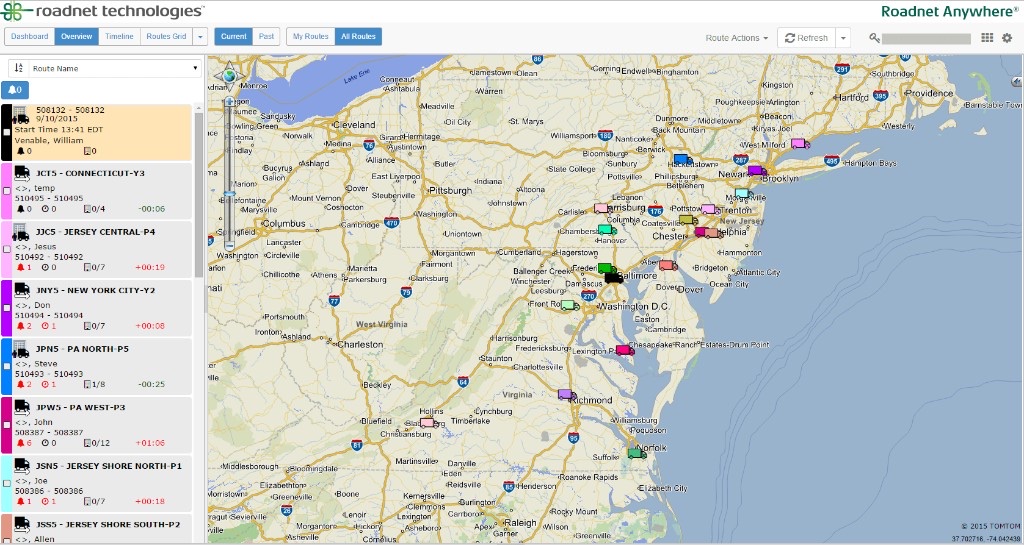
- Roadnet: routing and dispatch for distribution fleets (Omnitracs/Roadnet Anywhere heritage). Enterprise planner/dispatch depth.
- Reviews (Gartner / Capterra Omnitracs, paraphrase): some report heavy implementation, a product that feels dated versus rivals, uneven support, and slow sync. Others praise feature depth and stability. The mix is real.
- OCL: dynamic last-mile routing + own fleet + workshops + tendering/GPS mirror + rate–CFDI–Carta Porte–POD cross-check before pay + multimodal. Native app; WhatsApp if the external provider cannot use the app. From ~$50 MXN per shipment.
- They can coexist if the group already lives on Roadnet for enterprise planning and OCL governs the file, workshop, and external freight, without ceding routing as “Roadnet-only”.
- Stamps and reviews invoices and Carta Porte. Not only generating your own docs.
- Sales, ops, Finance, fleet, and suppliers in one flow. Contrast: Roadnet wins historical depth in enterprise fleet dispatch/routing. OCL also does dynamic last-mile routing — with fleet, workshops, third-party freight, multimodal, and WhatsApp for externals.
Tower and mirror-account depth: GPS mirror accounts · OCL control tower · Auditor agent.
Questions to run in both evaluations
Same test on both vendors. The OCL column describes the recoverable file; the vendor column describes what to ask in their demo.
Initial case
OCL Cargo: Bring a real third-party trip: contracted rate, CFDI, Carta Porte, GPS, and POD that AP actually uses
Roadnet evaluation: Bring the same delivery/route identifier into the proposed Roadnet flow
Evidence check
OCL Cargo: Name what must stay attached to the file before pay (rate, tax docs, GPS, POD, exception)
Roadnet evaluation: Ask how Roadnet presents the same route/stop reference and what a second role can still recover
Routine exception
OCL Cargo: Use detention, an accessorial, or an incomplete POD the team already sees; ask for owner and next action
Roadnet evaluation: Run the same exception in Roadnet and ask who sees it first and what stays open
Later lookup
OCL Cargo: Ask AP or finance to find the file after ops “closed” the trip
Roadnet evaluation: Ask the equivalent reviewer to recover the same event in the Roadnet flow
Commercial conversation
OCL Cargo: Define the file, AP handoff, and field test before a bounded demo
Roadnet evaluation: Clarify routing/last-mile scope, fleet assumptions, support, and how the handoff to third-party freight is tested
Run a routine case and a case the floor cannot ignore
Run a normal Roadnet route and a third-party freight trip with invoice. Insert analogous exceptions. Compare which handoff stays useful for fleet ops vs for AP.
Separate the operational record from the pay decision
Do not rip out Roadnet to “win” audit. Separate fleet suite from freight file. The fair test is coexistence + handoff — not rip-and-replace.
Consider OCL if:
- ✓You already pay Roadnet for routes but AP loses money on third-party freight
- ✓You need a field test of the pre-pay file
- ✓You want to add agents without replacing the fleet suite
- ✓6–8 week pilot with measurable recovery
Keep Roadnet on the shortlist if:
- ✓Roadnet/Omnitracs is already deployed on the enterprise fleet
- ✓You can test normal route and exception on that stack
- ✓The RFP is fleet/routing — not freight audit
- ✓Suite switching cost is the dominant criterion
Hand the reference to a second reviewer before you end the meeting
Hand the reference to AP. If Roadnet covers fleet but not the pay file, that is not a routing failure — it is a signal that OCL (or another layer) belongs on the audit shortlist.
Test the handoff, not just the Roadnet demo
Run the same three moments with every vendor on the shortlist. The decision stays anchored to the work after the record is created — not to a clean demo screen.
Use a normal trip or invoice from the operation
Bring the shipment, CFDI, Carta Porte, rate reference, and evidence (GPS/POD) that actually reach AP or the tower. A staged sample does not show where the real handoff breaks.
Run a known exception
Use disputed detention, an unquoted accessorial, a weight mismatch, or an incomplete POD — something the team already sees. Look for an explicit owner and next action, not just a generic ticket.
Let another role recover the result
Ask AP, finance, or customer service to find the same file away from the person who captured it. The useful compare is whether the same data and decision state are recoverable.
Key takeaways6 points
- Roadnet = enterprise planner depth; OCL = last-mile routing + fleet + workshop + freight + multimodal.
- Omnitracs reviews: UI/support mix; they talk fleet, not CFDI.
- OCL WhatsApp: channel when the external provider cannot use the app; milestone on the trip ID.
- Typical pattern when auditing 100%: 5–7% freight-spend recovery; 6–8 week pilot without ripping out the TMS on day one.
- OCL stamps invoices and Carta Porte; it also reviews suppliers’ and builds the pre-pay file (rate, CFDI, GPS, proof of delivery).
- Sales, ops, Finance, fleet, and suppliers in one flow.
Next steps after comparing Roadnet
The fastest path after comparing Roadnet is to take every vendor through the same test: your corridor, your systems, your evidence requirements, and real implementation work.
Next operating step
Turn research into a decision with the same frame.
Book a 30-minute diagnostic
Sales, ops, Finance, fleet, and suppliers in one flow. Roadnet wins historical depth in enterprise fleet dispatch/routing. OCL also does dynamic last-mile routing — with fleet, workshops, third-party freight, multimodal, and WhatsApp for externals.
Stamps and reviews invoices and Carta Porte. It crosses rate, CFDI, Carta Porte, GPS, and POD before releasing pay.
If you need dynamic own-fleet last-mile routing + pre-pay file + fleet/workshop + multimodal, prioritize OCL. If you only want Roadnet’s historical enterprise planner depth, Roadnet can be enough. OCL also routes.
OCL Cargo: dynamic last-mile routing + pre-pay file + fleet/workshop + WhatsApp if the external cannot use the app. Multimodal road, ocean, and air.
When the job is pre-pay file, 100% audit, and agents that operate portals, prioritize OCL. Roadnet usually owns Enterprise routing/transportation suite (fleets and distribution). Different jobs; they often coexist. The field test (trip + exception + second reviewer) decides.
Not necessarily. The healthy pattern is coexistence: Roadnet covers its job; OCL executes audit, tower, proof of delivery, and assignment with agents — a 6–8 week pilot without forcing rip-and-replace.
The reference accounts payable already knows, the physical/ops data observed (rate, CFDI, Carta Porte, GPS, proof of delivery), exception state, and who can close the pay decision.