

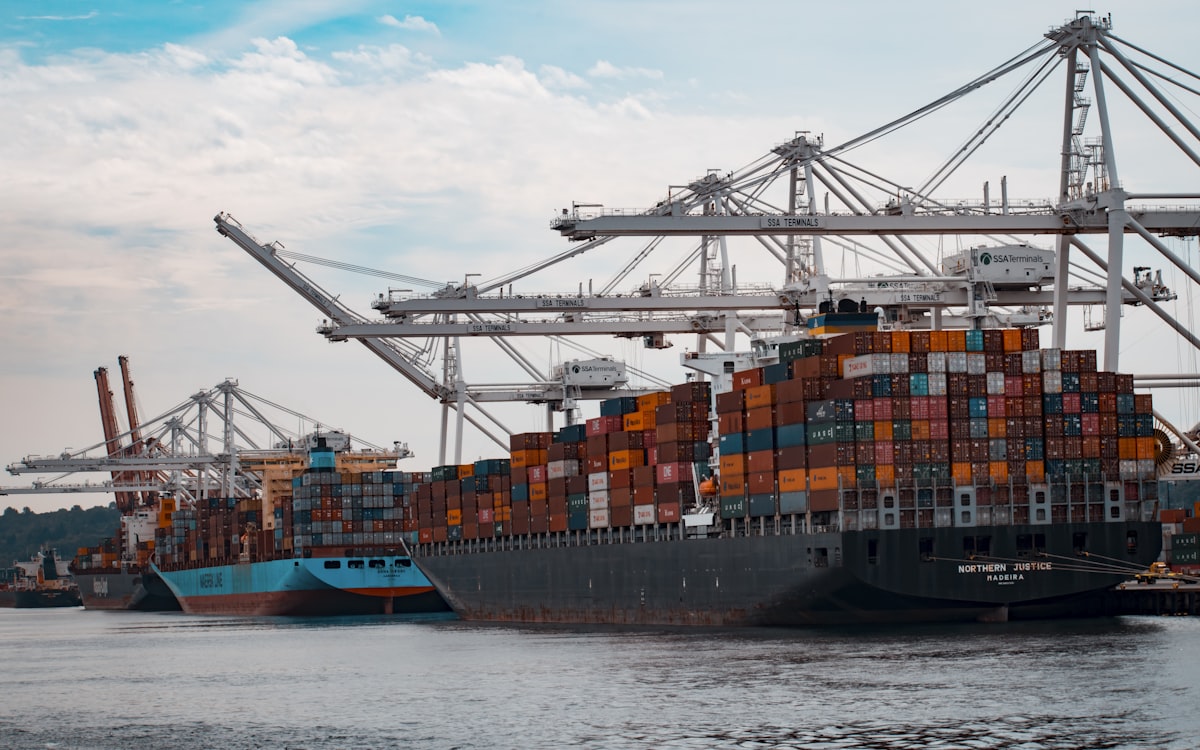
A Bill of Lading (B/L or BOL) —conocimiento de embarque in Mexican Spanish— is the document issued by the ocean carrier (or agent) that, in practice, serves three functions: evidence of the contract of carriage, a receipt for the goods and, when negotiable, a document of title that controls who may take delivery at destination.
In Mexico, do not confuse it with the SAT Carta Porte complement: they are different instruments that often coexist on the same port import. This guide covers main types, field groups, and the match accounts payable needs before paying freight — without a 29-field catalog wall nobody uses on Monday.
- contract · receipt · title
- 3 functions
- ocean B/L vs SAT CFDI
- ≠ Carta Porte
- Manzanillo 2025 (ASIPONA)
- ~3.89M TEUs
- B/L + CFDI/CP + POD
- 1 file
Context: what is a shipment · Carta Porte · POD · Incoterms®
What is a Bill of Lading (B/L)?
Usable answer: the B/L is the primary document for the ocean leg. It is issued by the ocean carrier or, in consolidations, by the freight forwarder (NVOCC). Without the right document — or the right release instruction — the terminal will not deliver the container.
You will also see BOL and, in Mexico, conocimiento de embarque. Multimodal moves may use a combined document (FBL / multimodal), but the pattern you see most on Asia–Mexico or Mexico–world imports is still an ocean B/L tied to a booking.
The 3 functions: contract, receipt, title
Carriers, banks, and customs rely on three roles. If your team treats the B/L as only “the ship PDF,” you lose release control and dispute leverage.
- 01
Contract of carriage
Evidences carriage terms between shipper and carrier (or agent): route, liability, and reverse-side clauses.
- 02
Receipt of goods
The carrier confirms receipt or on-board loading. Piece, seal, and “said to contain” disputes start here.
- 03
Document of title (if negotiable)
Whoever presents the endorsed original (or a valid instruction) can claim delivery. Lost originals block the port.
Release
From B/L to terminal delivery
Booking
Space and cutoff
B/L issue
Draft to final
Instruction
Original / Telex / SWB
Release
Terminal delivers
B/L vs Carta Porte, CMR, AWB, SWB, and POD
Each document answers a different question. The expensive Mexico mistake is treating a B/L as if it were the Carta Porte complement — or the reverse.
Bill of Lading (ocean)
- Contract / receipt / title for the ocean leg (or multimodal operator).
- Issued by carrier or forwarder — not SAT.
- Controls release at the marine terminal.
- Does not evidence inland Mexico tax compliance for SAT.
Carta Porte (CFDI complement)
- Tax complement on the CFDI to support moves in Mexico.
- Issued by the service provider or own-fleet mover via stamping.
- Version 3.1 in force (since July 2024); confirm SAT catalogs.
- Does not replace the B/L to take cargo off the vessel.
B/L
Mode / use: Ocean (or multimodal operator)
Negotiable?: Yes, if negotiable / “to order”
What it proves: Contract, receipt; title when applicable
Sea Waybill (SWB)
Mode / use: Ocean, non-negotiable
Negotiable?: No
What it proves: Contract + receipt; release without original
Mode / use: Air
Negotiable?: No (not classic title)
What it proves: Air contract and receipt
CMR
Mode / use: International road (convention)
Negotiable?: Not like a negotiable B/L
What it proves: International road carriage contract
Mode / use: Mexico move (CFDI)
Negotiable?: N/A (tax)
What it proves: Legal/data basis of the move for SAT
Mode / use: Final delivery
Negotiable?: N/A
What it proves: Who received, when, how much, condition
Master vs House B/L
In consolidations and forwarder services you will see two layers. Do not pick “the nicer PDF”: pick the layer that matches your contractual relationship and invoice match.
Master Bill of Lading
- Issued by the ocean carrier.
- Shipper/consignee are often the NVOCC or agent.
- Governs the line contract and the box at terminal.
- Useful for vessel, voyage, and “line” ports.
House Bill of Lading
- Issued by the forwarder / NVOCC to the end customer.
- Shipper/consignee reflect the real sale.
- Often the document your internal ops files as “our B/L”.
- Must align with the Master on vessel, ports, and containers.
Original, Telex, Express, and Switch
These are the main release forms you will see. Carrier product names vary; the operational decision is the same: do you need a negotiable title, or is an electronic instruction enough?
Original B/L
Negotiable: Yes (typical “to order”)
How release works: Present original(s) at destination
When to use: Documentary credit; sale that requires title
Telex / Express Release
Negotiable: Case-dependent
How release works: Electronic instruction after originals surrendered at origin
When to use: Avoid courier of originals to destination
Sea Waybill (Express / SWB)
Negotiable: No
How release works: Named consignee identity
When to use: Trusted flows; no need for title
Switch B/L
Negotiable: Depends on the new set
How release works: A new B/L replaces the prior set
When to use: Consignee / commercial data change (strict rules)
Main fields (what to verify)
You do not need every box on the carrier form. You need a short set of hard data that, if wrong, blocks release, customs, or freight payment.
Parties
Main fields: Shipper, consignee, notify
What to verify: Names aligned to commercial invoice and entry
Route
Main fields: Load/discharge ports, vessel, voyage
What to verify: Matches booking and freight invoice
Cargo
Main fields: Container(s), seal, pieces, weight, description
What to verify: Matches packing list; watch “said to contain” / clauses
Condition
Main fields: On board / received; clean vs claused
What to verify: On board if Incoterm or LC requires it; no surprise clauses
Money / refs
Main fields: Freight prepaid/collect; booking/BL refs
What to verify: Prepaid/collect aligned to Incoterm and who is billed
Elige un paso para ver el detalle
Detalle del paso · 01
Vessel and voyage
Verify 1
Mexico–US and multimodal: how they coexist
On a real corridor the governing document changes by leg. The B/L does not “expire” when the truck leaves the port — it simply stops being the tax instrument for the inland Mexico move.
Typical chain
Ocean import to inland Mexico
Ocean B/L
Contract and release
Customs
Entry + docs
CFDI + CP
Inland Mexico truck
POD
Plant receipt
Scale context: Manzanillo reported 3,893,357 TEUs moved in 2025 (ASIPONA Manzanillo). That volume is why a bad B/L release or a missing CFDI/Carta Porte becomes yard dwell and pay exceptions — without inventing generic demurrage rates.
- Import/export via MX ports: B/L (or SWB) + commercial invoice + packing list + entry; then inland trucking with CFDI/Carta Porte when required.
- Mexico–US truck cross-border: ocean B/L does not apply; contract/rate, POD, and Carta Porte in Mexico govern. Hazmat: hazmat + Carta Porte 3.1.
- Multimodal: a combined document may span modes, but the Mexican tax leg still needs CFDI/Carta Porte when trucking requires it. Visibility: multimodal documentation.
- Trucking NOMs: a B/L does not replace permits or vehicle configuration — see SICT freight NOMs.
Expensive B/L mistakes
These are the main failures that turn an “almost right” PDF into a stuck container, a rejected LC, or freight paid blind.
Mistakes that hurt
- Treating B/L = SAT Carta Porte and “skipping” the complement on the trucking leg.
- Paying freight when vessel/ports differ between B/L and invoice.
- Losing negotiable originals with no indemnity / switch plan.
- Using a Sea Waybill when the credit requires a negotiable on-board B/L.
- Filing only the House and discovering the Master mismatches containers.
- Treating the B/L as plant POD and closing OTIF without real receipt.
Healthy practice
- One ID file: booking ↔ B/L ↔ invoice ↔ CFDI/CP ↔ POD.
- Define release type before sailing (not at destination).
- Separate roles: carrier issues B/L; Mexico tax is stamped separately.
- Accounts payable holds if on board is missing or hard data mismatches.
- Counsel/agent validates Switch and consignee changes.
- Tower and DC close with a defensible POD, not the vessel PDF.
Checklist before paying freight
Before releasing ocean freight payment (or a related leg), match these signals. This is the minimum that prevents “paying the wrong ship.”
Elige un paso para ver el detalle
Detalle del paso · 01
Final B/L (not only draft)
OCL, the file, and Carta Porte (no B/L issuance)
OCL Cargo is an autonomous TMS with AI agents (computer use). It does not replace the ocean carrier: it does not issue Bills of Lading. On the Mexican fiscal leg, OCL can stamp invoice and Carta Porte; on the buyer audit side, it matches the file (B/L, booking, freight invoice, CFDI/Carta Porte, GPS, and POD) and escalates exceptions to your team.
You can coexist with your current TMS or ERP: the goal is that accounts payable does not pay misaligned ocean freight or an inland move without the complement when required. Product: TMS guide.
Key takeaways6 points
- A Bill of Lading (B/L) has three functions: contract of carriage, receipt of goods and, when negotiable, a document of title that controls release.
- B/L ≠ SAT Carta Porte: the first is an ocean transport document; the second is a CFDI tax complement for Mexico moves.
- Master (ocean line) and House (forwarder) are not interchangeable: match the right layer to booking and freight invoice.
- Original, Telex Release, Express (Sea Waybill), and Switch solve different release problems — they are not synonyms.
- Manzanillo moved ~3.89 million TEUs in 2025: the B/L governs ocean release; CFDI + Carta Porte often govern the inland Mexico trucking leg.
- Accounts payable should not pay ocean freight without matching vessel, ports, on-board status, and containers to booking and invoice.
Want to match B/L, CFDI, and POD before paying?
Related reading
Frequently asked questions
No. A Bill of Lading (B/L) is the ocean transport document (contract, receipt and, when negotiable, document of title). Carta Porte is the tax complement on the CFDI (Mexico’s electronic invoice) that supports the move for SAT. On an import via Manzanillo they often coexist: B/L on the ocean leg; CFDI + Carta Porte on the inland Mexico trucking leg.
Contract of carriage (evidence of carriage terms), receipt of goods (the carrier confirms receipt or on-board loading) and, when negotiable, a document of title that controls release at destination.
The Master is issued by the ocean carrier (often to the NVOCC or forwarder). The House is issued by the freight forwarder to the end shipper. Accounts payable and customs need to know which one they match to booking, freight invoice, and the entry.
No. A Sea Waybill / Express is a non-negotiable transport document: it eases release without physical originals. It does not replace an original B/L when a documentary credit or contract requires a negotiable title.
Not necessarily. It proves the ocean leg (and sometimes a multimodal span by document type). Physical receipt at the plant or DC closes with proof of delivery (POD). See POD for shippers.
No. The carrier or forwarder issues the B/L. OCL can stamp invoice and Carta Porte on the Mexican fiscal leg, and match B/L ↔ booking ↔ freight invoice ↔ CFDI/Carta Porte ↔ POD on the file before pay.
A notation that goods were loaded on the vessel. It is critical under Incoterms® FOB/CIF/CFR and many documentary credits. A “received for shipment” B/L is not the same as “shipped on board”.