

The B1 visa crisis has already hit 10% of the Mexican operator pool. Revocation is automatic, there is no appeal, and it is not recovered. And the only defense specialists on both sides of the border recommend is the same piece almost no operation builds today. The trip file.
A driver leaves in the morning. Comes back without a job.
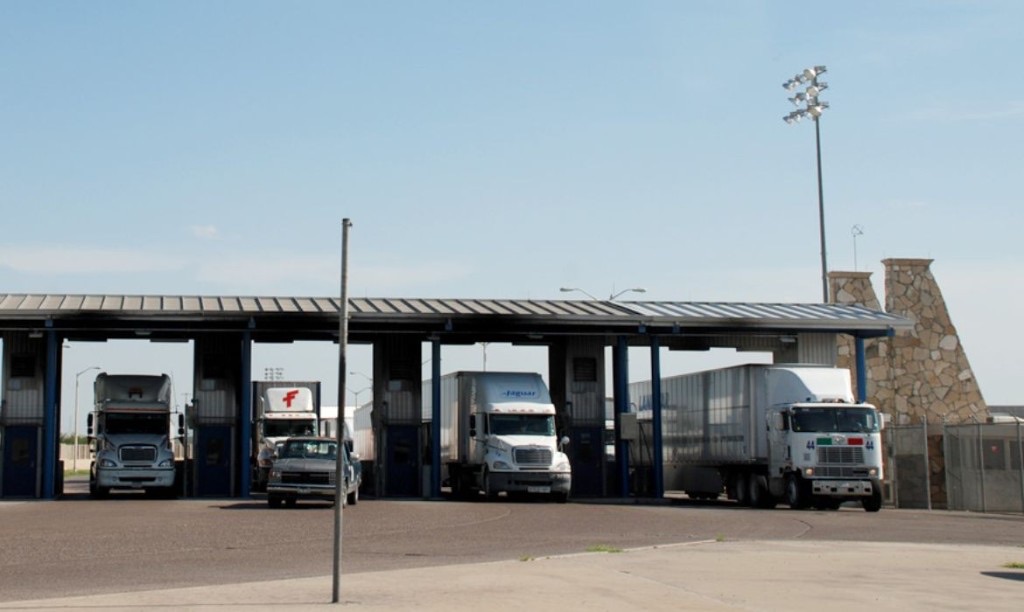
The scene repeats every week in Otay Mesa, Nuevo Laredo, and Mexicali. An operator leaves in the morning with freight, as always. At the port of entry, the CBP system flags an old DOT warning. From months ago. That he may not even have known he had.
The visa is revoked automatically. No investigation, no document that explains the cause, no mechanism to challenge it. The driver returns to Mexico that same afternoon. Without a visa and without a job.
Ismael Reyes de la Rosa, Canacar’s president in Mexicali, summed it up in August with the question that became the industry’s cry. Who do we complain to?

The numbers, verified
Between April 2025 and April 2026, the United States revoked visas for 20,000 Mexican drivers, according to Canacar. The total pool of operators with visas to work in that country is 194,000. The math is direct. One in ten can no longer cross.
Inside that total is a number both sides of the conflict confirm. U.S. Transportation Secretary Sean Duffy stated that approximately 3,200 Mexican operator visas were revoked since January for alleged cabotage violations alone. On the Mexican side, Pedro Lozano, Canacar’s Nuevo Laredo delegate, reported the same figure for the border region. When accuser and accused give the same number, it stops being a port rumor. It is official policy.
The numbers, verified
Same figure from accuser and industry.
20,000
visas revoked from Mexican drivers
Apr 2025 – Apr 2026 · Canacar
1 in 10
of the visa pool no longer cross
194,000 operators · Canacar
3,200
revoked for alleged cabotage
since January · Duffy / Canacar NL
The context makes it worse. Mexico is already short roughly 96,000 operators according to Canacar itself, with nearly 30% of active drivers over 55. Every visa lost is a driver who is not replaced and a truck that sits idle. And it happens just as Mexican exports grow at double digits. Record demand, falling capacity.
How automatic revocation works
What changed was not the law. Cabotage was always prohibited; moving freight between two points inside the U.S. without authorization was never legal for a B1 operator. What changed was the machinery.
Department of Transportation and CBP systems were connected. The warnings DOT issued on the road, which used to sit in a file, now appear on the agent’s screen at the port of entry. The result, documented by Overdrive and by FreightWaves (Borderlands), is that drivers with old warnings are losing the visa automatically at the moment of crossing.
In parallel, the April 2025 executive order added the English-proficiency requirement for operators with a B1 visa and an international license, which explains most of the 20,000 cancellations in the annual cut. And inspections hardened. Canacar reports inspections where operators are questioned, their phones are reviewed, and in some cases agents cover unit cameras before entering to inspect.
The underlying dispute is evidence
Here is the point almost nobody is reading. Canacar denounces that agents are interpreting legitimate international trips as cabotage. In the association’s words, while the B1 operator is on an international trip there is no violation, loaded or empty. Cabotage is moving freight between two points in the United States, and that, they hold, is not what they are doing.
The problem is where that interpretation is decided. It is decided at the port of entry, in minutes, in front of an agent. The driver was on an international operation. But standing there, he has no way to prove it.
The defense fits in a phone
The technical recommendation circulating among specialists on both sides of the border is concrete. A digital record of each trip that ties four pieces.
Origin and destination of the full move. Cargo type. The number of the international operation the leg belongs to. And the GPS log that shows the real route.
U.S.–Mexico border — Operator B1 visas20,000 Mexican visas revoked. In one year.
A digital trip file ready at the port of entry.
1 in 10 of the 194,000 visa pool · Canacar, Apr 2025 – Apr 2026
The operator
Trip file
- Origin – destination
- Cargo type
- Intl operation no.
- GPS log
Defense at inspection
Port · CBP
The trip file is defense at the port.
Cause, effect, and defense
The causes
English (Apr 2025 order), cabotage, and labor use of the B1.
CBP inspectionsThe effect
Drivers who avoid crossing, rising rates, less capacity.
Canacintra · CoparmexThe defense
Digital record per trip: origin, destination, cargo, and operation.
Trip file + GPSWith that file on the phone, the domestic leg inside the U.S. stops looking like cabotage and looks like what it is. A segment of a documented international operation. Without it, the driver’s word against the agent’s screen.
It has to be said without ornament. Because a revoked visa is not recovered, the file rescues no one. It protects. And it only works if it already existed when the operator reached inspection. Documentation is not to recover the 20,000. It is to avoid becoming 20,001.
What to do this week
Five moves, in order, for any operation whose people cross.
Select a step to see detail
Step detail · 01
Inventory
DOT warnings
First, inventory warnings. Ask every operator whether they ever received a DOT roadside observation, even an old one. Those warnings are live mines today.
Second, define the minimum trip file. Origin, destination, cargo, international operation number, and GPS log. One ID that ties it all.
Third, put it on the driver’s phone. A defense that lives on an office server defends no one at the port of entry. It has to be showable at inspection, offline if necessary.
Fourth, audit itineraries inside the U.S. Any move between two American points must be explicitly tied to its international operation before the truck leaves.
Fifth, train for the inspection. The operator must know what to show, in what order, and what to answer. The calm of someone who brings evidence shows, and so does the calm of someone who does not.
The shipment is born auditable
At OCL Cargo we have long held a thesis for this corridor. Evidence is worth more than the rate. We built it for freight pre-payment, for matching invoices against GPS and POD before releasing money. We never imagined the first mass proof of that thesis would be drivers’ visas.
But the logic is identical. The file is not built after the problem; it is built at the origin. The shipment is born auditable, with its ID, its route, its evidence, and its international operation tied from the first kilometer. OCL agents build that file automatically for every trip, with the GPS log and movement documentation, without manual capture and without migrating the system you already use.
If your people cross the border, the question is no longer whether it is worth documenting. It is whether you can prove today, trip by trip, that every move in the U.S. is part of an international operation. If the answer is no, you have homework this week. And if you want to see it solved with your own trips, write us.
Key takeaways5 points
- 20,000 visas revoked in one year against a pool of 194,000: one in ten Mexican operators with a visa can no longer cross.
- 3,200 revocations for alleged cabotage are confirmed by both Duffy and Canacar Nuevo Laredo: official policy, not a port rumor.
- Revocation is automatic, not appealable, and not recoverable. The trip file does not rescue: it protects.
- Minimum defense on the phone: origin/destination, cargo, international operation number, and GPS log.
- Documentation is not to recover the 20,000. It is to avoid becoming 20,001.
Auditable trip file, trip by trip
Sources
- Canacar · 20,000 visas revoked April 2025–April 2026, 194,000 pool (AM)
- Sean Duffy statements and operator shortage (FreightWaves)
- Pedro Lozano report, Canacar Nuevo Laredo (FreightWaves, Borderlands)
- DOT–CBP systems merge · DOT confirmation (Overdrive)
- Canacar urges U.S. to clarify B1 rules (FreightWaves, August 2026)
- Cancellation causes: B1 work, cabotage, and English (Excélsior)
- Executive order · English proficiency for CMV drivers (White House, Apr. 2025)
Related reading
- Transload vs through-trailer vs transfer at the border
- Agents are eating logistics
- What is a shipment
- The transport squeeze: diesel and Canacar 2026
FAQ
Between April 2025 and April 2026, the United States revoked visas for 20,000 Mexican drivers, according to Canacar. The pool of operators with visas is 194,000: one in ten can no longer cross.
U.S. Transportation Secretary Sean Duffy said roughly 3,200 Mexican operator visas were revoked since January for alleged cabotage violations alone. Pedro Lozano, Canacar’s Nuevo Laredo delegate, reported the same figure for the border region.
No. Revocation is automatic, there is no appeal, and it is not recovered. The trip file does not rescue anyone who already lost the visa: it protects those who still cross, and only if it already existed when the driver reached inspection.
A digital record per trip that ties four pieces: origin and destination of the full move, cargo type, the international operation number the leg belongs to, and the GPS log of the real route.
Cabotage is moving freight between two points inside the United States without authorization. Canacar holds that while a B1 operator is on an international trip there is no violation, loaded or empty. The underlying fight is evidence: proving, trip by trip, the international character of each move.
By Gibrán Ramírez, CEO of OCL Cargo.