


The difference between a Bill of Lading (B/L) and a Waybill is not the PDF layout: both evidence receipt and the contract of carriage, but only a B/L (depending on type) can act as a negotiable document of title that controls who takes delivery. A Waybill (Sea or Air) does not transfer ownership: at destination, cargo releases to the named consignee against identification.
This guide helps shippers, 3PLs, and Finance choose the document at booking on the Mexico corridor (Manzanillo / Lázaro Cárdenas to inland), without equating a B/L with Carta Porte or treating an Air Waybill as “an airborne B/L with the same endorsement rules.”
- B/L: contract · receipt · title*
- 3 roles
- Waybill: contract · receipt
- 2 roles
- ocean vs Mexico CFDI inland
- ≠ Carta Porte
- B/L/SWB + CP + POD
- 1 trip file
Cluster context: what is a B/L · Air Waybill (AWB) · Carta Porte · POD.
Short answer: title vs release by identity
If the search question is “what is the difference?”, the operable answer is this: do you need to control the goods with a document, or only move them fast with a trusted named consignee?
*Title applies mainly to negotiable (“to order”) B/Ls. A named straight B/L is non-negotiable but still a B/L; a Sea Waybill is the explicit path with no originals for express release.
What each one is (workable language)
Before the matrix, lock definitions that traffic, customs, and Finance can cite on Monday without fighting over jargon.
Bill of Lading (B/L): document issued by the ocean carrier or freight forwarder. It evidences the contract of carriage, acts as a receipt for the goods, and, when negotiable, functions as a title document that controls release. Deep guide: what is a Bill of Lading.
Waybill (Sea Waybill / Air Waybill): a non-negotiable transport document. It is a receipt and evidence of contract, but not a document of title. In ocean freight it is often called Sea Waybill or Express; in air freight, Air Waybill (AWB). Cargo is delivered to the named consignee against identification (and local charges if due).
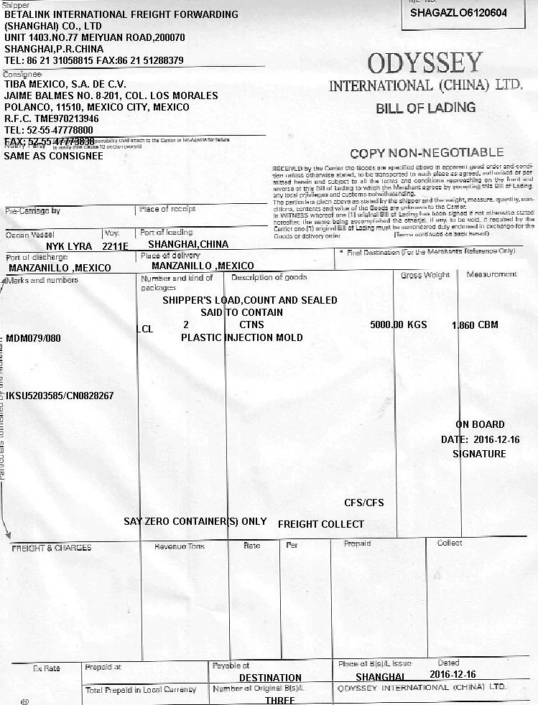
Decision matrix: Bill of Lading vs Waybill
Use this table at booking. If Finance, foreign trade, and operations mark different criteria, the rule that protects payment and cargo control wins.
Document of title / negotiable
Bill of Lading (B/L): Yes (by type: “to order” / endorsement)
Waybill (Sea / Air): No
Receipt + contract of carriage
Bill of Lading (B/L): Yes
Waybill (Sea / Air): Yes
Release at destination
Bill of Lading (B/L): Usually requires original / endorsement (or Telex)
Waybill (Sea / Air): Identity of the named consignee
Physical originals
Bill of Lading (B/L): Typically a set (e.g. 3 originals)
Waybill (Sea / Air): No: copies / non-negotiable record only
When to use
Bill of Lading (B/L): Bank LC, in-transit resale, shipper control
Waybill (Sea / Air): Trusted relationship, payment covered, express release
Typical risk if you choose wrong
Bill of Lading (B/L): Ship arrives before the courier to demurrage
Waybill (Sea / Air): No title control if the buyer does not pay
B/L vs Sea Waybill vs AWB vs Carta Porte
Four instruments SERP articles blur. They are not synonyms or “versions of the same form.”
Bill of Lading (B/L)
Mode: Ocean (sometimes multimodal)
Title?: Yes, if negotiable
What it answers: Contract + receipt + release control
Sea Waybill
Mode: Ocean
Title?: No
What it answers: Contract + receipt; express release to named party
Air Waybill (AWB)
Mode: Air
Title?: No (never)
What it answers: Air contract + receipt; release by identity
Carta Porte (CFDI complement)
Mode: Mexico carriage (SAT)
Title?: Not an ocean title
What it answers: Tax evidence of domestic carriage for SAT
Hard boundaries: an AWB is not “the B/L of the plane with the same endorsement rules.” Carta Porte does not replace the ocean B/L. POD (proof of delivery) closes receipt at plant or DC; it is also not a B/L.
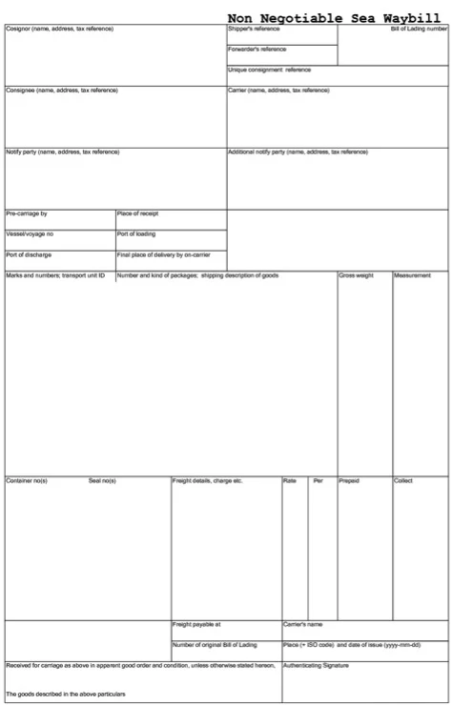
Minimum B/L fields (what to match before pay)
Finance does not pay ocean freight “because the PDF looks official.” Match hard fields to booking, the freight invoice, and (when applicable) the customs entry.
Elige un paso para ver el detalle
Detalle del paso · 01
Parties
Corridor tip: on Mexico imports a consignee with a readable RFC avoids agent round-trips. The Shanghai–Manzanillo example above shows exactly that field.
When NOT to use a Waybill
A Waybill is faster. It also removes the title brake. Do not request it “by default” at booking.
Letter of credit (LC) requires original B/L
Why the Waybill fails: Bank refuses presentation without negotiable title
What to request instead: On-board B/L per LC (and courier / Telex if the LC allows)
Sale in transit
Why the Waybill fails: You cannot endorse a Waybill as title
What to request instead: Negotiable B/L (or Switch B/L with clear rules)
New buyer / unpaid goods
Why the Waybill fails: Releases without shipper document control
What to request instead: Original B/L until paid, or consign to the bank
Master contract forbids express
Why the Waybill fails: Contract breach even if “it is faster”
What to request instead: The document type the contract names
Dispute over who the consignee is
Why the Waybill fails: Identity names only one party
What to request instead: Clarify Consignee before sailing; do not “fix at destination”
MX corridor: Manzanillo / Lázaro + inland Carta Porte
In Mexico the ocean leg and inland tax layer do not compete: they stack. The common error is thinking “the B/L already satisfies SAT” or “Carta Porte replaces the bill of lading.”
- Port (Manzanillo, Lázaro Cárdenas, etc.): the B/L or Sea Waybill plus customs entry / pedimento drive the import flow.
- Mexico road leg: usually needs a CFDI with Carta Porte when carriage rules apply.
- Plant / DC: closes with POD (who received, when, in what condition).
Manzanillo moved on the order of ~3.89 million TEUs in 2025 (ASIPONA): high volume, costly delays if the release document is late or mistyped. Calibrate demurrage/detention with your terminal and agent; do not copy a generic blog number.
Multimodal: multimodal TMS and what is a shipment help you see the full trip, not only the ocean PDF.
Original, Telex, Express, and Waybill: how release works
Four release paths. Mixing them in the operations chat is the fast lane to a stuck container.
Release at destination
Pick one path
Original B/L
Present / endorse
Telex Release
Originals surrendered
Express / SWB
No originals
Air AWB
Consignee ID
Original B/L
Were originals issued?: Yes (signed set)
How release works: Delivery against presentation / endorsement
Telex Release
Were originals issued?: Yes, then surrendered at origin
How release works: Carrier message authorizes destination release
Express / Sea Waybill
Were originals issued?: No negotiable originals issued
How release works: Release to the named consignee
Air Waybill
Were originals issued?: Non-negotiable by design
How release works: Release to consignee (ID)
Practical rule: Telex is not a Sea Waybill. Telex starts from a B/L with originals; Express / Sea Waybill is born without that title. If your LC or contract says “full set of originals,” do not improvise an Express.
Checklist: which document to request at booking
Five questions before you confirm with the carrier or forwarder. If any fail, do not choose a Waybill for speed.
Elige un paso para ver el detalle
Detalle del paso · 01
Is there an LC or documentary finance?
OCL: multimodal trip file without issuing the B/L
OCL does not replace the carrier or forwarder that issues the bill or Waybill. The work it does close is the trip file: tying the ocean or air document to Mexican tax docs and delivery evidence before you pay.
- Autonomous TMS with agents (computer use: the agent operates screens like an analyst): matches B/L or Waybill ↔ booking ↔ freight invoice ↔ CFDI / Carta Porte ↔ POD.
- Coexists with your current system of record: no day-one TMS rip-and-replace.
- Typical pattern when auditing 100% of the pilot: 5–7% visible leakage · 6–8 week pilot · ~$50 MXN/shipment when scope fits.
- OCL can stamp invoice and Carta Porte on the Mexican tax leg. Who owns exceptions? Your team.
Context: false digitization of freight · what is a TMS.
Key takeaways6 points
- B/L and Waybill both cover receipt + contract; the hard gap is title: a B/L (by type) can control ownership/release; a Waybill cannot.
- Use a B/L for bank LCs, in-transit resale, or when the shipper must control cargo until paid.
- Use a Waybill (Sea/Air) for trusted parties, payment already covered, or express release: release by named-consignee identity.
- An AWB is never negotiable; Carta Porte is not a B/L: it is the CFDI tax complement on Mexico legs.
- At Manzanillo/Lázaro the ocean leg runs on B/L or Sea Waybill; inland usually adds CFDI + Carta Porte + POD.
- OCL does not issue B/Ls: it matches documents in the trip file, audits freight, and can stamp invoice and Carta Porte.
Do your B/L and Carta Porte live in the same trip file?
Related reading
Frequently asked questions
Both act as a receipt and evidence of the contract of carriage. A Bill of Lading (B/L) can be a negotiable document of title and usually requires an original or endorsement to release cargo. A Waybill (Sea or Air) is not a document of title: cargo releases to the named consignee against identification.
In practice many carriers use “Express / Sea Waybill” for the non-negotiable document with no physical originals. Do not confuse with Telex Release: originals were issued, then surrendered at origin so destination can release. Confirm the exact label with your agent.
No. An Air Waybill is never a negotiable document of title: it releases to the named consignee. Detail: what is an Air Waybill.
No. The B/L covers the ocean (or ocean multimodal) leg. Carta Porte is the tax complement on Mexico’s digital tax invoice (CFDI) for domestic carriage. On an import via Manzanillo or Lázaro they usually coexist. See Carta Porte and B/L.
When a letter of credit (LC) requires an original B/L; when goods may be sold in transit; when the shipper must control release until paid; or when the bank/commercial contract forbids it. In those cases a Waybill breaks the payment mechanism or control.
Shipper, consignee, notify; vessel/voyage; load and discharge ports; marks/container and seal; description, packages, weight and volume; freight terms (prepaid/collect); on-board date if required; and number of originals. Match those fields to booking and the freight invoice before you pay.
No. Carriers or forwarders issue them. OCL is an autonomous TMS with agents: it builds the multimodal trip file (B/L or Waybill + CFDI/Carta Porte + POD), audits before pay, and can stamp invoice and Carta Porte on the Mexican tax leg. Your team owns exceptions.