

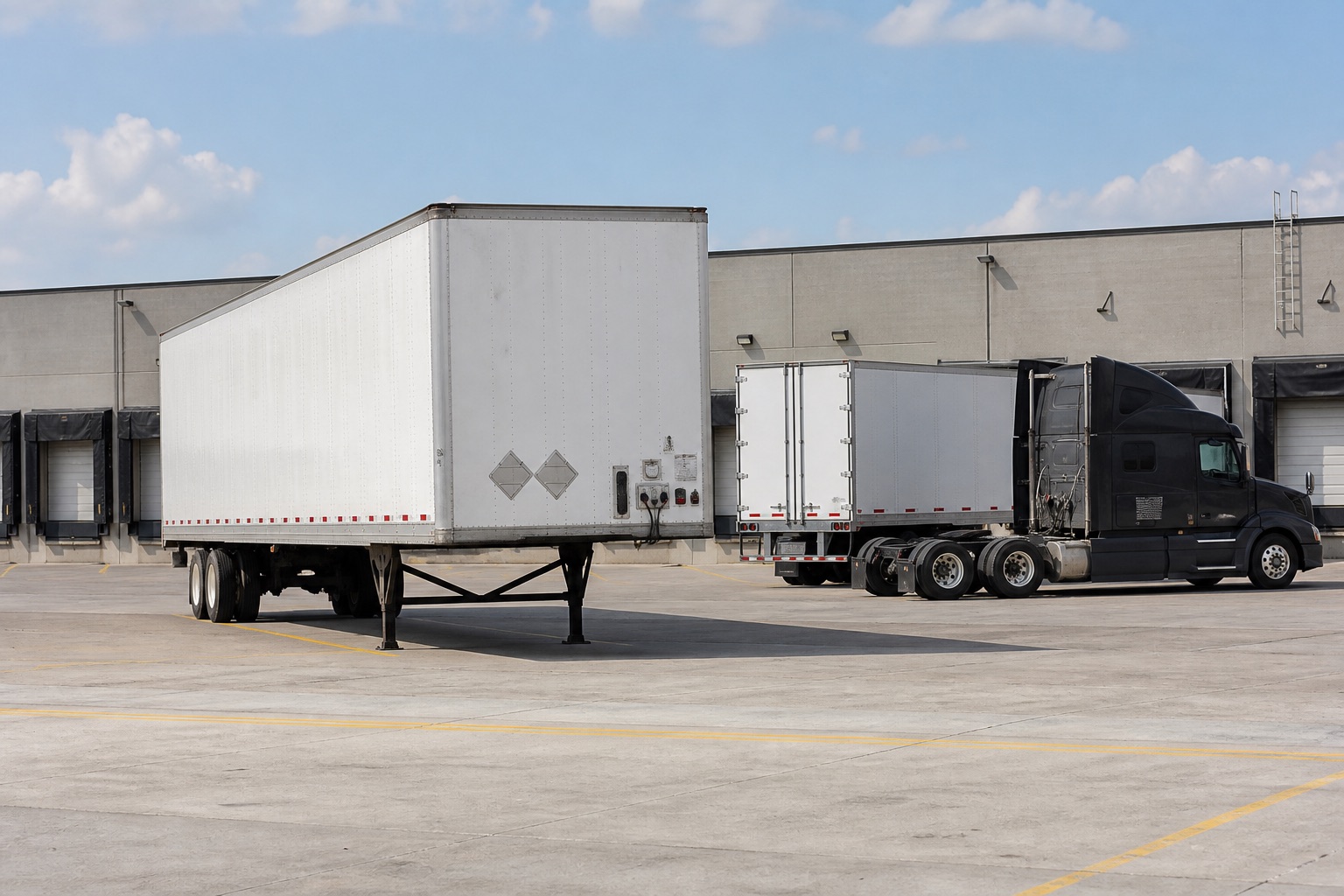
Standard freight units in Mexico run from smallest to largest: 1.5 t van, 3.5 t van, straight truck (~10 t), torton (~18 t), 48′ or 53′ dry van trailer (~28–30 t), and doubles (~50 t). Picking wrong costs twice: trailer for torton freight wastes 25–35% of the rate, and overloading a smaller unit triggers overweight fines and risk.
This guide is the operational reference for quoting, assigning, and auditing: capacities, per-km rate bands, and the Carta Porte traceability every shipment needs.
- capacity range
- 1.5–60 t
- trunk boxes
- 48′ / 53′
- oversizing leakage
- 25–35%
- weights & dimensions
- NOM-012
Cluster: cost per kilometer · Mexico City–Nuevo Laredo · audit an invoice · freight tender.
Quick reference table
Reference 2026 ranges excluding tolls. Corridor detail lives in the linked rate guides below.
Capacity ladder (Mexico)
From last mile to trunk: volume and weight decide — not the habit of quoting a trailer.
1.5 t van
Approx. capacity: 1.5 t / 8–10 m³
Rate / km: $10–16 MXN
Typical use: Urban last mile
3.5 t van
Approx. capacity: 3.5 t / 15–18 m³
Rate / km: $14–20 MXN
Typical use: Local distribution
Straight truck
Approx. capacity: 8–10 t / 35–40 m³
Rate / km: $20–28 MXN
Typical use: Regional, restricted zones
Torton
Approx. capacity: 16–18 t / 55–60 m³
Rate / km: $28–36 MXN
Typical use: Medium and long haul
48′ trailer
Approx. capacity: 26–28 t / ~90 m³
Rate / km: $34–45 MXN
Typical use: National trunks
53′ trailer
Approx. capacity: 28–30 t / ~105 m³
Rate / km: $36–48 MXN
Typical use: High volume, export
Doubles
Approx. capacity: 45–60 t
Rate / km: By agreement
Typical use: NOM-012 corridors
Reefer
Approx. capacity: Per unit
Rate / km: +25–40% vs dry
Typical use: Cold chain
Three decisions that set cost
Before you ask for quotes, settle weight vs cube, load mode, and whether the corridor allows doubles. Without that, you compare incomparable rates.
Three decisions that set the cost
Weight vs cube, dedicated vs consolidated, doubles where NOM-012 allows.
01
Weight vs cube
Quote both or you pay for the worse of the two.
02
Dedicated vs LTL
Half-load regular, consolidate; critical window y dedicated.
03
Authorized doubles
Cuts cost per ton 20–30% on permitted corridors.
Weight vs cube. Light, bulky freight cubes out first; dense freight weighs out first. Always quote with both numbers.
Dedicated vs consolidated. Less than half a unit regularly points to LTL; critical windows or delicate freight point to dedicated FTL even with empty space.
Authorized doubles. Double trailers cut cost per ton 20–30% on permitted corridors under strict NOM-012 rules.
Rates per km and corridor
The per-km band orients; real cost depends on corridor, seasonality, and accessorials. Always contrast against your trailer cost per kilometer.
Frequent corridors: Mexico City–Nuevo Laredo. In a freight RFQ, unit type belongs in the data pack.

The right unit is also an invoice issue
Vehicle configuration on the CFDI with Carta Porte must match the actual unit. Configuration errors break the complement and deductibility.
Overweight billed as an adjustment needs a scale ticket, like every concept in the charges dictionary.
Elige un paso para ver el detalle
Detalle del paso · 01
Quoted unit = assigned unit = Carta Porte unit
Typical unit-selection errors
Five failures concentrate waste on high-volume accounts. Each is caught crossing shipment, rate card, and invoice.
| Error | What happens | How to catch it |
|---|---|---|
| Trailer by default | 25–35% overpay on torton freight | Weight/cube vs minimum unit |
| Overloaded small unit | Overweight fines, scale rejection | Ticket vs NOM-012 limit |
| 48′ where 53′ fits | Extra trips per month | Pallets per shipment vs capacity |
| Unauthorized doubles | Fine + urgent reassignment | Corridor vs configuration permit |
| Carta Porte mismatch | Rejected or non-deductible CFDI | Config vs GPS / unit photo |
Assignment
Unit per shipment
Weight
Actual kg
Cube
m³ or pallets
Lane
Corridor + NOM
Rate
Minimum unit
What OCL runs on assignment
OCL Cargo is an autonomous shipper-side TMS. The system uses automated screen control (computer use) to operate carrier portals and validate data when there is no direct integration. The Audit Agent crosses invoiced unit, rate card, and shipment evidence before accounts payable releases payment. It can stamp invoice and Carta Porte when applicable. It coexists with your operations team: humans on exceptions, agent on 100% of routine volume.
The same shipment file that proves the right unit feeds invoice audit and surfaces oversizing patterns month over month.
6–8 week pilot
Take 100 recent shipments. Baseline: % oversize unit, MXN rate gap, and Carta Porte configuration errors. The agent audits invoice and complement 100%; operations only sees exceptions. Pattern when auditing 100%: recover 5–7% of spend when the habit is quoting trailer for everything.
Elige un paso para ver el detalle
Detalle del paso · 01
% shipments with unit different from rate card
Key takeaways5 points
- MX ladder: 1.5 t, 3.5 t, and straight truck, torton, and 48/53′ trailer to doubles (NOM-012).
- Wrong unit costs 25–35%: trailer for torton load, or fines from overloading a smaller unit.
- Three decisions: weight vs cube, dedicated vs LTL, doubles where permitted.
- Carta Porte: vehicle configuration must match the actual unit.
- OCL crosses capacity and rate card per shipment; audit catches oversizing patterns.
Are you paying for the right unit on every shipment?
Related reading
Frequently asked questions
About 15 m³ of capacity and 4 to 6 extra pallets. On trunk lanes 53′ dominates; 48′ survives where maneuver space is tight.
26 to 30 standard pallets (1.0 × 1.2 m) floor-loaded, depending on layout; double-stacked when the freight allows.
Torton if volume fits; paying trailer rate for 12 tons only makes sense with a critical window or high cube freight.
Only on corridors authorized under NOM-012. Cuts cost per ton 20–30%, but requires full connectivity and permitted routes.
Yes. Vehicle configuration on the CFDI with Carta Porte must reflect what moved; errors kill deductibility and can trigger fines.
The autonomous TMS crosses weight, cube, and rate card per shipment before assignment. The Audit Agent flags recurring oversizing when auditing invoices. Typical pilot: 6–8 weeks.