

Deep learning is a subset of machine learning that uses artificial neural networks with several hidden layers to recognize patterns in complex data — images, text, time series — without hand-coding every rule.
On the Mexico–US corridor that matters when you must read a dirty proof of delivery (POD), estimate ETA (estimated time of arrival) from noisy history, or catch exceptions before accounts payable overpays. It is not a warehouse robot and not artificial general intelligence (AGI): it is perception and prediction under team governance.
- Subset of machine learning
- ⊂ ML ⊂ AI
- Input · hidden · output
- Layers
- Doc vision · ETA · anomalies
- Today
- Perceive ≠ operate the portal
- ≠ agent
Cluster context: AI operations copilot · RPA vs AI agents · TMS guide.
What deep learning is
Artificial intelligence (AI) is the umbrella. Inside it sits machine learning: systems that improve from examples. Deep learning is the branch that stacks layers of artificial neurons — hence “deep” — to learn internal representations instead of relying only on analyst-designed variables.
Ops example: a vision model can locate the stamp and signature on a scanned POD; a sequence model can estimate delay on a corridor with GPS and appointment history. Both are deep learning if the architecture is a deep network trained on data — not a fixed rule tree.
Global market figures (consultancies such as Grand View) vary widely by methodology. Use them as industry context, not as your tower’s budget: calibrate with your real document volume and exceptions.
Deep learning vs machine learning
The most common buying confusion is treating deep learning and machine learning as synonyms. The table clarifies what changes in practice.
| Dimension | Classic ML | Deep learning |
|---|---|---|
| Relationship | AI branch that learns from data | Subset of ML (deep networks) |
| Features (variables) | Often hand-designed | The network learns representations |
| Data | Useful with medium, clean datasets | Shines with high volume (images, text) |
| Compute | CPU often enough | Trains better with GPUs / accelerators |
| Explainability | Often more interpretable | More black-box; needs controls |
| Freight example | Cost regression with rates + km | POD OCR / damage photo classification |
How it works (deep neural network)
A deep neural network organizes computation in layers. The signal enters, transforms through hidden layers, and exits as a prediction. The diagram below summarizes the flow (no third-party logos).
Deep neural network
Data
Labeled examples
Forward pass
Prediction
Error
Compare to truth
Update
Adjust weights
In operations, the forward pass is what runs in production (read the document, score risk). Training happens off the critical path, with held-out validation so you do not fool yourself with overfitting.
Benefits and limits
Deep learning wins where the visual or sequential pattern is hard to hand-write. It also fails in predictable ways: without data, compute, or governance.
| Side | What it means in freight |
|---|---|
| Benefit: scale on documents | Less manual entry of POD, packing slips, and carrier-varying attachments |
| Benefit: non-linear signals | ETA and anomalies that do not fit a fixed kilometer rule |
| Limit: data and labels | Without clean examples (folios, photos, outcomes) the model invents with confidence |
| Limit: compute and cost | Training and redeploying is not “flipping a switch” in the TMS |
| Limit: overfitting | Memorizes your history and fails on a new corridor or carrier |
| Limit: black box | Audit and accounts payable need evidence, not only a score |
Useful types: CNN, RNN, transformers, GAN
You do not need to memorize papers — you do need to know which family fits which trip pain.
CNN (convolutional)
What it is for: Vision: edges, stamps, layout
Mexico–US freight use: Locate regions on POD / damage photos
RNN / sequences
What it is for: Time series and order
Mexico–US freight use: ETA signals, dock time, corridor patterns
Transformers
What it is for: Text and multimodal at scale
Mexico–US freight use: Extract fields from PDF/Carta Porte; language models
GAN
What it is for: Generate or augment data
Mexico–US freight use: Rare in the tower; more lab (synthetic data)
Real applications in Mexico–US freight
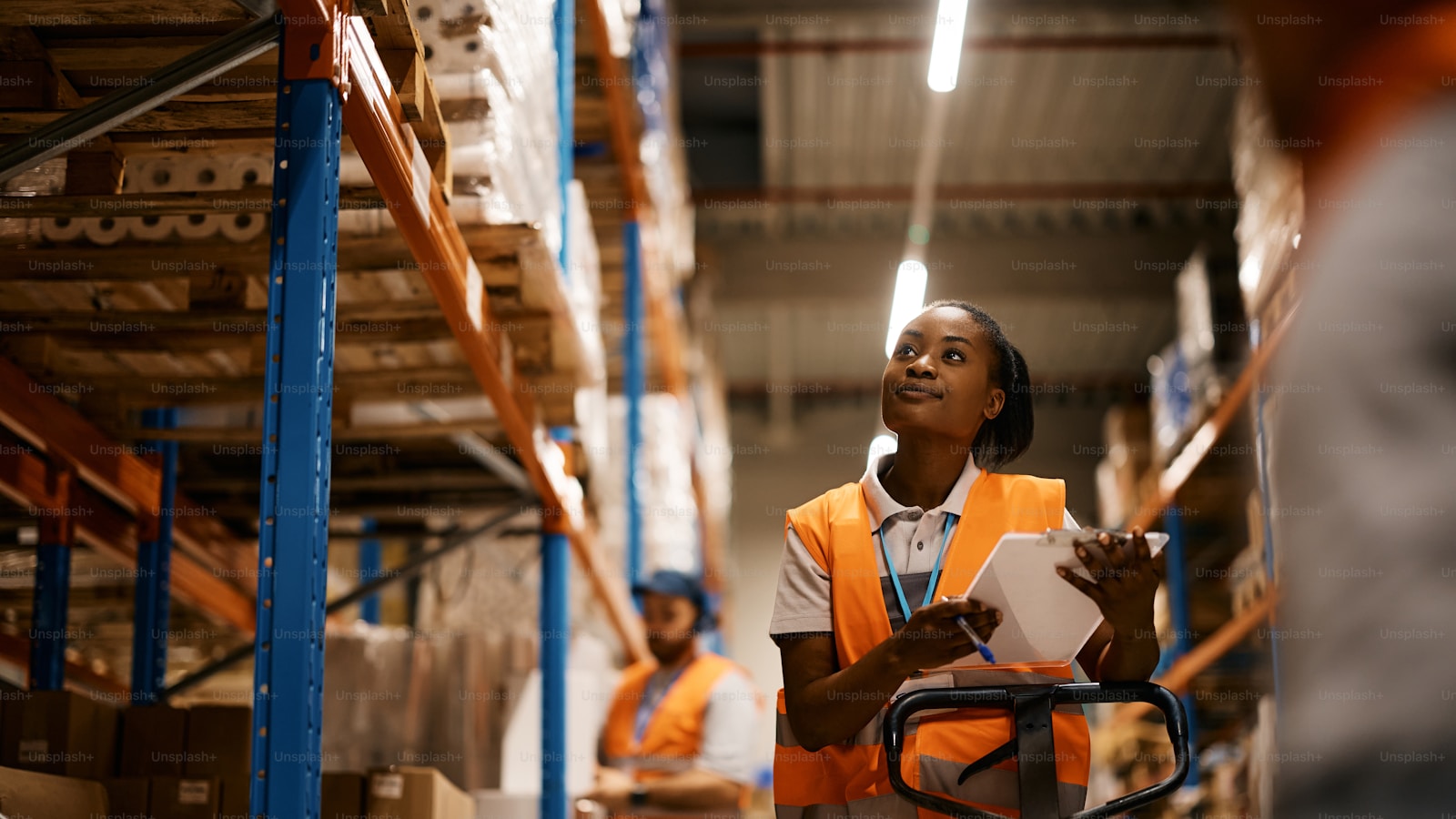
This is the wedge versus European warehouse guides: value today sits in the trip file — not in selling an AMR.
Document OCR / vision
What is real today: Read POD, packing slips, attachments, and Carta Porte fields on variable scans
What it is not: Replace fiscal judgment or stamping without SAT rules
Demand and ETA
What is real today: Delay / window models with GPS + appointment history
What it is not: Magic OTIF guarantee without dock discipline
Anomalies and exceptions
What is real today: Flag freights, accessorials, or routes off pattern
What it is not: Authorize payment without your team in accounts payable
Evidence quality
What is real today: Detect blurry photo, missing signature, illegible folio
What it is not: AGI that “understands” the whole business alone
Proof of delivery and document cross-check remain the bottleneck: POD convention · POD · Carta Porte · invoice triad.
When to use it (and when not)
The buying question is not “do we have AI?”. It is “is this pain perception at scale, or execution in portals?”.
| Use deep learning if… | Do not start with DL if… |
|---|---|
| Thousands of documents with different layouts | You have ~40 trips/month and clear rules |
| The signal lives in images or free text | The pain is “nobody operates the carrier portal” |
| You can label and measure per-field precision | There is no data owner or confidence threshold |
| Your team will handle low-score exceptions | You want the model to “decide” payment alone |
Operable checklist
Before you sign a deep learning project for the tower or accounts payable, close these points.
Elige un paso para ver el detalle
Detalle del paso · 01
Measurable pain
What OCL executes (DL ≠ agents)
OCL Cargo is an autonomous TMS: computer-use agents operate screens and portals, build the trip file, and can stamp invoice and Carta Porte when fiscal scope applies. Where deep learning enters, it helps perceive evidence; agents close repeatable work. Your team on exceptions.
Register
Trip and ID
Perceive
Docs and signals
Execute
Portals / match
Decide
Your team on exception
It coexists with your TMS or spreadsheet of record. Typical pilot 6–8 weeks on one corridor. When auditing 100% of the pilot flow, the published pattern is recovering 5–7% of spend (3PL case). System guide: what a TMS is.
Key takeaways5 points
- Deep learning is a subset of machine learning: networks with several hidden layers that learn representations from data.
- It is not magic or AGI: it needs data, compute, and validation; overfitting and black-box risk are real in operations.
- In Mexico–US freight today it helps with POD/document OCR-vision, demand/ETA signals, and anomaly detection — not “decide payment” alone.
- Deep learning perceives and predicts; agents that operate portals execute the trip. Different layers.
- OCL: autonomous TMS that coexists; 6–8 week pilot; 5–7% pattern when auditing 100% of the pilot flow.
Want to close the trip with a file — not only “AI” on a brochure?
Related reading
Frequently asked questions
It is a subset of machine learning that uses artificial neural networks with several hidden layers to learn patterns from data — images, text, time series — without hand-coding every rule.
No. All deep learning is machine learning, but not all machine learning is deep learning. Classic ML often relies on hand-designed features; deep learning learns internal representations when you have enough data and compute.
The input layer receives signals (pixels, tokens, sensors). Hidden layers transform those signals step by step. The output layer returns a prediction (class, number, sequence). Training adjusts weights to reduce error on labeled examples or defined objectives.
It is when the model memorizes the training set and fails on new data. In freight: an anomaly detector perfect on one carrier’s history can fail on another corridor. Mitigate with out-of-sample validation, regularization, and your team on exceptions.
No. Deep learning perceives and predicts (read a POD, estimate ETA). Computer-use agents operate screens and portals to close the trip. They complement each other: see AI operations copilot and RPA vs AI agents.
When you have few clean examples, stable fiscal rules (prefer a checklist), or must explain every decision to audit without a black box. Start with rules + simple ML; scale to deep learning only where the signal is visual, sequential, or high-volume.
OCL is an autonomous TMS: agents build the trip file, can stamp invoice and Carta Porte when fiscal scope applies, audit before pay, and escalate exceptions to your team. It coexists with your system of record. Typical pilot 6–8 weeks; pattern 5–7% when auditing 100% of the flow.