

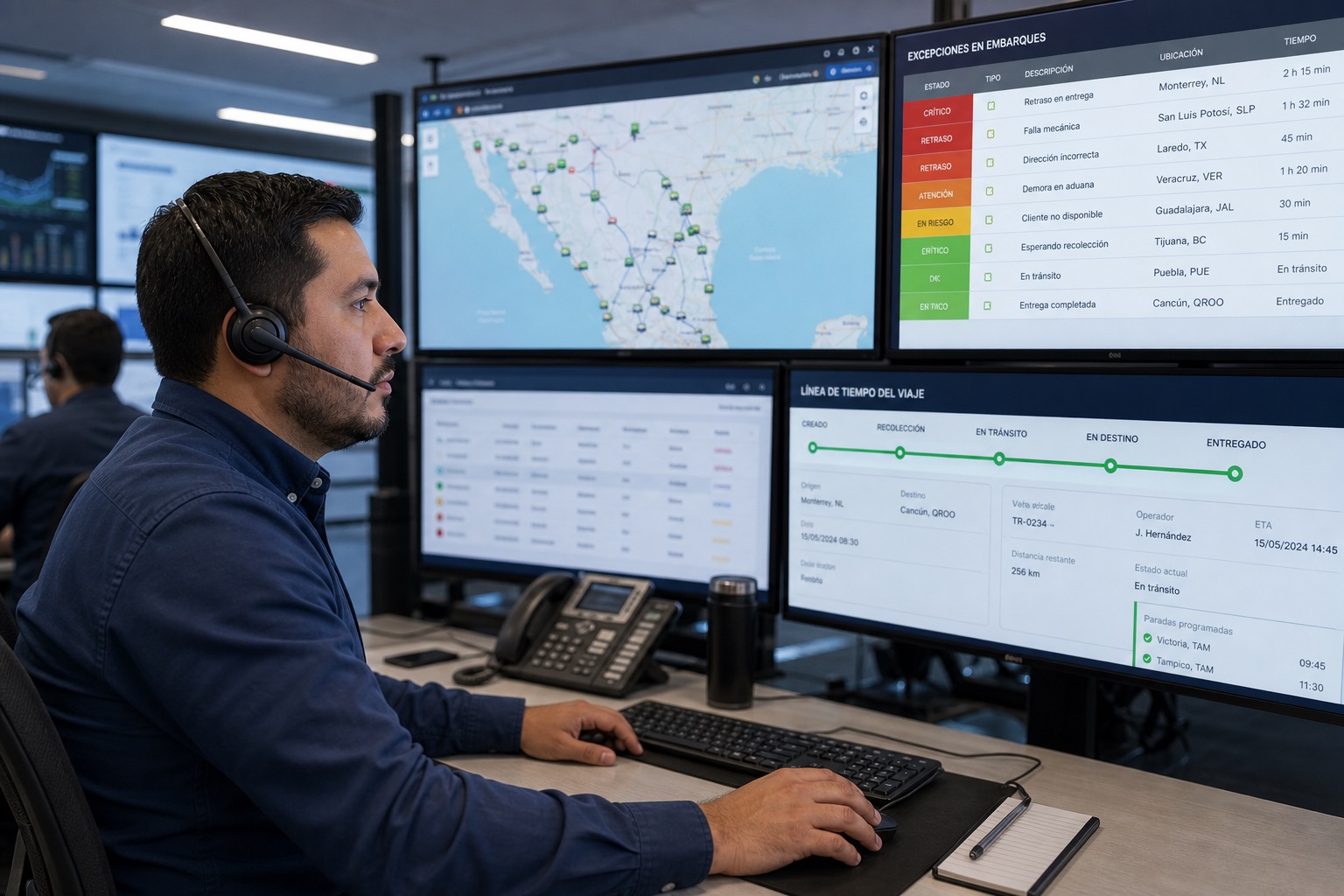
An AI operations copilot is an artificial-intelligence layer that connects to the systems you already use — TMS, ERP, GPS, portals — and helps your team work faster in natural language: ask for status, surface rules, and, when designed well, execute repeatable work without inventing another screen.
In manufacturing that “frontline” is usually the plant floor. On the Mexico–US corridor the freight frontline is different: tower coordinators, DCs, shipments, proof of delivery (POD), and accounts payable. There, the winning system class operates portals — it does not only chat about them.
- speed · decide · know · execute
- 4 modes
- answer vs close the trip
- Chat ≠ agent
- recovery when auditing 100% of the pilot
- 5–7%
- pilot on one corridor, no big-bang
- 6–8 wk
Cluster context: RPA vs AI agents · agents that operate the TMS · false digitization.
What an AI operations copilot is
In one sentence: an AI assistant embedded in the operational workflow. It understands natural-language questions, takes context from your systems, and returns an answer or an action — without requiring the user to be a developer.
What it is not: a generic chatbot disconnected from your operation; another dashboard license; or an automatic replacement for fiscal or payment judgment. The copilot speeds; your team decides with evidence.
Manufacturing vs freight tower: same word, different class
Many “manufacturing copilot” pages talk about operators, engineers, and MES. That narrative fits a plant. Copy it into a logistics control tower and you undershoot: the pain here is the Mexico–US trip, not a machine cycle.
Frontline
Plant / MES (typical): Operator, engineer, line
Mexico–US freight tower: Coordinator, tower, DC, accounts payable
Anchor system
Plant / MES (typical): MES, IoT, SOP
Mexico–US freight tower: TMS, GPS, portals, CFDI / Carta Porte
Measurable success
Plant / MES (typical): Downtime, quality, throughput
Mexico–US freight tower: OTIF, dock dwell, trip file, recovered cash
Critical evidence
Plant / MES (typical): SOP, lot, sensor
Mexico–US freight tower: Rate, CFDI, Carta Porte 3.1, GPS, POD
Useful AI class
Plant / MES (typical): Assistance in plant flow
Mexico–US freight tower: Agents that operate screens and portals
At OCL, “frontline” means the freight frontline: who assigns, tracks, disputes accessorials, and releases or holds payment. See also what a control tower is.
What it actually does (speed, decide, knowledge, autonomy)
Vendors group capabilities into four modes. In logistics each has a concrete example — and a limit.
Speed
What it does: Cuts capture and lookup friction
Freight example: “Where is trip 4821?” without five tabs
Decide (with your team)
What it does: Proposes a typed next step
Freight example: Hold invoice for CFDI vs rate mismatch
Knowledge
What it does: Surfaces rules and history
Freight example: Detention policy for customer X
Frontline autonomy
What it does: Executes repeatable portal work
Freight example: Assign, mirror GPS, attach POD, build trip file
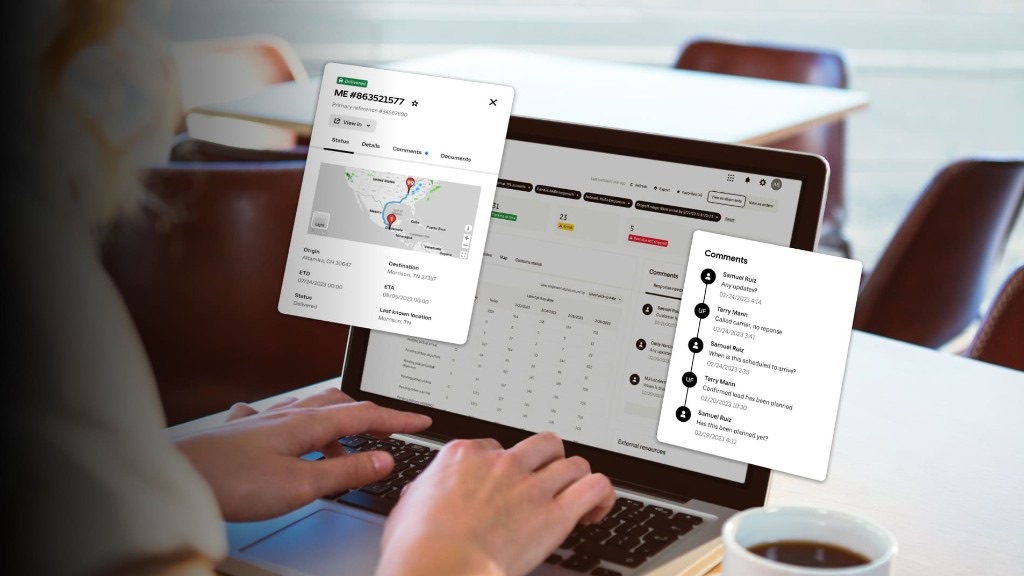
Autonomy does not mean “the AI signs the payment”. It means repeatable work — chasing status, matching documents, building the trip file — stops depending on a human bridge between screens. Your team stay on exceptions.
Chat vs agents that execute
This is the buying wedge. A pretty chat does not close OTIF or recover accessorials. An agent that operates screens and portals can — with rules, logs, and your team owner.
Only converses
- Summarizes email or dashboards
- Suggests text or a checklist
- Still needs someone to paste into the TMS
- Useful for training and lookup
Executes in systems
- Enters GPS and TMS portals like an operator
- Closes trip steps with evidence
- Escalates a typed exception (not a vague paragraph)
- Measures closed work, not chat tokens
Technical depth: agents that operate your TMS without a perfect API and the hub RPA vs agents.
Three signals of an operable copilot
A useful diagram is not a logo with slogans. It is an architecture test: natural language over what you already have, agents that execute, and your team who decide.
Freight frontline
OCL agents
Autonomous TMS
Natural language
Questions and orders over TMS, GPS, portals, and the trip file — no code.
Agents that execute
They operate screens and portals: assign, track, attach POD, and audit before pay.
Your team decides
AI speeds repeatable work; your tower and accounts payable close exceptions with evidence.
Privacy, adoption, and realistic expectations
The best industrial-copilot pages get trust right. In freight the checklist is the same — with the trip file as the unit of truth.
- Private data: per-customer isolation; fine control of which flows use AI; do not train third-party models on your rate, CFDI, or POD.
- Human adoption: if the tower does not trust the agent, it returns to WhatsApp. Start with one corridor and visible metrics (hours, exceptions, held MXN).
- Realistic expectations: AI speeds repeatable work; the rest are exceptions. “100% autonomous on day one” is usually marketing.
- No-hallucination policy: “I don’t know / missing evidence” must be a valid output. Your team decides payment, dispute, and exception.
How to evaluate a copilot (checklist)
Use this list in the demo. If the vendor only shows chat, you are measuring marketing — not operations.
Elige un paso para ver el detalle
Detalle del paso · 01
Real systems
What OCL executes on the freight frontline
OCL Cargo is an autonomous TMS with AI agents: it does not sell another screen to feed by hand. Agents operate screens and portals, build the trip file, and escalate exceptions. When fiscal scope applies, OCL can stamp invoice and Carta Porte.
Operable order
From chat to trip file
Record
TMS / ERP
Execute
Agents on portals
Trip file
Rate · CFDI · POD
Your team
Exceptions
In a typical 6–8 week pilot on one corridor, you measure tower hours and — when auditing 100% of the flow — the published recovery pattern is 5–7% of freight spend (reference: logistics operator case). Agent map: what freight agents OCL has.
Key takeaways5 points
- An AI operations copilot is a conversational assistance layer on existing systems — not another screen your team must feed by hand.
- In freight, “frontline” means tower, shipments, and accounts payable: value is closing the trip with evidence, not a plant chat.
- Chat answers; agents that operate screens and portals execute. Serious buyers measure closed work, not chat demos.
- Privacy, human adoption, and “your team decides” are not marketing: without a trip file and action log, AI hallucinates confidently.
- OCL: autonomous TMS that coexists; 6–8 week pilot; 5–7% pattern when auditing 100% of the pilot flow.
Want to see agents operating your flow — not only a chat?
Related reading
Frequently asked questions
It is an AI layer that sits on the systems you already use (TMS, ERP, GPS, portals) to speed operational work in natural language: look up status, suggest next steps, and — in the class that matters for freight — execute screen work under team rules.
The idea (AI near the work) yes. The system class no. Plants center on MES, SOPs, and machine downtime. Mexico–US freight centers on the trip, CFDI, Carta Porte, POD, OTIF, and accounts payable. You need agents that operate portals — not only a plant chat.
No. A chat answers or summarizes. An operable copilot also does work: assigns, tracks, attaches evidence, and escalates exceptions. Compare: RPA vs AI agents.
It should not. Healthy pattern: AI speeds capture and matching; your team (tower or accounts payable) decide hold, dispute, or release with a trip file. “I don’t know” with evidence beats a confident hallucination.
Not at the outset. OCL is an autonomous TMS: agents operate screens and portals, build the trip file, and can stamp invoice and Carta Porte when fiscal scope applies. It coexists with your system of record. Typical pilot 6–8 weeks; when auditing 100% of the flow, the published pattern is 5–7% recovery (3PL case).
Per-customer isolation, control of which flows use AI, an action log for the agent, and a clear policy not to train third-party models on your trip file. Without that, the copilot is operational risk — not acceleration.