

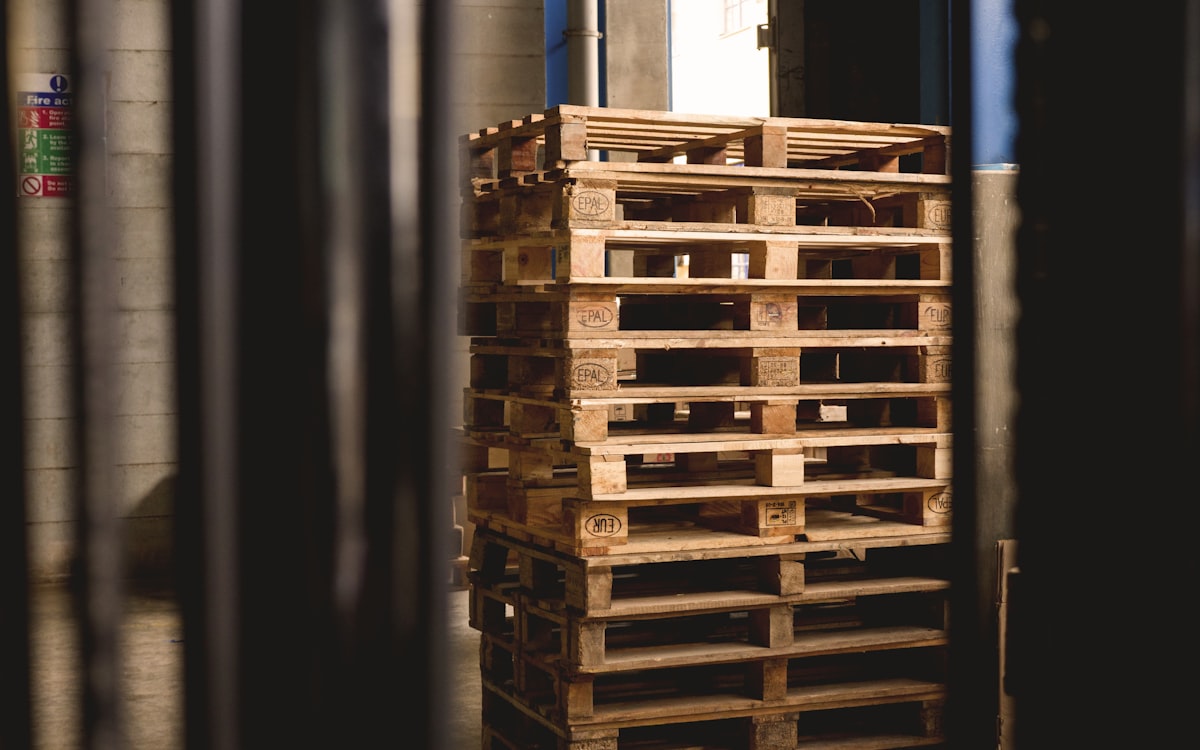
Packaging types in Mexico logistics read in three levels: primary (product contact), secondary (groups sell units), and tertiary (load unit: pallet, strap, container). Mix up the level and you pay the damage twice: at the DC (distribution center) and in the freight dispute.
European guides (Mecalux and peers) teach the pyramid with euro pallets and EU directives. Our wedge is operable for Mexico–US: empaque vs embalaje in LATAM, modular on 48×40″ GMA, wood under ISPM-15 / NOM-144, and damage evidence tied to the freight journey.
- primary · secondary · tertiary
- 3 levels
- GMA pallet (Mexico–US corridor)
- 48×40″
- empaque (sell) vs embalaje (logistics)
- 2 layers
- trip + POD when there is damage
- 1 ID
Cluster: POD · traceability · packing list · lean supply chain.
What packaging types are
On Mexico–US operations the useful question is not “which material do I buy?” but which level fails when there is a claim, retail chargeback, or DC rejection. An intact carton inside a crushed case is a secondary failure; a pallet with overhang and broken cases is tertiary / unitization.
OTIF (on time in full), POD (proof of delivery), and the TMS (transportation management system) only close the loop if tertiary packaging arrives countable. Without a stable load unit, the WMS (warehouse management system) receives garbage and the tower argues over WhatsApp photos.
Primary, secondary, and tertiary
Three layers, three typical owners. The diagram locks the hierarchy and where pain shows in receiving versus distribution.
Hierarchy
Product, primary, and secondary to tertiary
Primary
What it does: Contacts the product; sell unit
Mexico example: Carton, PET bottle, blister, pouch
Typical failure: Leak, broken seal, unreadable label
Secondary
What it does: Groups primaries; protects for shelf/picking
Mexico example: Corrugated case, multipack, display
Typical failure: Crush, miscount, moisture
Tertiary
What it does: Load unit to move and stack
Mexico example: GMA pallet, strap, stretch, container
Typical failure: Overhang, collapse, unmarked wood, shift
At DC receiving you count what the packing list and dock allow — cases and pallets. In distribution you design so that same layer survives vibration, stack, and border handling. See what a packing list is.
Empaque vs embalaje (LATAM)
In Mexico and LATAM Spanish the words cross. An operable split keeps marketing, the DC, and the carrier from arguing three different things under one name.
Empaque (sell focus)
- Near primary / sell unit
- Brand, label, shelf, e-commerce unit
- Typical owner: product / commercial
- Failure: customer cannot recognize or open
Embalaje (logistics focus)
- Secondary + tertiary: protect and move
- Stack, strap, pallet, container
- Typical owner: operations / DC / 3PL
- Failure: freight damage, dock reject, claim
On a Mexico–US LTL lane, polished e-commerce empaque can survive primary and fail at secondary: cartons that pop open at the carrier cross-dock drive damage claims even when the brand label is intact. The chargeback says “bad packaging”; at dispute table it is almost always tertiary embalaje: loose strap, GMA pallet overhang, or unit load without edge protectors.
Unitization (unit load on pallet or container) is where you decide whether product arrives sellable at the customer DC. A poorly unitized pallet rides fine on direct FTL and collapses on handoffs — damage shows on POD, not at the plant. Align with your 3PL which level (primary, secondary, tertiary) each OTIF and dock-reject SLA covers.
Materials (compact)
Material follows product and lane risk — not the supplier catalog. Short list for Monday decisions.
- Corrugated board: dominant secondary; calibrate ECT/burst and DC humidity.
- Rigid / flexible plastic: primary (PET, film) or tertiary (bins, stretch).
- Wood: pallets and crates; international moves need treatment and mark (ISPM-15 / NOM-144-SEMARNAT). Operational playbook, not a legal ruling.
- Metal / other: cages, drums, IBCs when the product or NOM requires it.
Hazmat: in Mexico the primary frame is the NOM-SCT / SICT family and what Carta Porte requires (UN number, packaging type). Do not take European ADR as the Mexico–US frame. Confirm with safety and tax counsel.
Selection factors
Choose level and material with a short matrix. If one factor is already failing, that is the project — not “improve packaging” in the abstract.
Product
Operable question: Fragile, liquid, perishable, hazmat?
Failure signal: Primary break or leak with secondary intact
Mode
Operable question: FTL, LTL, cross-dock, last mile?
Failure signal: Shift in LTL; stack collapse in the DC
Climate / humidity
Operable question: Open dock, rain, cold chain?
Failure signal: Soft board; unreadable label
Retail / DC
Operable question: Pallet, height, stretch rules?
Failure signal: Chargeback for overhang or label
Total cost
Operable question: Material + damage + dim weight + claim?
Failure signal: Cheap case, expensive claim
Compliance
Operable question: Wood, hazmat, labeling?
Failure signal: Hold at border or dock
Prioritize the factor already billing you: if 70% of claims are crush in LTL, climate matters less than board ECT and stack height. If the retail customer requires GMA pallets with no overhang, the “Retail / DC” factor beats saving five cents on stretch film.
On a border lane, add compliance (ISPM-15 wood, bilingual labeling) to total cost: a Laredo hold for untreated pallets costs more than an embalaje upgrade. In-transit damage that does not match POD plus photos usually signals the “Mode” factor (LTL vs FTL) does not fit the packaging level you chose.
Modular vs non-modular packaging
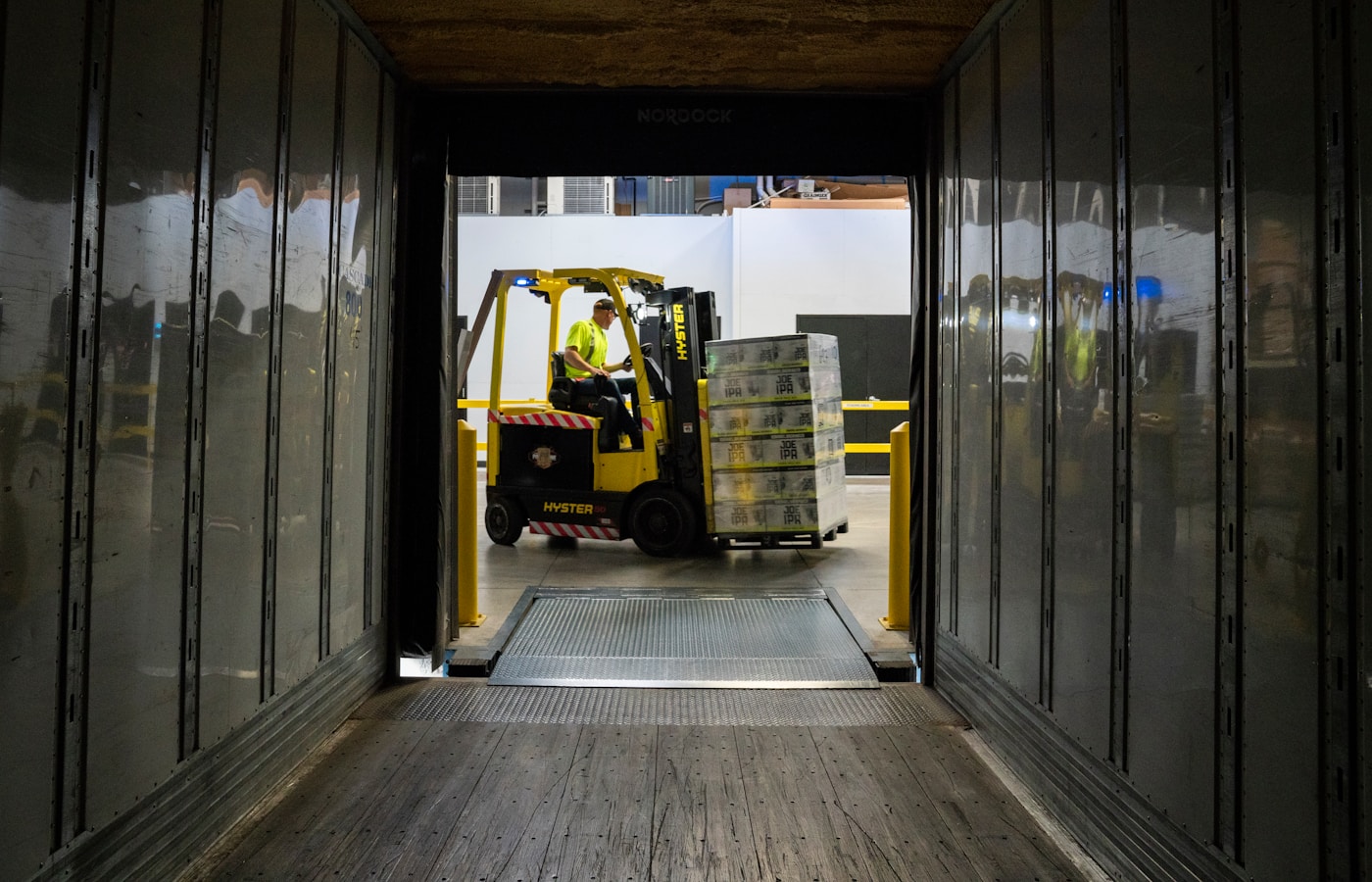
Modular is not “pretty in a render”: it is 2, 4, or 8 units covering the GMA 48×40″ pallet without overhang or voids that invite collapse. EU guides center the euro pallet; on Mexico–US lanes design on GMA first.
48×40″ stack
Non-modular vs modular (2 / 4 / 8) on a GMA pallet
Related to lean: less motion waste and less damage from re-stacking. See lean supply chain in Mexico. If empty space is your pain, industry narratives (including Forbes-style empty-space pieces) are a hypothesis — calibrate with your cost per trip and claims; do not use an invented %.
Errors and damage on Mexico–US freight
Damage is disputed by level. Without photo, count, and POD tied to the trip ID, accounts payable pays blind or holds for weeks.
Primary
Symptom: Leak / broken seal / unusable unit
Minimum evidence: Photo + lot/SKU + packing list
Who acts: Quality + supplier
Secondary
Symptom: Crushed case, open multipack
Minimum evidence: DC count + layer photo
Who acts: DC + shipper
Tertiary
Symptom: Overhang, broken pallet, load shift
Minimum evidence: POD + dock photos + trip ID
Who acts: Tower + carrier + accounts payable
Documentary
Symptom: Real damage without a usable file
Minimum evidence: Rate · GPS · POD under one ID
Who acts: Accounts payable + tower
Go deeper in proof of delivery (POD), traceability, and root cause analysis (RCA) when the pattern repeats corridor after corridor.
Operable checklist
Use this list on one pilot shipment. If an item fails, that is the first packaging project — not a full catalog redesign.
Elige un paso para ver el detalle
Detalle del paso · 01
Levels named
Item 1
What OCL executes when packaging fails
OCL Cargo is an autonomous TMS with agents (computer use: they operate screens and portals). It does not replace case design on day one: it concentrates trip evidence so damage does not become a WhatsApp narrative.
When there is damage
From dock to trip file
Capture POD
Photo and count
Tie the ID
One trip
Cross docs
Rate and evidence
Team exception
Tower or pay
Dispute or pay
With the file
RCA pattern
If it repeats
Coexists with your WMS and system-of-record TMS. Your team on exceptions. If the pain is documentary, the hub is the freight journey; if it is a repeating cause, RCA.
Key takeaways5 points
- Three levels: primary (contact/sell), secondary (groups), tertiary (load unit).
- In LATAM: empaque ≈ sell unit; embalaje ≈ logistics protection — align the glossary with DC and customer.
- Modular on Mexico–US lanes is designed on GMA 48×40″ (2/4/8), not euro-only.
- International wood: ISPM-15 / NOM-144; hazmat: NOM-SCT/SICT + Carta Porte — not ADR as the MX frame.
- Damage without usable POD and trip ID is a blind dispute; OCL builds the file (5–7% pattern / 6–8 week pilot).
Does damage arrive without a trip file?
Related reading
Frequently asked questions
Primary contacts the product (bottle, carton, blister). Secondary groups sell units (corrugated case, multipack). Tertiary forms the load unit to move: pallet, strap, stretch film, container. On Mexico–US lanes, tertiary is what most often fails in freight and the DC.
In LATAM Spanish they overlap. Operable split: empaque ≈ primary / sell unit; embalaje ≈ protection and logistics (secondary + tertiary). If your customer says one word and your DC another, align the glossary before disputing a chargeback.
Sizing cases or trays so 2, 4, or 8 cover the pallet without overhang or large voids. On Mexico–US corridors the useful frame is the GMA 48×40″ pallet, not only the euro pallet from European guides.
For wood in international trade: ISPM-15 (NIMF-15) requires treatment and mark; in Mexico the operable reference is NOM-144-SEMARNAT (authorized treatment + mark). Not legal advice: confirm with compliance and the carrier at crossing.
No. In Mexico the primary frame is the NOM-SCT / SICT family plus what Carta Porte requires (UN, packaging type). Do not use European ADR as the main Mexico–US frame. Not a ruling: validate with safety and tax/ops counsel.
Industry narratives (including Forbes-style empty-space pieces) argue that air and overhang drive damage, dimensional weight, and chargebacks. Calibrate on your lane — we do not invent a universal %. Measure claims, OTIF, and cost per trip.
OCL does not redesign your case on day one. Agents build the trip file (rate, evidence, POD) so accounts payable and the tower can defend or dispute the claim. When auditing 100% of the pilot, the recovery pattern is 5–7%; typical pilot 6–8 weeks on one corridor.