

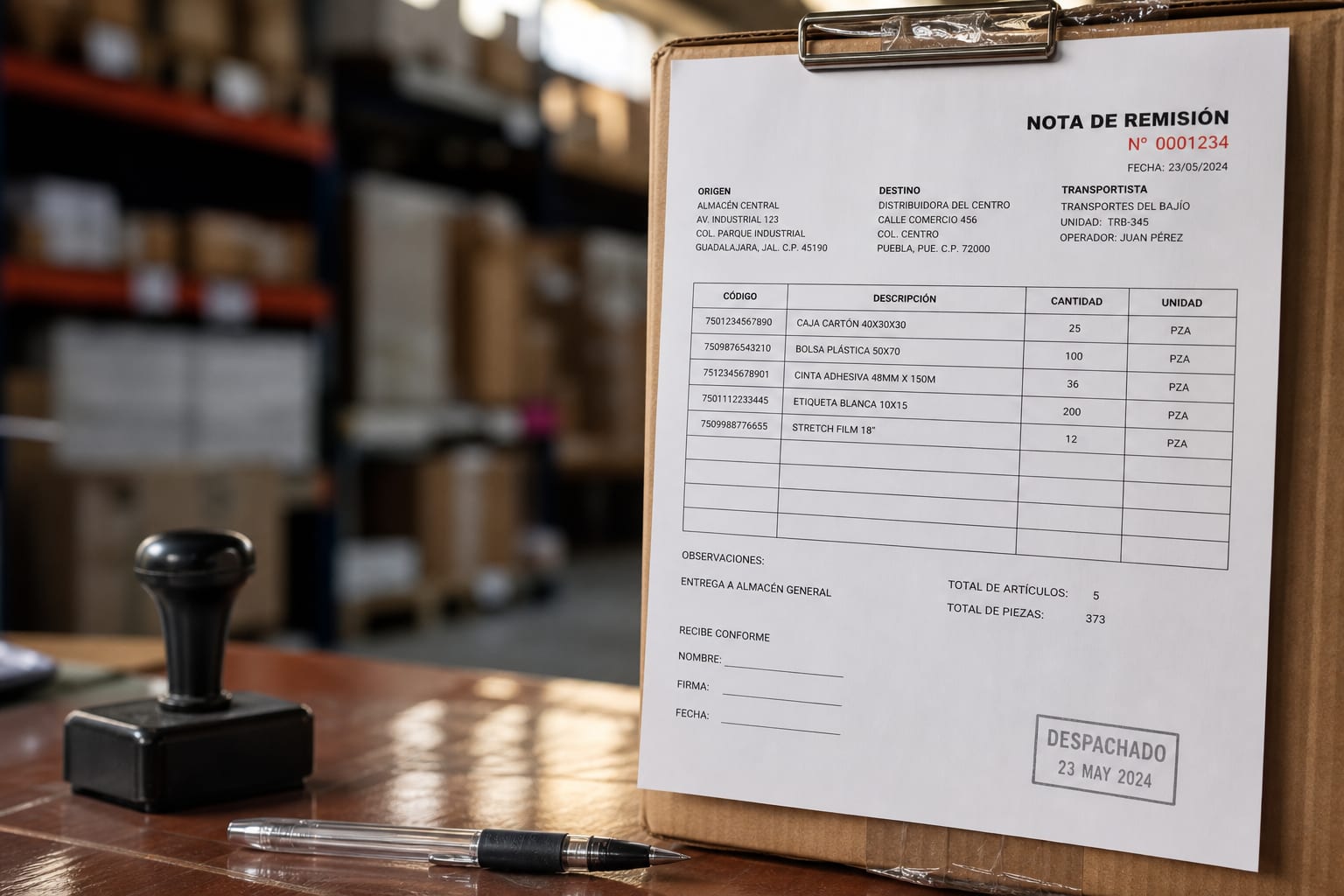
Definition
A packing list is the commercial-operational document that lists the physical contents of a shipment: quantities, description by package or SKU, gross and net weights, dimensions, marks and, when applicable, lot or serial numbers. It complements the commercial invoice (value) with evidence of how the goods are packed.
If the invoice says 40 cartons and the packing list says 36, the problem did not start at customs — it started in the file.
What it means in practice
On Mexico import/export, the packing list travels with the commercial invoice and the transport document (B/L, AWB, or Carta Porte). Customs brokers and warehouses use it to count, classify, and match.
It is not a stamped tax document. It is operational evidence: if the packing list lies, the pedimento and DC receipt inherit the error.
Why it matters (roles)
Each role reads the packing list for a different reason.
| Role | How they use it | If missing or wrong |
|---|---|---|
| Trade / customs | Match packages, weights, description | Clearance delay and observations |
| Warehouse / receiving | Plan dock, putaway, and count | Partial reject or shortage claim |
| Carrier | Stowage, weight, package liability | Damage/shortage dispute with no baseline |
| AP / claims | Shortage baseline vs invoice | No way to defend OTIF or a claim |
Minimum fields
A usable Mexico-corridor packing list includes:
| Field | What it should say | Why it matters |
|---|---|---|
| Shipment reference | PO, invoice #, booking, or internal ID | Ties documents for the same trip |
| Lines / packages | SKU or description + qty per carton/pallet | Count at customs and DC |
| Weights | Gross and net per line or total | Match vs B/L/AWB and pedimento |
| Dimensions / volume | cm or m³ when LCL/air applies | Cost and stowage |
| Marks and numbers | Shipping marks, lots, serials | Traceability and recall |
| Totals | Pieces, weight, volume for the shipment | Documentary close |
What it is not
Do not confuse packing with value or delivery.
Packing list
- Physical contents
- Weights and packages
- Marks / lots
Commercial invoice
- Value and Incoterm
- Parties and currency
- Duty basis
1.Not POD
POD proves delivery; packing describes what should have moved.
2.Not pedimento
The pedimento is the customs declaration; packing feeds physical data.
3.Not a magic ASN
An electronic ASN helps, but if it disagrees with physical packing, the DC still rejects.
Mexico and foreign trade
A typical Mexico import set includes commercial invoice + packing list + transport document + pedimento (and certificate of origin when seeking USMCA/other preference).
In nearshoring and retail, packing with lots/serials also supports recalls and origin audits.
Related: shipment · certificate of origin · Incoterms®.
Checklist before dispatch
Count packages
vs invoice
Weights
vs B/L or AWB
Marks
Visible on carton
File
Same trip ID
Common mistakes
1.Generic “1 lot” packing
Without package breakdown, customs and the DC cannot verify.
2.Invented weights
The carrier weighs differently and a claim or surcharge appears.
3.No marks
Cartons arrive with no shipping marks and nobody knows which PO they belong to.
4.Stale versions
Goods shipped on packing v2 while the broker received v1.
Relation to the document set
The packing list connects value, transport, and customs.
OCL and the file
OCL helps require a packing list per shipment ID and flag piece/weight mismatches against invoice and transport docs. It does not replace the customs broker or WMS.
Sources and further reading
- Hub: what is a shipment.
- Siblings: commercial invoice · B/L · pedimento.
Key takeaways5 points
- A packing list details pieces, weights, dimensions, and marks for what travels on the shipment.
- It bridges the commercial invoice (value) and the physical reality customs, warehouse, and carrier see.
- Packing ↔ invoice ↔ B/L/AWB mismatches drive a large share of documentary customs delays.
- It does not replace the pedimento or POD; it feeds both with defensible physical data.
- OCL does not invent the packing list: it helps file it on the shipment ID and flag piece/weight mismatches.
Does your packing list live outside the shipment ID?
Frequently asked questions
It is the document that details the physical contents of a shipment: quantities, weights, dimensions, marks and, when applicable, lots or serials. It complements the commercial invoice, which sets value.
In Mexico foreign trade it is usually required in practice for clearance and import/export, even though it is not a CFDI. Without it, customs and the warehouse operate blind.
The invoice sets value, parties, and Incoterm. The packing list describes how the goods are packed and counted.
Yes on piece/weight totals. If not, fix it before presenting to customs or paying freight.
No. Delivery closes with POD. Packing says what should have moved.
It can help capture and match them in the file. Content is defined by your operation/supplier.