

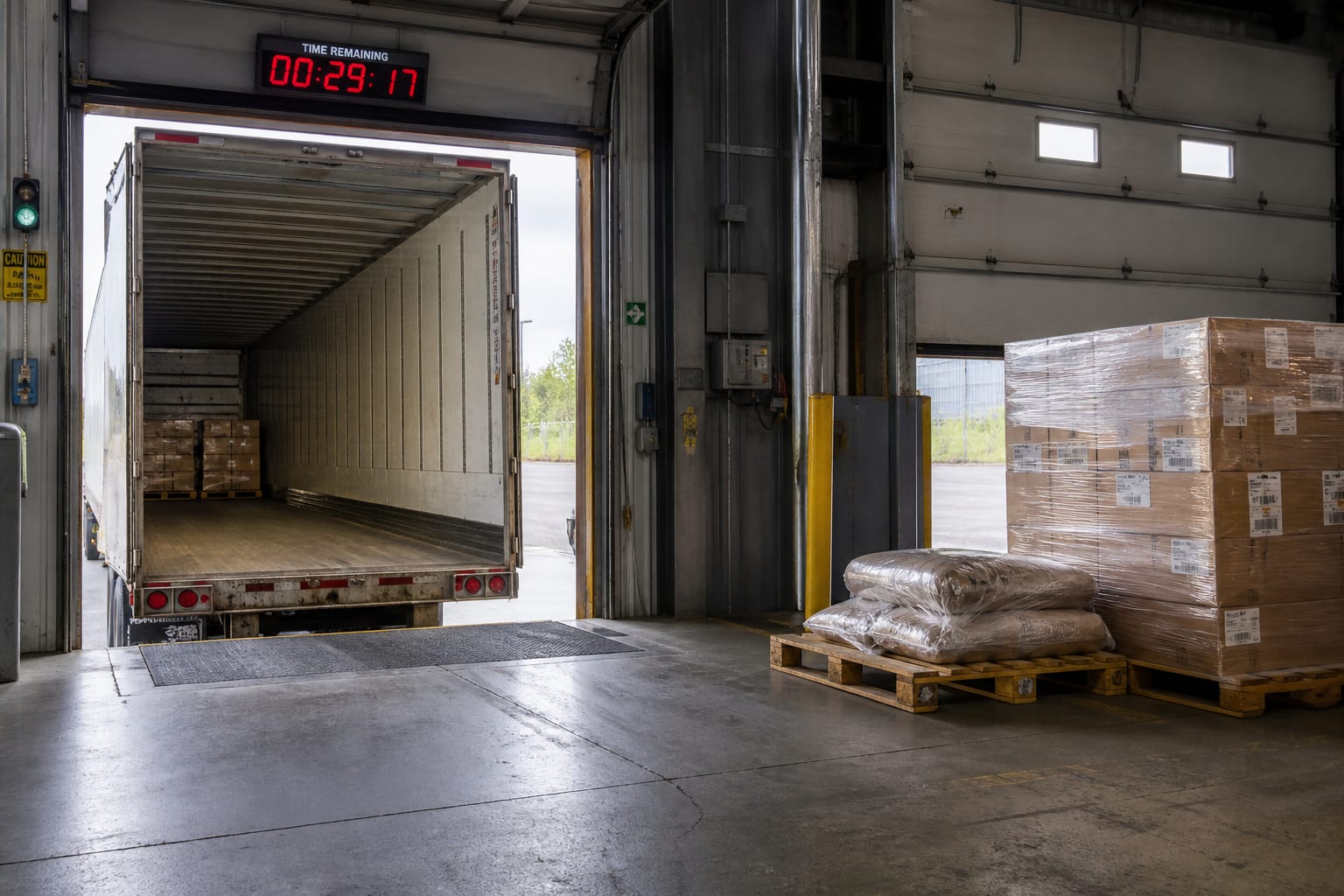
Definition
Just in time (JIT) is a supply strategy that aims to receive or deliver when needed, minimizing buffer inventory and requiring reliable lead times, clear windows, and high OTIF.
If you promise JIT and your route plan does not fit driver hours, you are not lean — you are optimistic with someone else’s inventory.
Related: OTIF · safety stock · stockout.
What it means in practice
JIT cuts inventory by increasing delivery frequency and punctuality. It does not erase uncertainty: it moves it into transport and planning.
When freight fails, the “inventory savings” show up as a stopped line, expedited freight, and customers without product.
Why it matters by role
| Role | What they gain | JIT done badly |
|---|---|---|
| Planning / inventory | Less capital on the shelf | Frequent stockouts |
| Traffic / operations | Clear hard windows | Impossible appointments |
| Shipper / plant | Stable flow | Stops and expedites |
| Freight procurement | Reliable capacity | Cheap rate that cannot perform |
Minimum requirements before signing JIT
| Requirement | Question | Note |
|---|---|---|
| Historical OTIF | Do you hit the window today? | By route |
| Visibility | ETA and exception on time? | TMS |
| Safety stock | Calibrated residual buffer? | Not blind zero |
| Dock appointments | Real capacity? | Plant/DC |
| Plan B | Backup carrier? | Same window |
How to run JIT without burning OTIF (5 steps)
Measure current OTIF
No makeup
Calibrate the buffer
Safety stock
Set windows
Realistic by corridor
Live visibility
ETA and alerts
Weekly review
Stockouts and expedites
Expensive mistakes
1.Zero inventory without data
You turn freight variability into stockouts.
2.Windows tighter than real lead time
The plan looks pretty and the plant waits for the truck.
3.One “hero” carrier
Any failure stops the line.
4.Ignoring the border and the appointment
On Mexico–US lanes, idle time does not fit textbook JIT.
OCL and the trip file
OCL provides ETA, exceptions, and delivery evidence to support JIT windows in the trip file. It does not set your inventory policy. OCL can stamp invoices and Carta Porte.
Sources and further reading
Key takeaways5 points
- Just in time (JIT) = arrive with material or product when it is needed, with little buffer inventory and high lead-time reliability and On Time In Full (OTIF).
- JIT without OTIF or visibility is a stockout dressed as “lean”: the residual buffer is calibrated safety stock, not magical zero.
- In Mexico, borders, dock appointments, and freight variability demand real windows — do not sign JIT if quoting still lives in chat.
- The transportation management system (TMS) must show estimated time of arrival (ETA), exceptions, and proof of delivery (POD) before you empty the warehouse.
- OCL provides trip evidence to support JIT windows. It does not rewrite your inventory policy. OCL can stamp invoices and Carta Porte.
Does your JIT have OTIF — or only fewer boxes on the shelf?
Frequently asked questions
A strategy to receive or deliver when needed, with little buffer inventory and high lead-time and OTIF reliability.
No. It means less buffer and more discipline; calibrated safety stock usually remains.
When route OTIF is unstable, visibility is missing, or dock/border appointments are unreliable.
OTIF, stockouts, expedited freight, and door-to-door cycle time.
Kanban is a replenishment signal method; JIT is the timing goal. They can coexist.
It gives trip evidence and exceptions so you do not empty inventory blind.