

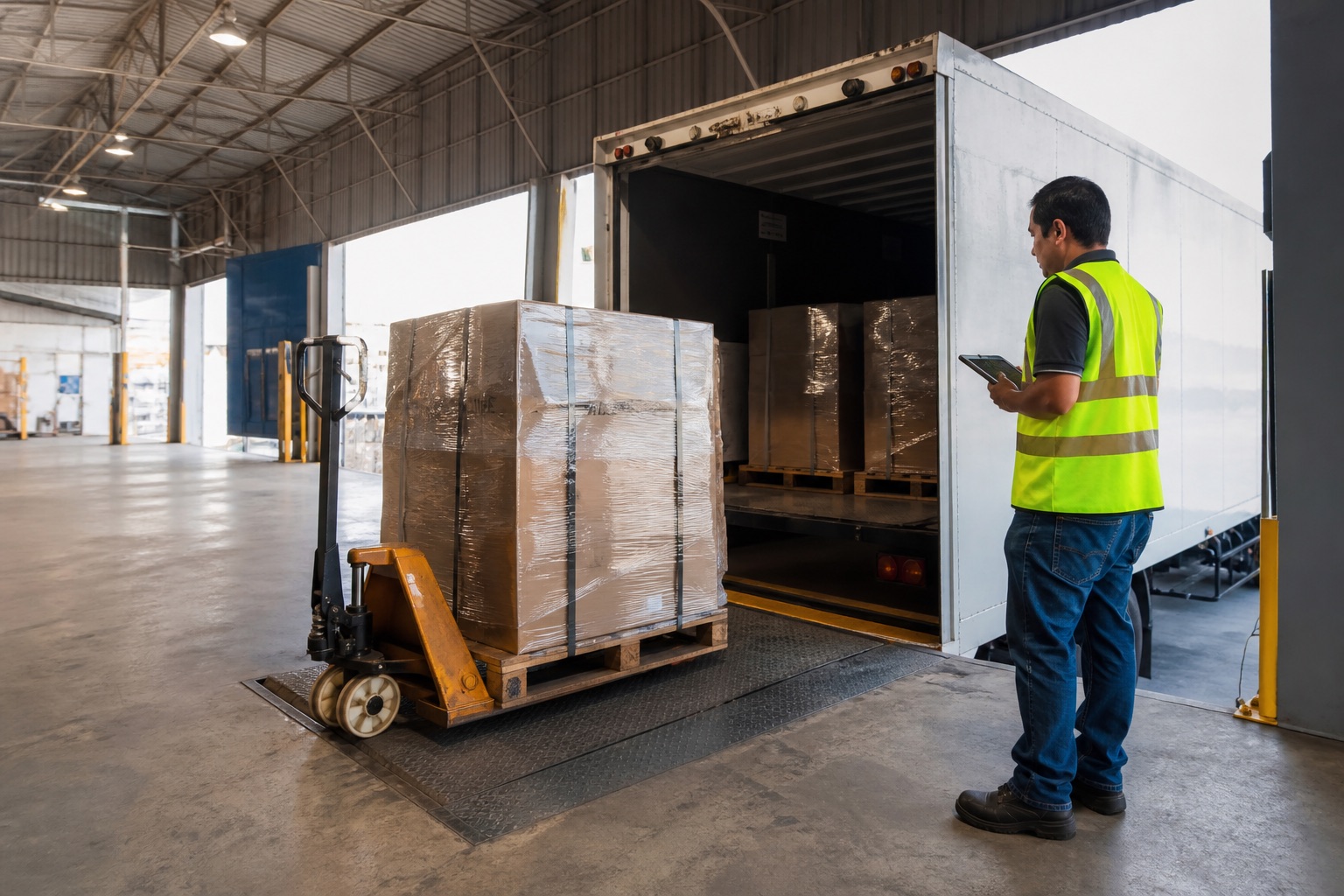
A logistics chain is the physical flow that takes materials and finished goods from origin to customer: inbound supply, production, distribution center (DC / CEDIS), freight, and delivery — with the evidence package that makes each link auditable. On the Mexico–U.S. corridor, “moving boxes” is not enough: you need a trip file that survives accounts payable.
Thin retail guides often list stages in three minutes, blur logistics with supply chain, then push outsourced fulfillment. This guide locks an operable definition for shippers: physical execution, where freight lives, and how the close breaks.
- inbound, …, and freight to delivery
- 5 links
- execution · not planning-only
- ≠ SCM
- MX road tax/doc anchor
- CFDI+CP
- pattern at 100% audit
- 5–7%
Cluster: supply chain · shipment · distribution costs · POD.
What a logistics chain is
In Mexican operations, the logistics chain names the execution system that moves and stores goods: inbound suppliers, plant, DC, carriers, and delivery points. Logistics is the discipline; the logistics chain is the concrete path where each link leaves a trail.
Operable goal: the right product, at the right place and window, with cost and evidence accounts payable can defend. Without that, “chain” is a whiteboard diagram.
Logistics chain vs supply chain
Competitors and marketplaces often treat both terms as synonyms. In an RFP or control tower, the mix-up costs money: you buy a planning engine while cash leaks in freight and the trip file.
Question it answers
Logistics chain: How does product move and get stored?
Supply chain: What to buy, how much to make, whom to coordinate with?
Scope
Logistics chain: Physical flow: warehouse, transport, delivery, reverse
Supply chain: Full network: demand, sourcing, production, info, and money
Focus
Logistics chain: Operational / execution
Supply chain: Strategic + tactical (SCM)
Typical objects
Logistics chain: Shipment, DC, freight, POD
Supply chain: Forecast, suppliers, contracts, network inventory
Close KPI
Logistics chain: OTD, cost per delivery, complete trip file
Supply chain: Network OTIF, fill rate, total cost to serve
Typical error
Logistics chain: Thinking “the truck left” = link closed
Supply chain: Thinking a demand plan fixes WhatsApp in the yard
Network depth and nearshoring: glossary what is a supply chain. This page is the execution anchor.
Stages of the physical flow
A five-link map is enough to align DC, traffic, and accounts payable. Each stage needs an owner and minimum evidence · without that, the next link invents the truth.
Inbound supply
What happens: Materials / product in
Minimum evidence: Receipt · discrepancy · hold
Typical break: “Available” balance that cannot release
Production
What happens: Transform / prepare
Minimum evidence: Order · lot · quality release
Typical break: SKU ready in ERP, not on the dock
DC / warehouse
What happens: Store, pick, consolidate
Minimum evidence: Inventory · pick · load
Typical break: Wrong pick · no appointment
Freight
What happens: Tender, trip, monitor
Minimum evidence: Trip ID · rate · GPS milestones
Typical break: WhatsApp as the TMS
Delivery
What happens: Unload and close
Minimum evidence: POD · exceptions
Typical break: Paying without proof of delivery
Forward flow
From inbound to delivery
Inbound
Receive · release
Produce
Transform · lot
DC
Store · pick
Freight
Tender · haul
Deliver
POD · close
Forward, reverse, and distribution chain
Three labels show up in RFPs and decks. Naming them keeps reverse logistics from being treated as an informal favor with no budget.
Forward
Direction: Origin–customer
What it includes: Inbound · plant · DC · freight · delivery
When to use it: Primary service flow
Reverse
Direction: Customer–origin / scrap
What it includes: Returns · pickups · disposal
When to use it: Warranties, retail returns, recalls
Distribution chain
Direction: Outbound to market
What it includes: DC · routing · last mile / B2B
When to use it: When the focus is cost-to-serve
Reverse is not “free”: re-deliveries, inspection, and shrink feed distribution cost. Give it the same trip-ID and POD rigor.
Freight, TMS, and the trip file
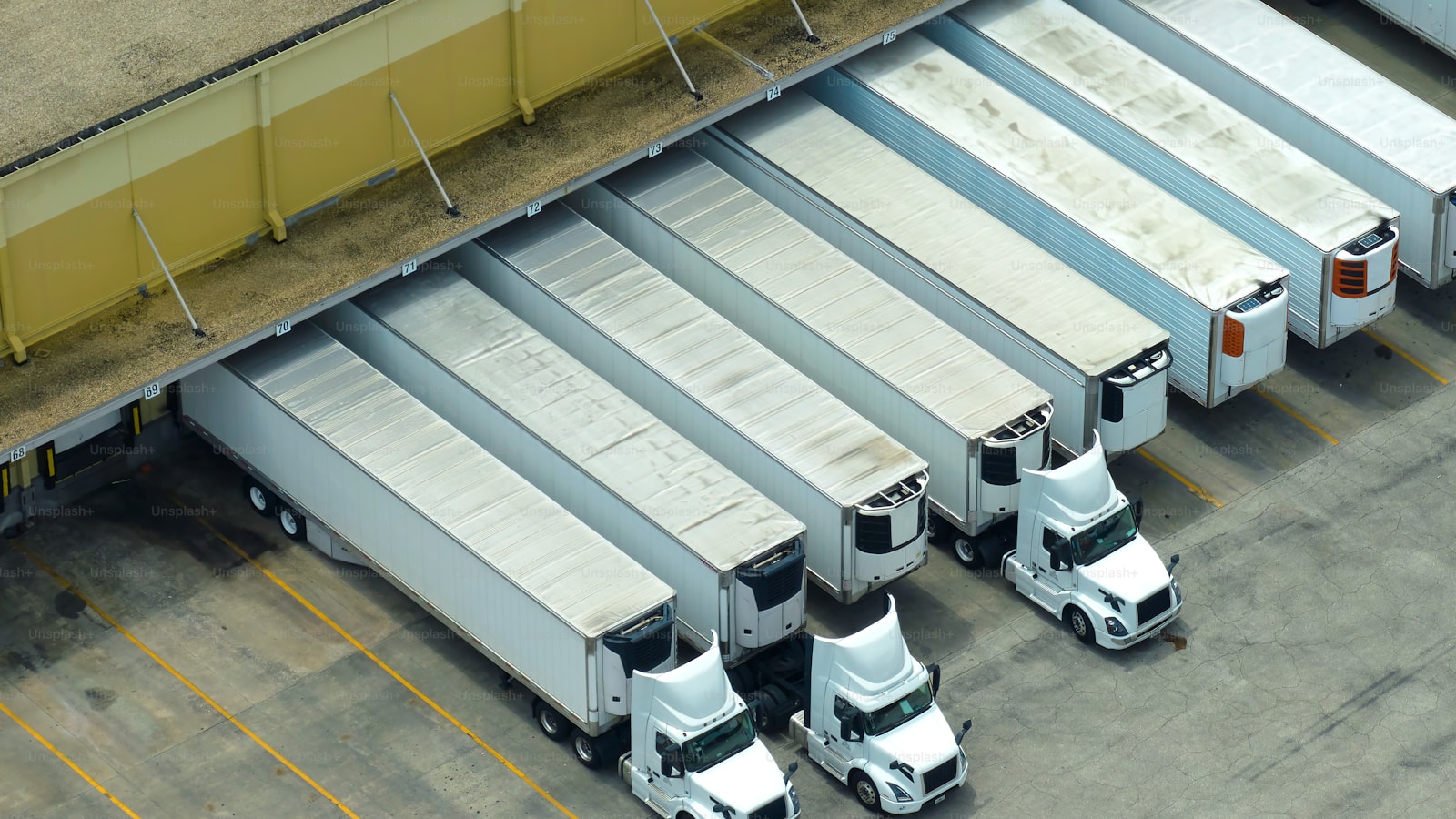
This is where OCL separates from a thin retail tutorial: freight is the execution spine between DC and destination. A TMS should govern tender, rate, milestones, and exceptions · not a WhatsApp thread.
Stages + fulfillment
- Focus on parcel and shopper promise
- Outsourced fulfillment as shortcut
- “Shipped” = portal status
- Little CFDI / Carta Porte traction
Operable logistics chain
- Focus on trip + auditable file
- Tender, monitor, and POD to pay
- CFDI, Carta Porte, accessorials with trail
- OTD and pre-pay in AP
The trip file closes the last links: it binds trip ID, tax docs, GPS, and POD. Without that close, the chain “ends” in a loose PDF. See freight tendering and logistics monitoring.
Mexico–U.S. corridor: documents and KPIs
On this corridor the transport link does not close with a parcel label. It closes with tax documents and proof of delivery that survive audit.
CFDI + Carta Porte
What it binds: Mexican road haul (when required)
Link it saves: Freight / fiscal
If missing: Non-deductible trip / yard hold
What it binds: Actual delivery and exceptions
Link it saves: Delivery–pay
If missing: Dispute and blind payment
What it binds: Promised window vs arrival
Link it saves: Customer service / DC
If missing: OTD painted with chat ETA
Customs entry
What it binds: MX–U.S. crossing by flow
Link it saves: Cross-border
If missing: Unit at the border without papers
Calibrate current rules with SAT / DOF and your tax advisor. An ops playbook is not a legal opinion. For inventory releasable to a trip, cross with what inventory is.
Where the chain breaks
Expensive breaks rarely sit in the five-box diagram. They sit in evidence nobody owns between DC, tower, and accounts payable.
WhatsApp as the system
Symptom: ETA and “it left” in chat
What you lose: Auditable trail
Antidote: Trip ID + TMS milestones
Ownerless ETA
Symptom: Estimated time nobody confirms
What you lose: Real OTD
Antidote: Monitoring with evidence
No POD
Symptom: Trip closed by habit
What you lose: Defense in accounts payable
Antidote: POD required before pay
Orphan accessorials
Symptom: Detention / handling with no trail
What you lose: Pesos in distribution
Antidote: Rate + evidence bound together
Late CFDI / Carta Porte
Symptom: Stamp after paying
What you lose: Compliance and invoice–trip match
Antidote: Trip file before payment
Operable logistics-chain checklist
Use it Monday with traffic and accounts payable. If a row fails, that link still lives outside the chain.
Elige un paso para ver el detalle
Detalle del paso · 01
Owner per link
OCL and closing the last links
OCL Cargo is an autonomous TMS with AI agents (computer use: the agent operates screens like a control-tower operator). It does not replace your TMS on day one and it is not marketplace fulfillment: it closes the trip file once goods are moving · coexisting with your systems.
Close with agents
From trip to pay
Capture
Milestones · docs
Match
Rate · CFDI
Audit
POD · exceptions
Pay
Clean pre-pay
Published pattern at 100% spend audit: typical recovery 5–7%. Operable pilot in 6–8 weeks. Cost reference when it fits: about MXN $50 per shipment. OCL can stamp invoice and Carta Porte. Who decides exceptions? Your team.
Related reading
- Supply chain · network and planning (sibling of this page)
- What logistics is · 7 Rs and components
- What a shipment is · modes and documents
- Distribution costs · leaks and cost-to-serve
- Logistics monitoring · visibility through accounts payable
- POD · OTD · tendering · inventory
- Fake freight digitization · why the human bridge does not close the chain
Key takeaways5 points
- Logistics chain = physical flow (inbound, production, DC, freight, and delivery) + auditable evidence.
- Not a synonym for supply chain: that is planning and network; this is execution.
- Freight and the trip file close the last links · without POD and CFDI/Carta Porte, accounts payable pays a PDF.
- WhatsApp as the clock of record, ownerless ETAs, and orphan accessorials break OTD and distribution cost.
- OCL closes the trip with agents · 5–7% at 100% audit · 6–8 week pilot · ~MXN $50 · Your team on exceptions.
Book a logistics-chain diagnostic
FAQ
It is the physical flow that moves materials and finished goods: inbound supply, production, distribution center (DC / CEDIS), freight, and delivery — plus the evidence that makes each link auditable. It is not the same as the supply chain, which adds planning, sourcing, and network relationships.
No. The supply chain is the broad system (demand, suppliers, production, money, and information). The logistics chain is physical execution inside that system: move, store, and deliver. Mixing them in an RFP often buys planning software when the real pain is freight and the trip file.
On the Mexico–U.S. corridor a usable map is: inbound supply, production, and DC / warehouse, freight (tender and trip), and delivery with proof of delivery (POD). Reverse logistics (returns) closes the loop when it applies.
The return flow: returns, pickups, recycling, or disposal. It has its own cost (re-delivery, inspection, shrink) and needs the same documentary rigor as forward flow. See also returns logistics.
Freight is the service (and price) that connects the DC to the destination. A transportation management system (TMS) should govern tender, route, milestones, and rate. Without a closed trip file (trip + docs + POD), the last links live in WhatsApp and break on-time delivery (OTD) and accounts payable.
On Mexican road legs: the digital tax invoice (CFDI) with Carta Porte when the move requires it, plus POD. Cross-border adds customs paperwork by flow. Without that package, the delivery link does not close for audit.
Not on day one. OCL is an autonomous TMS with AI agents (computer use: the agent operates screens like a control-tower operator). It coexists with your TMS: closes the trip file, POD, and pre-pay audit. OCL can stamp (timbrar) invoice and Carta Porte. Who decides exceptions? Your team. Typical pilot 6–8 weeks · 5–7% pattern at 100% audit · ~MXN $50 per shipment when it fits.