

Definition
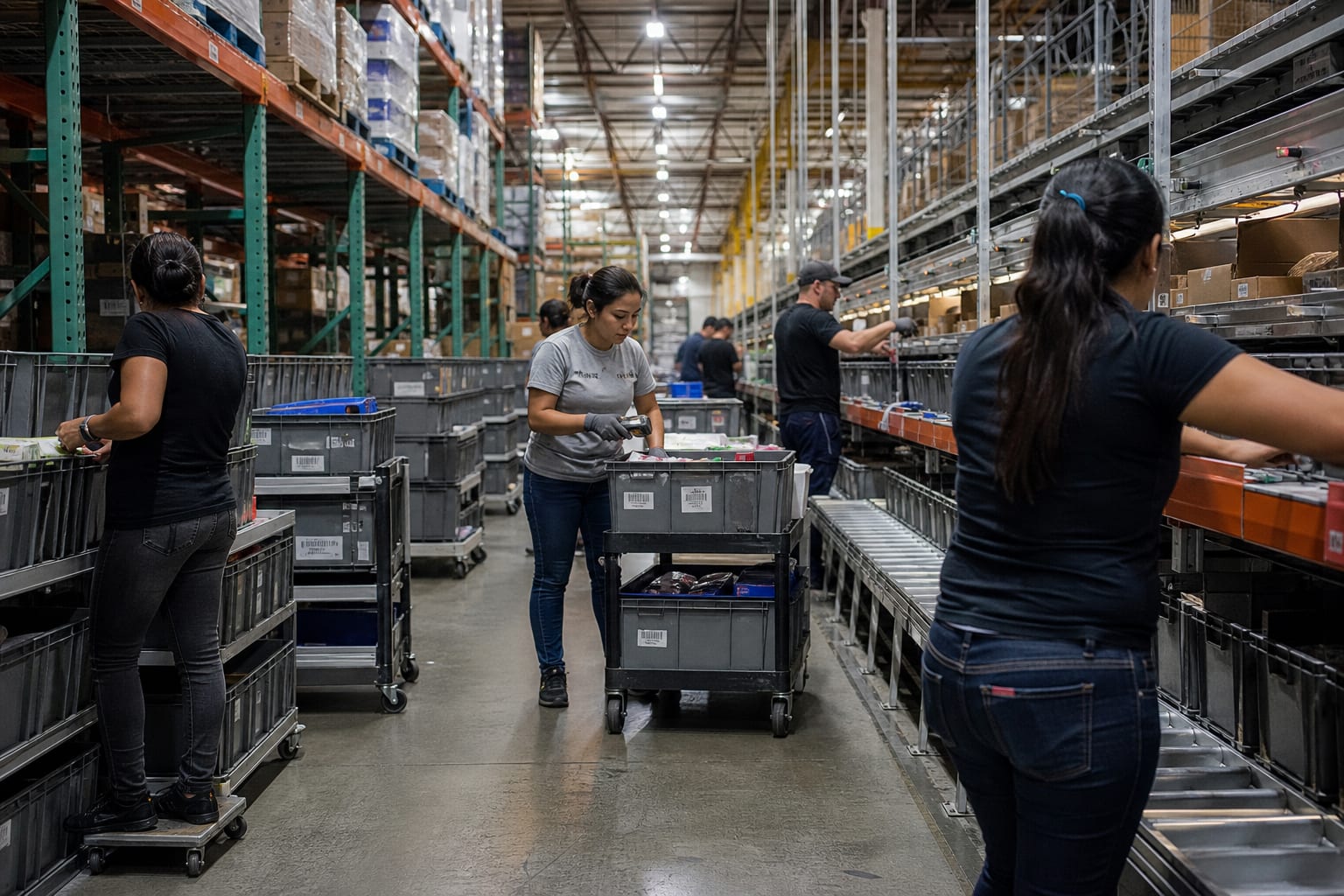
Wave picking is an order-preparation strategy that groups orders into waves and releases them to the warehouse in blocks synchronized with shifts, dock capacity, or transport cutoffs, instead of releasing each order in isolation.
If the wave closes at 17:40 and the appointment was 17:00, you do not have a picking problem — you have a cutoff problem.
Related: picking · warehouse–transport handoff · WMS.
What it means in practice
A wave defines which orders enter, with what priority, and when they must be in staging. The warehouse management system (WMS) releases tasks; the transportation management system (TMS) should already have an appointment or window.
Do not confuse it with batch picking (multi-order lines in one pass) or zone picking (operator fixed to an area). The wave is the time/capacity container.
Why it matters by role
| Role | What they watch | If the wave fails |
|---|---|---|
| Warehouse | Lines/hour and accuracy per wave | Rework and overtime |
| Traffic | Wave ready vs appointment | Detention / Late |
| 3PL | Customer SLA at the cutoff | Claims and saturated yard |
| Accounts payable | Trip born on time | Emergencies without a rate |
Wave vs other strategies
| Strategy | Release unit | When it shines |
|---|---|---|
| Order | One order | Low volume |
| Batch | Multi-order lines | Repeated SKUs |
| Zone | DC area | Large layout |
| Wave | Time block | Appointments / outbound cutoffs |
How to build a healthy wave
Set cutoff
Transport time
Select orders
Dock capacity
Release wave
WMS to floor
Close staging
RTS to TMS
Dispatch
Appointment met
Expensive mistakes
1.Giant waves at 18:00
They saturate doors the TMS already sold. Respect dock capacity.
2.Measuring only lines/hour
You can look “productive” and miss the appointment. Measure waves on time to dock.
3.No transport tie-in
The wave ends in WhatsApp; the handoff does not exist.
4.Mixing customers without rules
In a 3PL, a crossed wave without clear priority punishes the wrong customer SLA.
OCL and the trip file
OCL does not compute your waves. When a wave releases an RTS, it helps birth the trip, track it, and close evidence before pay. It is not a WMS. OCL can stamp invoices and Carta Porte.
Sources and further reading
Key takeaways5 points
- Wave picking = grouping orders into waves and releasing picks in blocks aligned to transport cutoffs or shifts.
- A wave is not only lines/hour productivity: it synchronizes the warehouse with the tractor appointment.
- Useful KPIs: % of waves on time to dock, errors per wave, dwell from wave close to departure.
- Badly cut waves create empty docks or waiting trailers — OTIF breaks before GPS.
- OCL is not a WMS: it helps a released wave become a trip with evidence, not a “almost ready” chat.
Are your waves late to the appointment?
Frequently asked questions
Grouping orders into waves and releasing picking in blocks aligned to shifts or transport cutoffs.
Batch groups lines from several orders in one physical pass. Wave defines the time/capacity block released to the floor — they can combine.
% of waves that reach staging before the appointment, errors per wave, and minutes RTS–departure.
As many as your dock and appointments support. More waves are not better if you fragment capacity or create idle time.
You need wave release and staging visibility. A spreadsheet cannot hold cutoffs with real appointments.
On the wave–trip handoff: tracking, POD, and pre-pay audit once the order left the node.