

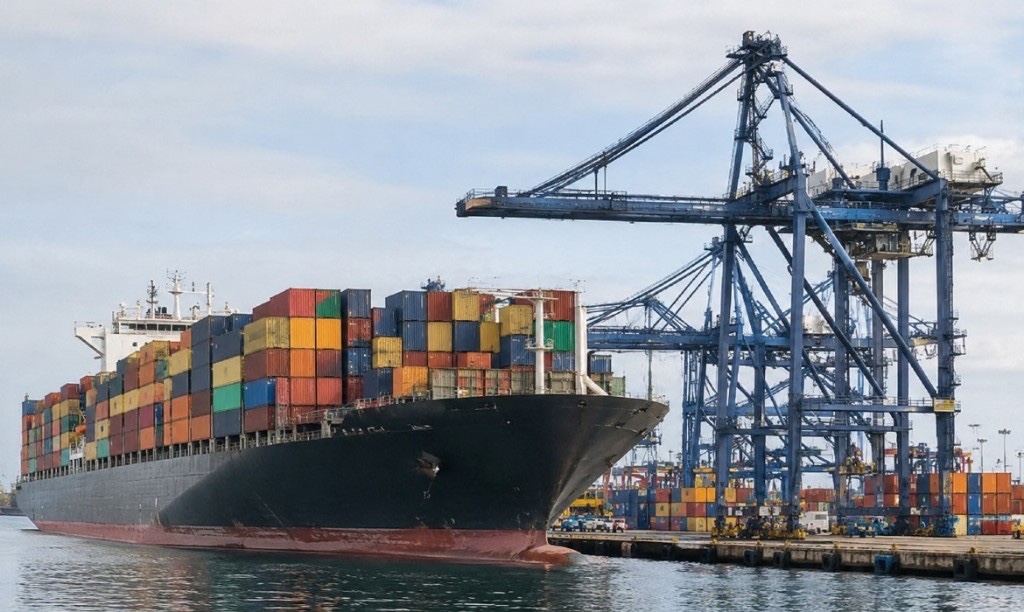
On the Mexico–US corridor in 2026, more money crossed than ever and, for many operators, never earned so little moving it. This reportage turns the T21 column by Gibrán Ramírez (11 Aug 2026) into an actionable map: cost squeeze, profit migration, and four sectors where certainty sells at its own price.
- bilateral trade 2025
- USD 872.8B
- MX–US rates since Feb (Laredo epicenter)
- +8–15%
- projected no profit by end 2026
- ~½ sector
Short answer: record volume, stuck margin
Carrier P&L and sector headlines do not match: more trips and rising rates, but diesel, insurance, and km competition eat profit. Uber Freight reports up to 10 loads per available truck at the crossing; the sector projects 25–35% rate increases for the year (+8–15% since February). Still, half of Mexican trucking could close 2026 without profit.
The operating question stops being “do I ride the cycle?” and becomes where did margin go — and what product recovers it?
The squeeze: rates up, cost and risk higher
You are paid more per trip and may earn the same or less. Diesel moved from ~22.50 toward 29–30 MXN/L (federal cap ~28); the column puts fuel at over 40% of a carrier’s revenue. Policies rose 34% this year after +18% the prior — from highway insecurity (SESNSP / ANERPV), not oil inflation alone. Sector rule: each peso diesel rises, freight rises ~4%.
Diesel, per liter
Already half the cost of running a truck.
Freight cost
+$1 diesel = +4% to the rate
In moving goods.
Insurance policies
In a single year.
Who absorbs it
operate with fewer than 5 units.
2026 projection
Half will close the year without profit.
2026 broker market updates (e.g. C.H. Robinson · cross-border) add another squeeze: a strong peso versus the dollar (less peso revenue when rates are in USD) and fewer operators with B-1 visas / language requirements at the crossing. That hardens capacity and price — but it does not replace the certainty product: trip file, window, custody, or reconciliation remain what the shipper still cannot buy with confidence.
MX–US spot/contract rate
Magnitude: +8–15% since Feb (Uber Freight); some corridors ~30% in 2 months
Operating implication: More gross revenue ≠ more EBITDA
Diesel
Magnitude: Cap ~28; >40% of revenue
Operating implication: FSC and index discipline or leakage
Insurance
Magnitude: +34% (cause: theft)
Operating implication: Does not fall with diesel; needs custody/route
Sector profit
Magnitude: ~½ no profit 2026
Operating implication: Capacity exits; survivors set price

Profit does not vanish — it moves
Following Christensen (as framed in the column): profit concentrates where performance still falls short of the customer. Moving a box origin to destination is solved after decades of free trade — so rate is auctioned. What the shipper still lacks: no theft, no border hour variance, evidence on every delivery.
Kilometer market
- Product: tractor + trailer
- Auction price
- Cheapest wins
- Record rate nobody captures
Certainty market
- Product: trip file / guarantee
- Own price
- Risk reducer wins
- New freight lands here
Sector map (nearshoring)
Pulsómetro Logístico 2026 estimates USD 35–50B additional nearshoring over the next decade in four sectors. Each translates the customer constraint into a different certainty product. Operating detail is in related reading; route by pain in What is your pain?.
| Sector | Customer constraint | Certainty product |
|---|---|---|
| Automotive | Origin / USMCA proof | File + CTPAT/OEA |
| Electronics | Border hour / US plant | Guaranteed window + FAST |
| Medical devices | FDA/COFEPRIS custody | Lot/trip file |
| Processed foods | Retail vs manual POD dispute | Delivery reconciliation |
Capacity clock: old fleet, falling sales
Heavy-vehicle sales fell 35.7% in January on a fleet averaging 19 years. When capacity stops renewing, survivors set price. Those also selling certainty arrive with a different offer.
Method: trip file first, system second
If the file lives across email, GPS, and Excel, a new TMS only speeds disorder. The rule: one trip file per shipment, delivered in hours, at its own price — because guarantee bundled free in rate is valued at zero.
Method
Scattered evidence to product
Unify ID
One trip = one file
Close evidence
Carta Porte + GPS + POD
Set price
Product with its own price
Automate
TMS after the trip file
Checklist: selling km or certainty?
Six signals to tell kilometer auction from certainty product. If you mark “no” on certainty, you compete on price.
Elige un paso para ver el detalle
Detalle del paso · 01
Trip file
OCL’s role in the certainty market
Certainty margin sells with a trip file, not a slogan. OCL Cargo is an autonomous TMS: agents build the trip file (rate + CFDI/Carta Porte + GPS + POD), audit before payment, and escalate exceptions to people. It coexists with your ERP or TMS without replacing everything on day one — and it does not operate the truck.
A 6–8 week pilot shows whether the file closes in hours and whether spend recovery approaches the 5–7% pattern when you audit the full lane. Yes: unified evidence and pre-pay audit. No: tax ruling or “guaranteed margin” for the cycle.
What is your pain?
Border margin is not recovered with a "ride out the cycle" slogan. It is recovered by choosing one certainty product and charging for it.
Elige un paso para ver el detalle
Key takeaways6 points
- Bilateral trade 2025 at highs (~USD 872.8B) and trucking in April +23.4% YoY — volume is not the problem.
- MX–US rates +8–15% since February (Uber Freight / sector); some corridors ~30% in two months; diesel >40% of revenue and insurance +34% for insecurity compress margin.
- Moving freight is commodity; the customer still lacks certainty on theft, border hour variance, and delivery evidence.
- Nearshoring (USD 35–50B, Pulsómetro 2026) concentrates in auto, electronics, medical, and food — each with a different certainty product.
- Heavy sales −35.7% in January and fleet ~19 years old: when capacity exits, certainty sellers arrive with a different hand.
- OCL turns scattered evidence into a trip file and audits before payment; it coexists with your TMS.
Want to map which certainty product fits your lane?
Sources cited in the column
Primary sources from the original column (verified) plus coverage that supports the magnitudes cited in the T21 column (11 Aug 2026).
- T21 — Nunca cruzó tanto dinero la frontera. Nunca se ganó tan poco moviéndolo (11 Aug 2026)
- Uber Freight — Q2 2026 Market Update (PDF) · blog summary
- Pulsómetro Logístico 2026 — ConaLog
- Aragonez, S. — Mexico Business News (10 Jun 2026)
- Centro México Digital — México Inteligente (INEGI Economic Census 2024)
- INEGI — Merchandise trade balance
- SESNSP — open crime data · ANERPV
- BEA — Mexico share of U.S. automotive imports
- USTR — USMCA
- ConaLog — Logistics Dialogues
- FreightWaves — MX–US bilateral trade 2025 (~USD 872.8B)
- Info Transportes — truck freight April +23.4%
- The Logistics World — MX–US rates +8–15%
- Reforma — rate hike outlook 25–35%
- El Imparcial — diesel cap ~28
- La Jornada Aguascalientes — diesel >40% of revenue; insurance +34%
- Forbes México — +1 MXN diesel ≈ +4% freight
- Transporte.mx — half of trucking unprofitable in 2026
- Forbes México — auto RVC proposal 75 a 82%
- El Universal — USMCA review cycle
- GCP México — CTPAT (~70% fewer inspections) and FAST (−27 min)
- ConaLog — Logistics Dialogues
- SDP Noticias / ANPACT — heavy-vehicle sales −35.7% Jan
- El Financiero / ANPACT — fleet ~19 years avg age
Related reading
- Nunca cruzó tanto dinero la frontera. Nunca se ganó tan poco moviéndolo — T21 · 11 Aug 2026
- Automotive: USMCA origin file
- Electronics: guaranteed hour and FAST
- Medical devices: FDA/COFEPRIS custody
- Processed foods: delivery reconciliation
- Supply-chain security certifications (definitions hub)
- Mexico logistics state 2026
- POD: shipper guide
Frequently asked questions
The MX–US corridor moves record volume and rising rates, but diesel, insecurity-driven insurance, and commodity km competition compress profit. Margin migrates to whoever sells certainty (trip file, guarantee, custody, reconciliation) — not just miles.
From the T21 column (11 Aug 2026) and its sources: Uber Freight Q2 2026 (cross-border), Pulsómetro Logístico 2026, SESNSP/ANERPV, and trade data. Used here as market signals, not accounting rulings.
Because roughly half of trucking could close 2026 without profit, and costs like insurance (+34% cited for insecurity) do not fall when diesel drops. Returning margin goes to survivors — and to those selling a product other than the km.
Pulsómetro Logístico 2026 puts USD 35–50B additional over the decade in automotive, electronics, medical devices, and processed foods. Each has a different certainty product — see the sector map and related reading.
The first auctions kilometers (cheapest wins). The second sells certainty: trip file, guaranteed windows, custody, or reconciliation — at its own price. That is where new freight lands.
The supply-chain security certifications map defines CTPAT, OEA, FAST, custody, and the trip file. This reportage translates the T21 column into concrete industry products.
It sells operational certainty in the corridor’s second market: as an autonomous TMS, agents build the trip file (rate + CFDI/Carta Porte + GPS + POD), audit before payment, and escalate exceptions. It does not operate trucks — it turns evidence into a defensible product.