

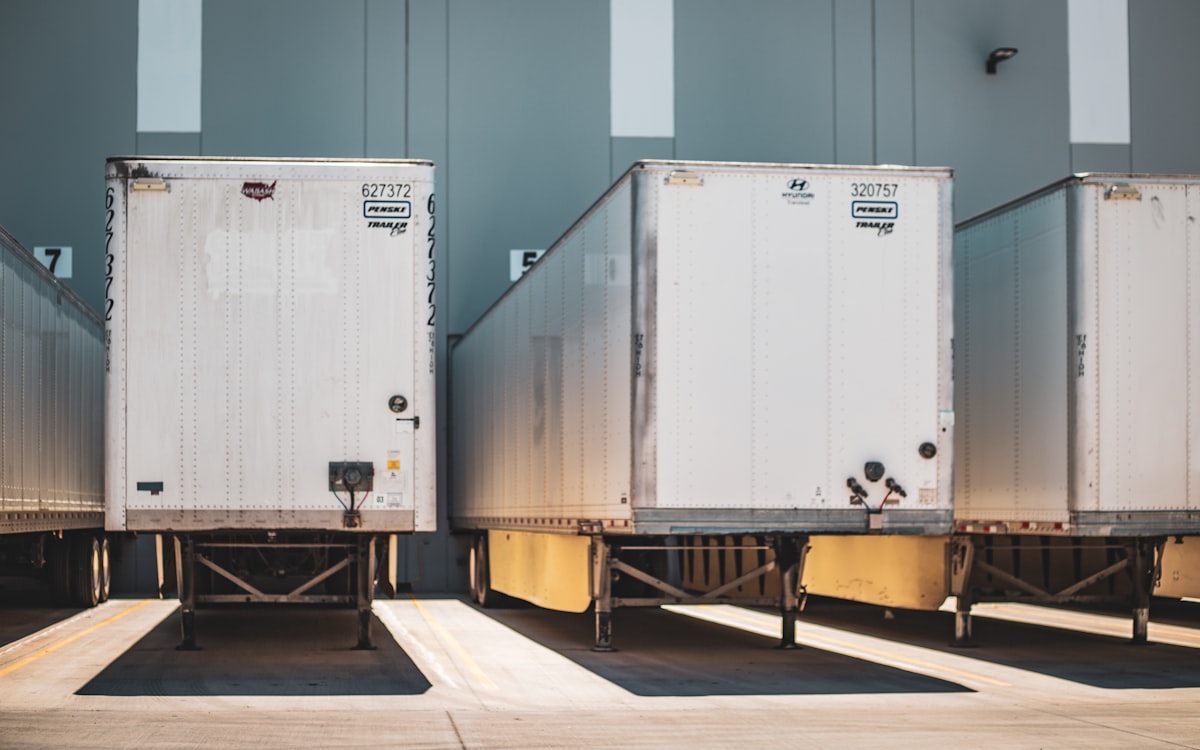
Cross-docking is the operation where goods move from receiving dock to shipping dock without entering storage locations: receive, sort, and reload in hours. It removes storage cost, but also removes the moment where you normally count, check, and record.
- minimum data
- 5
- on floor
- Hours
- to door
- Door
- discrepancy
- % without
The risk is not speed: it is cargo crossing the warehouse without leaving a trail.
Cluster: cross-docking · warehouse · WMS.
Storage vs cross-docking
In traditional flow the error appears in inventory; in cross-docking it appears at the customer with a deduction.
Traditional storage vs cross-docking
Speed removes the moment where you normally count.
| Traditional | Cross-docking | |
|---|---|---|
| Counting | On receipt and pick | Only if process forces it |
| Floor time | Days or weeks | Hours |
| Error found | In inventory, calmly | At customer, with deduction |
| Main cost | Space and capital | Control and appointment sync |
Five-data checklist
Every pallet that crosses records five data points. Without an inbound-outbound link, shortages are searched warehouse-wide.
Five-data checklist
Every pallet that crosses leaves a trail or becomes ghost inventory.
Select a step to see detail
Step detail · 01
Reference
In ↔ out
Three failures that turn speed into loss
Crossing without a count, zone-as-informal-storage, and a fallen outbound appointment with no plan B.
Three failures that turn speed into loss
If you only measure door-to-door, you reward hiding errors.
01
No count
Supplier shortage becomes your customer deduction.
02
Zone-as-DC
Three days in the lane = storage without inventory.
03
No plan B
Crossing without outbound appointment creates ghost stock.
How to measure if it works
If you only measure speed, you reward hiding errors. Related: what is cross-docking, warehouse functions, custody.
What OCL runs
OCL Cargo is an autonomous TMS with agents and computer use (operating screens and portals like an analyst). It builds the trip file per shipment, cross-checks evidence, and leaves exceptions to humans. It coexists without a day-one TMS migration. OCL can stamp invoice and Carta Porte. On the Mexico–US corridor, the value is closing the trip file before paying.
Trip file
Flow control
Receive
Count
Zone
Assign
Cross
Owner
Ship
Evidence
6–8 week pilot (cross-dock)
Four weeks of crossed orders: door-to-door time, % with five data points, and destination discrepancies. Goal: cut discrepancies without lengthening the cross.
Elige un paso para ver el detalle
Detalle del paso · 01
ASN counted, not copied
Key takeaways5 points
- Cross-docking removes storage and also the natural counting moment.
- Five data points per move: reference, count, zone, condition, owner.
- Do not cross without a confirmed outbound unit and appointment.
- Measure door-to-door and % without destination discrepancy.
- OCL closes the trip file after the dock.
Do you cross fast but deductions still arrive?
Related reading
Frequently asked questions
Pre-assigned product, confirmed demand, and a supplier reliable on count and labeling.
You need to record the five data points. A WMS scales; a disciplined form works in small ops. Chat does not.
Door-to-door time per reference and % of crossed orders without destination discrepancy.
It is no longer cross-docking: it is storage without inventory.
Outbound trip file, POD, and discrepancy reconciliation for Finance. It can stamp invoice and Carta Porte.