

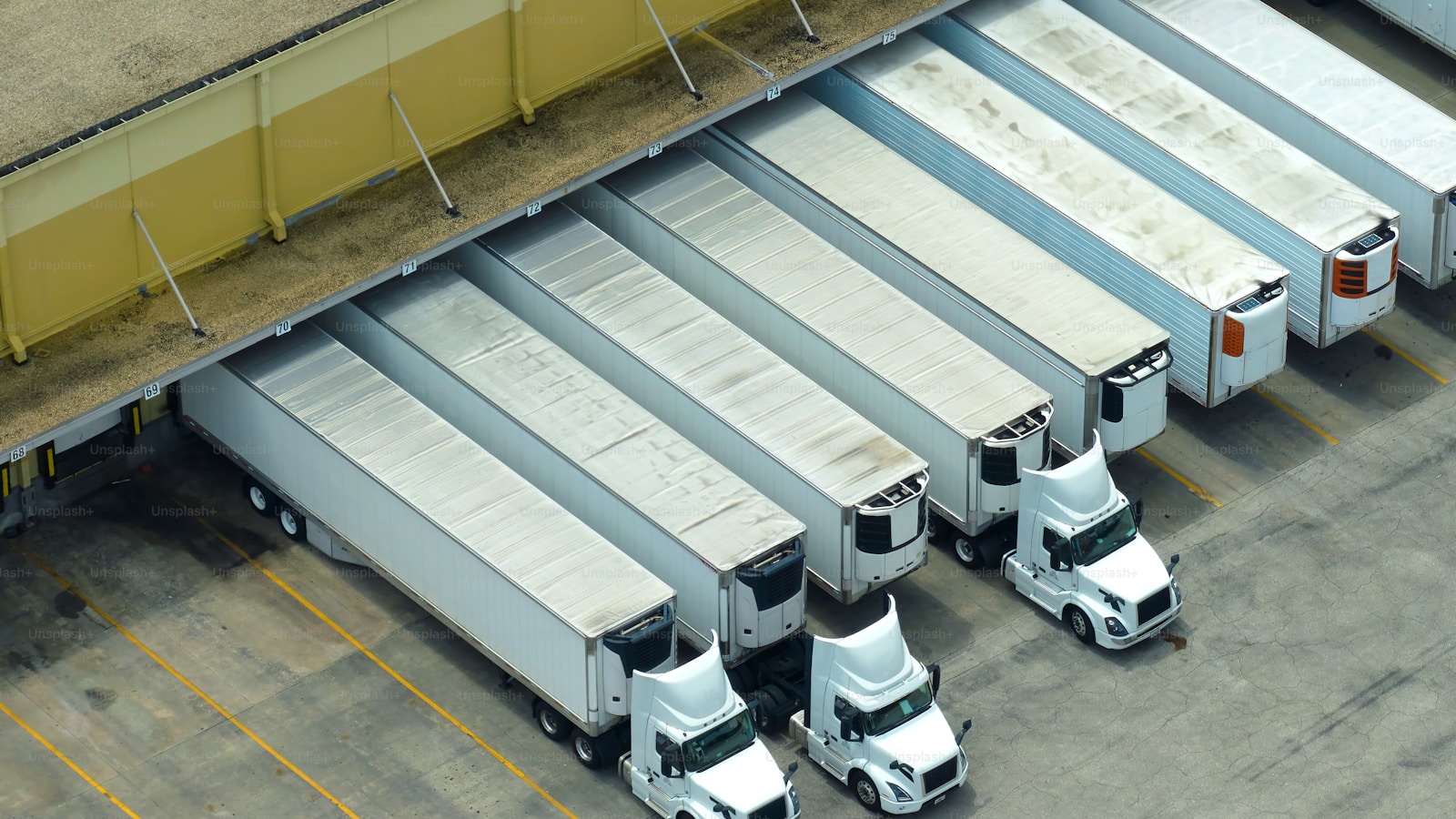
Food traceability is the ability to identify, record, and follow a food item—and its inputs—with reconstructable evidence: which lot it came from, what happened in the plant or DC, under what temperature it traveled, and which customers received it. On the Mexico–US corridor it is not a European WMS ad: it is the link between lot, cold chain, and the trip file.
Mecalux covers the three types well and sells Easy WMS. Our wedge is refrigerated freight, cold docks, and an operable recall: tower, DC, and accounts payable on the same ID. For the general logistics definition (trip · CFDI · POD), see the sibling hub what is traceability.
- backward · internal · forward
- 3 types
- lot + trip + POD
- 1 ID
- exception = evidence
- Cold
- bound destinations in hours
- Recall
Cluster: POD · freight journey · supply chain examples · processed foods.
What food traceability is
In one sentence: know where it came from, what happened to it, and where it went for each food unit or lot—with records that survive an audit or a recall.
International bodies (Codex Alimentarius; frameworks such as FSMA in the United States) treat traceability as follow-up capacity under risk. The European Union has explicit origin/destination rules by stage. In Mexico, the operating frame runs through COFEPRIS and hygiene/labeling standards—confirm current criteria with compliance; we do not invent obligations here.
Versus general logistics traceability, food adds safety: lot, dates, temperature, and a destination list so you recall only what is affected. Tractor GPS is not enough if the lot was split in the DC with no record.
Three types: backward, internal, and forward
The three types are not marketing: they are the three questions you must answer in minutes when there is a safety alert or a retail claim.
Food traceability · three directions
Upstream
Backward
MX–US: dairy lot at origin + load temperature
Where did it come from?
Process / DC
Internal
DC: lot split, FEFO, and cold-chain exception
What happens inside?
Downstream
Forward
Tower: destinations + POD + who received the lot
Where does it go?
Backward
Question: Where did it come from?
Freight / DC example: Juice lot at MX plant + ASN/packing slip + reefer load temp to Laredo
Who uses the evidence: Quality / compliance / accounts payable on claims
Internal
Question: What happens inside?
Freight / DC example: Cold DC receipt, FEFO, pallet split, cold-room slot
Who uses the evidence: Warehouse operations / inventory
Forward
Question: Where does it go?
Freight / DC example: Trips to retail and foodservice with POD signed by store or kitchen
Who uses the evidence: Tower / customer service / recall
In a recall: backward bounds the origin of the problem; internal shows what was touched in your network; forward lists who to call. Missing one segment means you over- or under-recall.
Key concepts (lot, cold chain, HACCP, FEFO, GS1)
Not a glossary dump: these are the fields and rules that make the trail operable on the dock and in the tower.
Lot
What it is (plain): Homogeneous group produced/received under the same conditions
Why it matters in operations: Recall unit: without a reliable lot, you pull “the whole SKU”
Cold chain
What it is (plain): Hold the agreed temperature range end to end
Why it matters in operations: Temp exception = documented trip event, not a loose chat
HACCP / APPCC
What it is (plain): Hazard analysis and critical control points (food safety)
Why it matters in operations: Traceability records evidence; HACCP defines what to control
FEFO
What it is (plain): First Expired, First Out: earliest expiry ships first
Why it matters in operations: In cold DCs it cuts shrink and mixed dates to the same destination
GS1 (GTIN / SSCC)
What it is (plain): Identification standards and barcode/logistics codes
Why it matters in operations: Same read across supplier, DC, and retail; less hand re-labeling
RFID
What it is (plain): Radio-frequency identification (tags read without line of sight)
Why it matters in operations: Useful at high volume; does not replace process owners or the trip file
How to implement (shipper and distributor)
Manufacturers often own process trail. Shippers and distributors win or lose on the handoff: which lot left, on which trip, at what temp, with which POD.
Operable rollout
Six steps without a big-bang
Map the flow
Origin, DC, and customer
Define object
Lot + trip ID
Minimum data
Per stage / owner
Cold handoff
Temp · seal · POD
Test recall
Bounded drill
Close gaps
WMS ↔ TMS ↔ ERP
- Minimum data per stage: supplier/lot, receipt timestamp, cold location, split, trip ID, load/route temp (if applicable), consignee, usable POD.
- Owners: quality/food safety (rules), DC (internal), tower (forward), accounts payable (backward when there is a claim/chargeback).
- Scope: one cold SKU or one pilot lane before “the whole network.”
Stack: WMS, TMS, and ERP (honest roles)
The warehouse-article mistake is selling one system as “the” food traceability. On Mexico–US lanes you need three clear roles.
ERP
Adds to the trail: Masters, orders, billing, sometimes accounting lot
Does not cover alone: Fine cold-room moves or in-transit exceptions
WMS
Adds to the trail: Receipt, slotting, FEFO, picking, internal ship confirm
Does not cover alone: Trip fiscal docs or multi-carrier tower
TMS / OCL
Adds to the trail: Trip, appointments, useful GPS, exceptions, POD, CFDI/Carta Porte when applicable
Does not cover alone: Slotting and FEFO inside the DC
Integration = the same identifier crosses systems. If the WMS has lot A and the TMS invents a trip folio without the lot, recall becomes a midnight spreadsheet.
Mexico–US patterns
Illustrative corridor patterns—not European WMS plant tours or invented brands with fake OTIF.
- MX plant, border DC, and US retail: lot + load temp + crossing + US DC POD. Typical break: yard split without updating destinations.
- US import, MX DC, and stores / foodservice: backward needs origin papers and a readable lot; forward needs daily FEFO routes. See patterns in supply chain examples.
- Multi-customer cold 3PL: lot segregation by owner + trip file per load. Without that, one customer’s recall contaminates another’s evidence.
Related: processed-foods delivery reconciliation —when the DC deducts and your defense is POD + lot.
Technology and cold chain
Sensors, temperature loggers, GS1 codes, and in some flows RFID speed capture. None replaces owners or a recall drill.
- Temperature logger / IoT: useful if the exception enters the trip file (threshold, time, segment) and someone decides quarantine or release. Go deeper in what IoT is in logistics.
- GS1 scan on the dock: cuts “lot written by hand” between DC and carrier.
- Blockchain: frequent marketing; only helps if you already have trusted data across partners. Not step one for a distributor with Excel in the tower.
Checklist: recall drill
A food-traceability system that is “ready” is proven with a bounded drill—not a software deck.
Elige un paso para ver el detalle
Detalle del paso · 01
SKU and lots
What OCL executes
OCL is an autonomous TMS with agents (computer use): they operate screens and portals to build the trip file—milestones, temperature exceptions when captured, POD, and fiscal documents—without asking you to migrate the WMS on day one.
Freight layer
From dock to pay
Capture trip
ID + visible lot
Track cold
Typed exceptions
Attach POD
Usable evidence
Audit pay
Complete file
OCL can stamp invoice and Carta Porte when fiscal scope applies. Your team close quarantine, disputes, and release. It coexists with your ERP/WMS; the published pattern when auditing 100% of the pilot flow is recovering 5–7% of freight spend when the file did not match—in food, you also reduce “blind recall.”
Key takeaways5 points
- Food traceability = follow the food with evidence (lot + cold chain + destination)—not only “see the truck on a map.”
- Three types: backward (origin), internal (DC/process), and forward (customers)—all three close a recall.
- On Mexico–US lanes the usual gap is the DC to carrier handoff: temperature, lot, and POD under the same trip ID.
- WMS, TMS, and ERP do not replace each other: each owns a segment; OCL joins the freight file and exceptions.
- Implement with owners, minimum data per stage, and a recall drill—not with a European WMS brochure.
Want a trip file ready for cold chain and POD?
Related reading
- What is traceability — general hub (trip · CFDI · POD); sibling of this food guide.
- Proof of delivery (POD) — operable shipper convention.
- Mexico freight journey — order to pay, documents, and KPIs.
- Mexico–US supply chain examples
- ALCOA good documentation practices
- Lean supply chain — less waste without breaking service.
- Processed foods: delivery reconciliation
- What IoT is in logistics — sensors, cold chain, and trip rules.
Frequently asked questions
It is the ability to identify, record, and follow a food item (and its inputs) with reconstructable evidence: lot origin, what happened in the plant or DC (distribution center), cold-chain conditions, and which customers received it. On Mexico–US freight the operable object joins lot + trip + POD (proof of delivery)—not only the GPS pin.
Three: backward (origin and suppliers), internal (movements and transformations inside your network/DC), and forward (destinations and customers). You need all three for a bounded recall.
No. Food traceability prioritizes safety, lot, cold chain, and recall. General logistics traceability (see what is traceability) prioritizes the trip file (rate · CFDI · Carta Porte · GPS · POD). In food they cross: without a DC–carrier handoff, both the safety trail and the freight trail break.
In Mexico, COFEPRIS and standards such as NOM-251-SSA1-2009 (hygiene practices) and labeling (NOM-051) push lot identification and documented controls. Exact scope depends on the product and your role (manufacturer, distributor, importer). This is an operating frame—not legal advice; confirm with compliance and published criteria.
HACCP (Hazard Analysis and Critical Control Points; APPCC in Spanish) is a food-safety approach by hazards and critical controls. Traceability does not replace HACCP: it records evidence (lot, temp, destination) so the control plan and recall work. Jurisdiction and obligations: confirm with your food-safety program.
None alone closes the trail. ERP owns masters and orders; WMS (warehouse management system) owns internal/FEFO trail; TMS (transportation management system) owns the trip and in-transit exceptions. OCL builds the trip file (temperature, POD, CFDI) with agents and coexists without a big-bang.
Agents concentrate milestones, temperature exceptions, POD, and fiscal documents under the same trip ID. OCL can stamp invoice and Carta Porte when fiscal scope applies, escalates exceptions to your team, and does not replace the DC WMS on day one.