

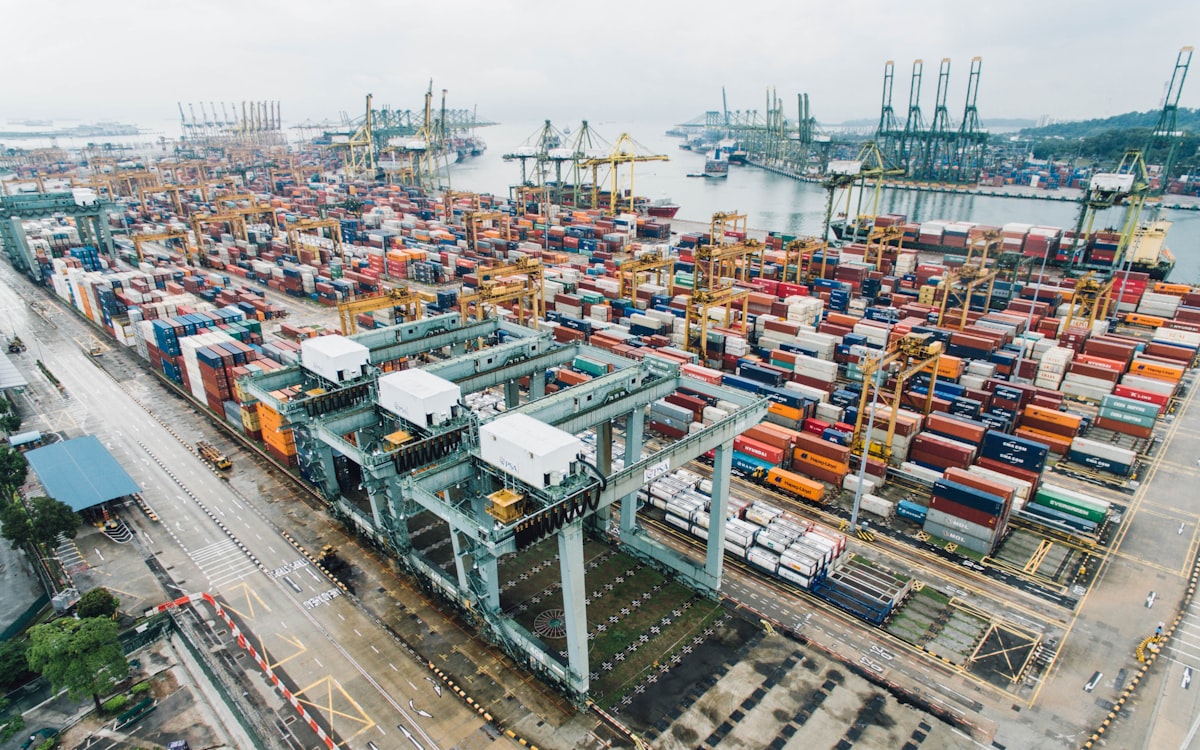
Mexico’s Interoceanic Corridor of the Isthmus of Tehuantepec (CIIT) links Salina Cruz (Pacific) and Coatzacoalcos (Gulf) by rail across ~300 km, promising basin-to-basin moves without Panama. 2026 reality: it is a selective alternative, not a substitute. It competes on specific flows (southeast origin-destination, some diversions when Panama congests or prices up) and does not yet compete on the bulk of global interocean transit. For a Mexican shipper, the useful question is not “does it beat Panama?” but “does it serve me, on which flow, with what service evidence?”
- rail isthmus
- ~300 km
- ship–rail transfers
- 2×
- cargo operating
- Línea Z
- re-verify status
- Semester
For finance, the most immediate real value is often negotiation leverage: the alternative’s existence pressures rates even if you are not using it yet.
Cluster: Mexico ports · intermodal · invoice audit
The honest comparison
Panama is direct ocean at global scale; CIIT is maturing multimodal. Compare full clock and total cost, not the rail segment alone.
Panama Canal vs CIIT
Selective ~300 km Salina Cruz–Coatzacoalcos alternative — not a global substitute yet.
| Criterion | Panama | CIIT |
|---|---|---|
| Mode | Direct vessel | Ship + rail + ship |
| Scale | Global network | Frequency maturing |
| Best case | Interocean transit | SE Mexico cargo |
| Criterion | Panama Canal | CIIT |
|---|---|---|
| Mode | Direct ship | Ship + rail + ship |
| Scale | Global liner network | Frequency still building |
| Reliability | High (with drought episodes) | Maturing |
| Best use today | Interocean transit | Southeast / isthmus cargo |
What to evaluate before trying it
Without regular calls at Salina Cruz and Coatzacoalcos for your lane, there is no corridor. Measure the full clock and multi-party documentation.
Before you trial CIIT
Select a step to see detail
Step detail · 01
Carrier
Call

Best case: southeast and isthmus cargo
Double transshipment is the core issue: each ship–rail–ship transfer adds cost, time, and risk. The corridor wins when the cargo belongs to the southeast, not when it merely passes through. Línea Z runs cargo services; port capacity, liner frequency, and industrial poles are still developing.
Maturity: re-verify status each semester
The ecosystem snapshot changes by semester. Before committing volume, verify real liner service at both ends, full clock vs your current route, and an auditable multi-party file. Hedge: treat CIIT as an option to revalidate, not a fixed budget assumption.
As negotiation leverage
Even if you do not use it tomorrow, the alternative’s existence pressures established routes (Panama or Pacific + inland). Use it at the table with service evidence, not as an empty threat.
What OCL runs
OCL Cargo is an autonomous TMS with agents and computer use (operate screens and portals like an analyst). Two ports, one railroad, and carriers per shipment: fragmented invoices need file-level reconciliation. Coexists without day-one migration; humans on exceptions. OCL can stamp invoices and Carta Porte when the flow requires it.
Pre-pay
Test with evidence
Verify
Service
Sum
Total cost
Pilot
Tolerant cargo
Audit
File
6–8 week pilot
Test with non-critical flow and measure against your current route, same as evaluating an alternate port. Metric: total cost per delivered shipment and ETA reliability.
Elige un paso para ver el detalle
Detalle del paso · 01
Baseline vs Panama / Pacific+inland
Key takeaways5 points
- CIIT links Salina Cruz–Coatzacoalcos (~300 km): selective alternative, not a Panama substitute.
- Double transshipment (ship–rail–ship) adds cost, time, and handling risk.
- Best case today: cargo with origin/destination in the southeast / isthmus.
- Línea Z operates; the ecosystem matures: re-verify status each semester.
- Immediate value: negotiation leverage even if you are not using it yet.
Evaluating alternate routes with real total cost?
Related reading
Frequently asked questions
Línea Z (Salina Cruz–Coatzacoalcos) runs cargo services; the ecosystem (port capacity, liner frequency, industrial poles) is still developing. Verify current status: the snapshot changes by semester.
Only if your flow finds ship + rail + ship with total cost below direct Panama or Pacific port + inland. It is a per-flow calculation, not a belief.
That is often the most immediate real value: the alternative’s existence pressures established-route rates whether you use it or not.
No. It is a selective ~300 km isthmus alternative for specific flows; global interocean transit still demands frequency and reliability the corridor is still building.
On multimodal flows, it reconciles fragmented invoices (two ports + rail + carriers) by file. Pilot with tolerant cargo and total-cost metrics.