

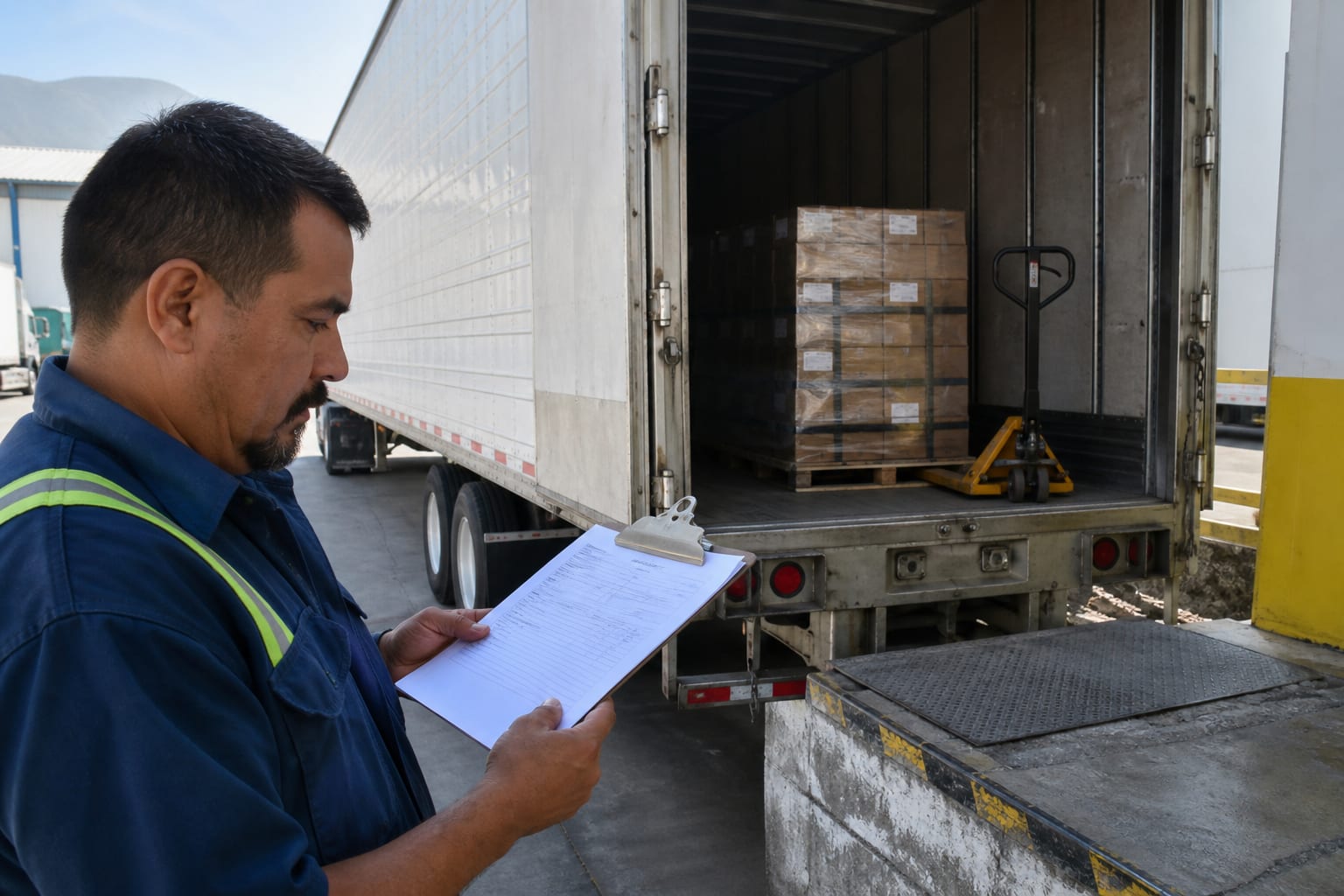
Detention (estadía) is the charge the carrier bills the shipper when the unit stays held at load, unload, or waiting beyond contracted free time. In 2026 it typically runs $350–$800 MXN per hour for general freight, and $2,500– $8,000 MXN per day by equipment type.
It is a legitimate charge when contracted and supported with hour evidence. It is leakage when billed without arrival and release logs. This blog deepens definition, operational legality, 2026 rates, and an audit checklist; the short glossary lives at what is detention.
- MXN/hour general freight
- $350–800
- typical free time
- 2–4 h
- contracted · supported · cause
- 3 conditions
- recoverable leak auditing 100%
- 5–7%
Cluster: detention glossary · free days port/terminal · detention calculator · dispute template.
What detention is (usable answer)
In Mexico over-the-road freight, detention pays for unit and driver time when the dock, paperwork, or consignee appointment holds the trip beyond agreed free time. It is not a tip or a generic penalty: it is a time accessorial.
In a broad sense it is an accessorial (see what accessorials are). Short glossary formula: detention = excess time × contracted rate.
When billing is valid (and when not)
Detention applies when three conditions hold. Miss one and the charge is disputable.
Select a step to see detail
Step detail · 01
Is it contracted in the rate or quote?
It does not apply when the delay is the carrier’s (off appointment, rejected unit), when time falls inside contracted free time, or when there is no hour evidence—only a CFDI line. At volume, unsupported detention is one of the most recurring accessorial leaks.
2026 reference detention rates
Market reference ranges. Your contracted rate governs. Use them to estimate annual exposure, not to argue someone else’s contract.
| Equipment | Per excess hour | Per day |
|---|---|---|
| 3.5-ton van | $250–$450 MXN | $2,000–$3,500 MXN |
| Straight truck / torton | $350–$600 MXN | $3,000–$5,500 MXN |
| 53-ft trailer | $500–$800 MXN | $4,500–$8,000 MXN |
| Reefer (reefer running) | $700–$1,200 MXN | $6,000–$10,000 MXN |
Tools: accessorial calculator · detention calculator.
Detention is not container demurrage
In ocean import three different clocks coexist. Billing them mixed creates double charges.
Clocks
Detention vs demurrage vs storage
Three owners, three contracts, three evidence sets.
01
Detention
Trucker. Unit held at dock beyond free time.
02
Demurrage
Ocean carrier. Container (equipment) beyond free days.
03
Storage
Terminal. Yard space beyond free storage.
Rule
Never pay a generic “port charge” without knowing which clock you are settling.

Go deeper in free days at port and terminal and the demurrage glossary.
Minimum evidence to dispute
Without these four pieces, fighting detention is opinion. With them, it is recoverable credit.
Elige un paso para ver el detalle
Detalle del paso · 01
Confirmed appointment
Ready template: detention dispute template.
Pre-pay audit checklist
This is the time-accessorial step in how to audit a freight invoice. The buyer flow is the same: do not release cash without a match.
Select a step to see detail
Step detail · 01
Intake
XML + rate
Detention
From appointment to payment
Read line
Concept + hours
Apply free time
Live contract
Match GPS
Arrival · release
Decide
Pay or dispute
CFDI and operational deductibility
Detention may sit on the same freight CFDI or a separate one. Stamped does not authorize payment: Finance needs the evidence match. Fiscal playbook (not a legal opinion): freight fiscal rules in Mexico.
Confirm the SAT service key with the SAT key finder. Do not mix detention into generic freight 78101800 if your policy requires a split.
What OCL runs on detention
OCL Cargo is an autonomous TMS: it audits CFDI + Carta Porte + GPS + POD before Finance pays. It can stamp invoice and Carta Porte when applicable. It coexists with your stack; humans only on exceptions. Commercial reference ~$50 MXN per shipment; typical pilot 6–8 weeks; recovery pattern 5–7% auditing 100%.
Start with the Auditor Agent or a free diagnostic.
6–8 week pilot (detention)
Do not migrate the TMS on day one. Freeze a corridor with high dock volume (retail, DC, cold chain) and measure only this accessorial.
Elige un paso para ver el detalle
Detalle del paso · 01
Inventory period detention
Key takeaways5 points
- Detention = charge for a held unit beyond contracted free time; it is not container demurrage or terminal storage.
- It applies only if contracted, supported with verifiable hours, and caused by the shipper or their customer.
- 2026 ranges: $350–$800 MXN/hour general freight; $2,500–$8,000 MXN/day by equipment. Your contracted rate governs.
- Without arrival and release logs, billed detention is one of the most recurring freight-spend leaks.
- Audit pre-pay: appointment, GPS, free time applied, and CFDI. OCL matches the file at 100%; can stamp when applicable.
How many detention charges did you pay last month without a log?
Related reading
Frequently asked questions
It is the charge the carrier bills the shipper when the unit stays held at load, unload, or waiting beyond free time in the contract or quote. In 2026 it typically runs $350–$800 MXN per hour for general freight, or $2,500–$8,000 MXN per day by equipment type.
2–4 hours for load or unload in general freight. Anything beyond must be contracted. If your contract does not define free time, writing it in is the first fix.
It can bill on the freight CFDI (Comprobante Fiscal Digital por Internet) as an extra line or on a separate CFDI. Either way it needs hour evidence. See freight fiscal rules.
Yes, with a trip file: if there is no hour evidence or the cause was the carrier’s, clarify before payment. That is why audit must be pre-pay, not after. Use the dispute template.
No. Detention is billed by the trucker for the held unit. Demurrage is billed by the ocean carrier for the container. Storage is billed by the terminal. Mixing them creates double pays. See free days port/terminal and the demurrage glossary.
When it is contracted (free time + rate), supported (verifiable arrival and release), and the cause is the shipper’s or their customer’s. It does not apply if the carrier arrived off appointment, if time falls inside free time, or if there is no hour evidence.
OCL is an autonomous TMS that matches CFDI, Carta Porte, GPS, and POD before Finance pays. It can stamp invoice and Carta Porte when applicable. The Auditor Agent reconciles free time and hours per shipment.