

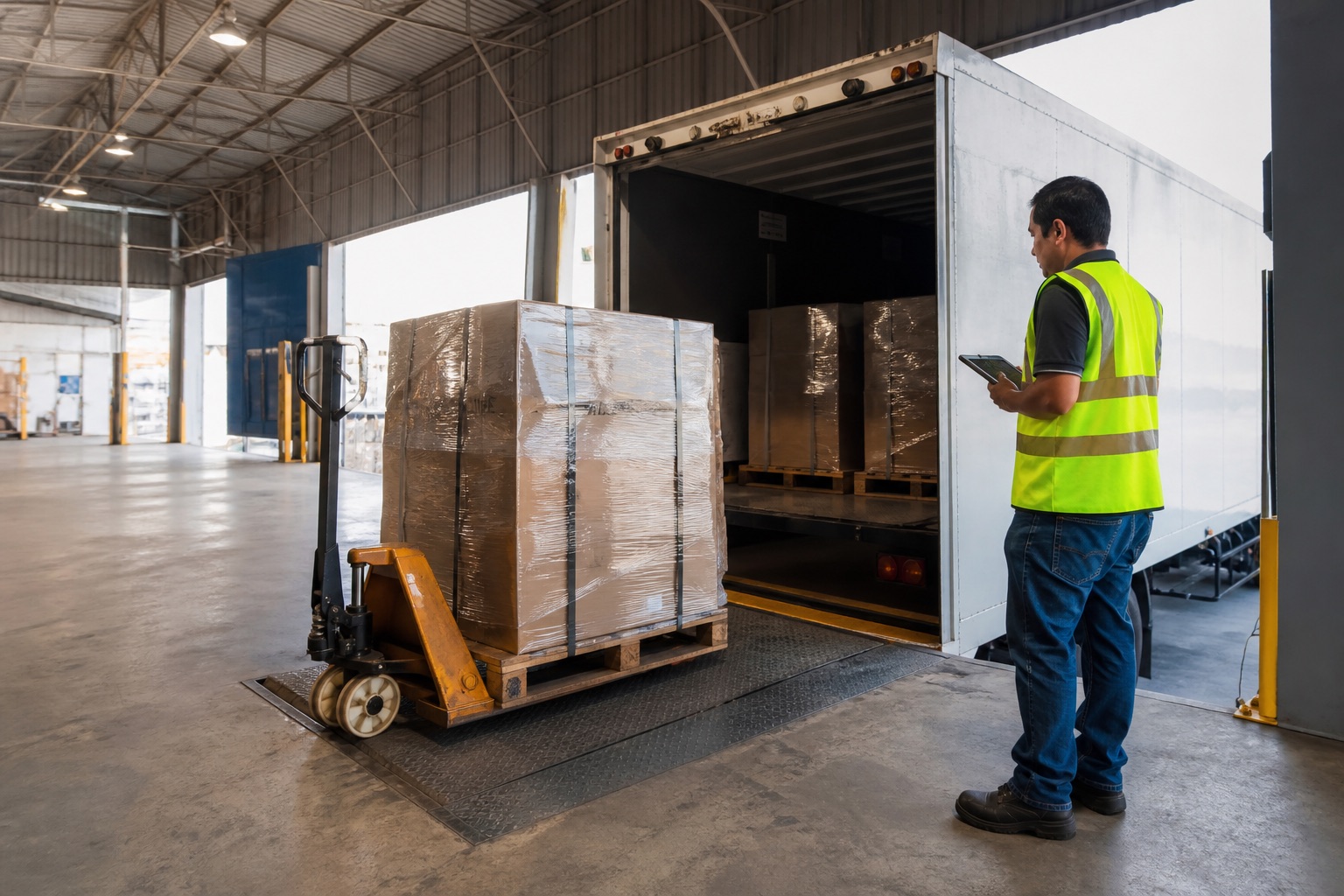
Shipping is the English word for sending and transporting goods from origin to destination. In Mexico–U.S. corridor operations it maps, in practice, to shipment (embarque) or dispatch: the trip plus the document and evidence pack that make it auditable. It is not only “shipping a marketplace parcel.”
For mode, port, and FCL/LCL depth, the canonical anchor is the shipment glossary. This page closes the loanword intent and the shipper cycle: tender, load, monitor, deliver, proof of delivery (POD), and pay.
- shipping ≈ embarque / envío
- EN–ES
- tender, …, and POD to pay
- 6 steps
- Mexico road fiscal anchor
- CFDI+CP
- pattern when auditing 100%
- 5–7%
Cluster: what is a shipment · POD · OTD · logistics monitoring.
What shipping means in logistics
In English supply-chain language, shipping names the physical movement of goods and often the full process through delivery. In Mexican yard and tower Spanish, the usable terms are embarque / shipment (trip + file) or envío / dispatch (more colloquial / parcel). Freight is what you pay for that move.
Ecommerce and retail blogs often define shipping as pick-pack, choose a parcel carrier, and deliver to the consumer. That is valid in retail. In B2B freight, “shipping” is the work object for traffic and accounts payable: unit, appointment, fiscal documents, and proof of delivery.
What shipping is not (for the shipper)
Three common mix-ups dilute the search. Separate them so your tower does not copy a marketplace playbook.
Retail / ecommerce shipping
- Focus on the parcel and shopper promise
- Channel fulfillment or parcel carrier
- “Shipped” = marked sent in the portal
- Last-mile or seller fulfillment
MX–U.S. shipper
- Focus on trip + auditable file
- Tender, load, monitor, POD, and pay
- CFDI, Carta Porte, BOL by mode
- OTD and pre-pay in AP
It is also not abstract “transport” alone: transport is the means; shipping/shipment is the case with ID, windows, and evidence. And it does not replace shipment (embarque) as the master Spanish term.
Shipping vs shipment vs dispatch vs freight
Use this matrix when the team mixes English and Spanish in the same WhatsApp thread. Clear terms cut closeout disputes.
Shipping (EN)
What it names: Send / transport (loanword)
When to use it: English SERP or docs · then localize
Typical mistake: Thinking it is only retail parcels
What it names: Trip + document file
When to use it: MX ops, tower, accounts payable
Typical mistake: Saying “it left” with no ID or POD
Dispatch / envío
What it names: Move / delivery (more colloquial)
When to use it: Parcel, last-mile, simple comms
Typical mistake: Using it with no document anchors
What it names: Price / rate of transport
When to use it: Quotes, invoices, audit
Typical mistake: Confusing freight with the trip itself
Shipper cycle: from tender to pay
For the shipper, useful shipping does not start at the dock and end at a map pin. It is a chain of decisions with a trail.
Tender
Offer and award
Load
Dock and seals
Monitor
Milestones and ETA
Deliver
Appointment handoff
POD
Hard evidence
Pay
Pre-pay match

Freight tendering places capacity with rules. Monitoring adds visibility with an owner. POD closes the handoff. Accounts payable matches rate, documents, and evidence before releasing payment.
Domestic vs cross-border and modes
The loanword does not change corridor physics: it changes the document pack and who owns the window.
Domestic MX
Typical modes: Road · LTL/FTL · rail
Operating anchor: Unit + appointments + Carta Porte
What to watch: Detention, accessorials, POD
Cross-border MX–U.S.
Typical modes: Dry van · reefer · drayage
Operating anchor: Trip + crossing + customs by flow
What to watch: Border appointments, pedimento, OTD
Ocean
Typical modes: FCL / LCL + hinterland
Operating anchor: Container + booking + B/L
What to watch: Free time, demurrage, road handoff
Air / multimodal
Typical modes: AWB + land legs
Operating anchor: Lot + plan by leg
What to watch: Short window · docs per mode
Documents: CFDI, Carta Porte, BOL, and POD
Without document anchors, shipping does not survive a dispute. In Mexico the fiscal file and delivery evidence travel together into pre-pay.
CFDI (income / transfer)
What it does: Fiscal voucher for the service or transfer
When it applies: Mexico operation with an invoice
If missing: Accounts payable cannot match
What it does: Road-transfer complement for the SAT
When it applies: When the transfer requires it
If missing: Fiscal risk + incomplete trip
BOL / B/L
What it does: Transport document (U.S. road / ocean)
When it applies: U.S. legs or ocean
If missing: No contractual anchor for the leg
What it does: Proof of delivery (who, when, what, condition)
When it applies: Close of every auditable trip
If missing: Blind pay or endless dispute
Challenges that break shipping
The same symptoms repeat in Mexican towers: informal coordination sold as a system. Name them with an owner before buying another screen.
WhatsApp as system
Symptom: Appointments and rates only in chat
Impact: No trail for accounts payable
Antidote: Template + trip ID in the file
False ETA
Symptom: Promise with no GPS or owner
Impact: Breaks OTD and appointments
Antidote: ETA with source and alert threshold
Trail-less accessorials
Symptom: Detention / lumper at the end
Impact: Leak in distribution costs
Antidote: Written authorization tied to the trip
No POD
Symptom: Verbal “they already delivered”
Impact: Blind pay or endless dispute
Antidote: POD with signature/photo/geo + timestamp
Trip-file checklist
Before marking the trip closed or releasing payment, confirm shipping has a file, not only activity.
Elige un paso para ver el detalle
Detalle del paso · 01
Unique trip ID
OCL and closing the trip
OCL Cargo is an autonomous TMS with computer-use agents: they operate screens like a tower operator to close the trip file (tender, milestones, POD, pre-pay match). It coexists with your system of record; no day-one migration required.
When the fiscal flow requires it, OCL can stamp invoices and Carta Porte. The recovery pattern when auditing 100% of freight spend in Mexico often lands in the 5–7% range (calibrate with your baseline). Typical pilot 6–8 weeks · commercial reference near ~$50 MXN per shipment when it fits. Who decides exceptions? Your team.
Capture trip
ID and assumptions
Track milestones
ETA with owner
Assemble POD
Hard evidence
Audit pay
100% match
Key takeaways6 points
- Shipping in MX ops ≈ shipment / embarque: trip + file, not only “the truck left.”
- Not retail-parcel-only: the shipper closes tender, load, and monitor to deliver, POD, and pay.
- Freight = price of the service; shipment/shipping = the trip that price must explain.
- In Mexico: CFDI + Carta Porte (when required) + POD; ocean anchors on the B/L.
- WhatsApp, false ETA, trail-less accessorials, and missing POD break OTD and accounts payable.
- OCL closes the file with agents · 5–7% when auditing 100% · 6–8 week pilot · ~$50 MXN · your team on exceptions.
Is your shipping a trip file · or a WhatsApp thread?
Related reading
FAQ
In English supply-chain usage, shipping is sending and transporting goods from origin to destination. In Mexico corridor operations it maps to shipment (embarque) or dispatch: the trip plus the file (documents and evidence). Freight is the price of the service, not the trip itself.
In Mexico–U.S. practice they are treated as equivalents for the auditable trip. “Shipping” is the English loanword; embarque / shipment is the operating noun in Spanish ops. For mode, port, and document depth, use what is a shipment.
Colloquial Spanish for “to ship / send.” In a CEDIS or control tower it is not enough: without a trip ID, documents, and proof of delivery (POD), “we already shipped” is a chat, not a trip file.
No. Retail/ecommerce uses it that way (parcel, channel fulfillment, last mile). For a B2B shipper, shipping covers dry van, LTL, ocean, air, and multimodal: tender, load, monitor, deliver, POD, and pay.
It depends on mode. On domestic Mexico road legs: digital tax invoice (CFDI) with Carta Porte when required, plus POD. On ocean: booking and bill of lading (B/L). Cross-border MX–U.S. often adds customs/pedimento by flow.
WhatsApp as the system of record, estimated time of arrival (ETA) with no owner, accessorials without a trail, and trips closed without POD. That breaks on-time delivery (OTD) and pre-pay in accounts payable.
Not on day one. OCL is an autonomous transportation management system (TMS) with agents (computer use: the agent operates screens like a tower operator). It coexists with your TMS: closes the trip file, POD, and pre-pay audit. OCL can stamp invoices and Carta Porte. Who decides exceptions? Your team. Typical pilot 6–8 weeks · 5–7% pattern when auditing 100% · ~$50 MXN/shipment when it fits.