

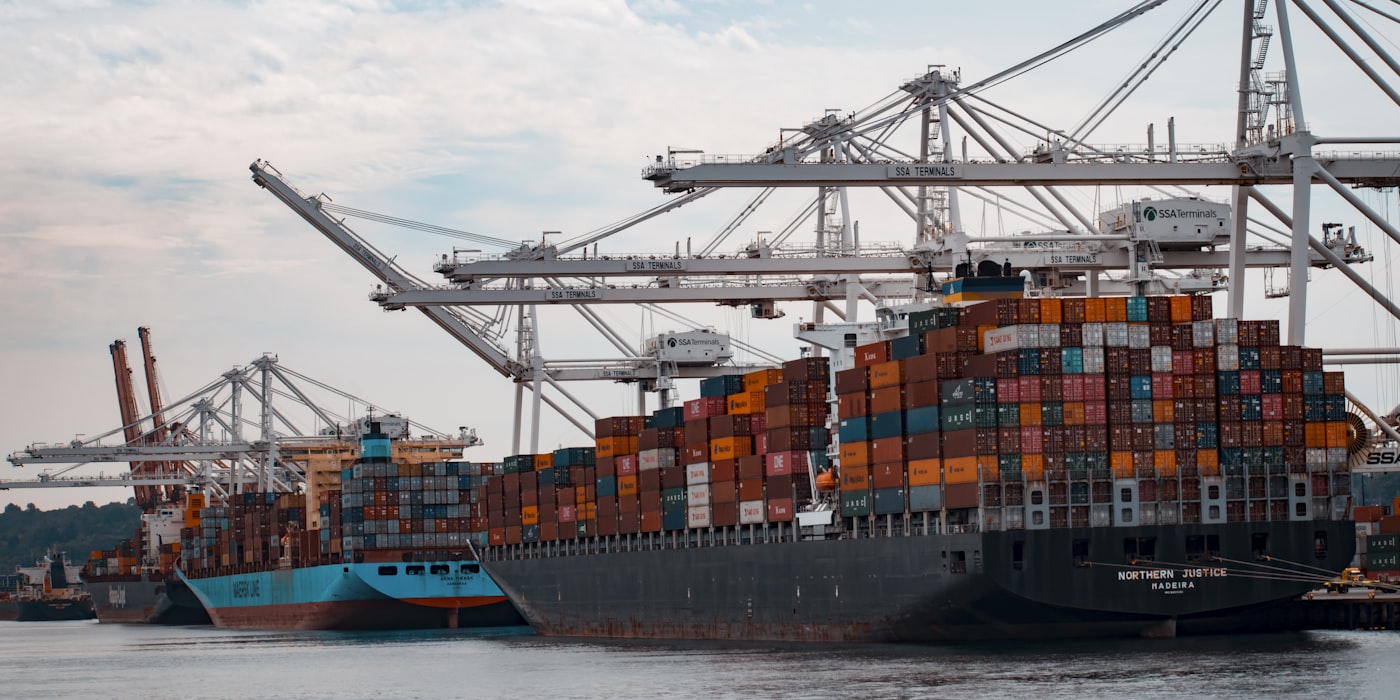
A shipment is the movement of goods from origin to destination — by truck, rail, vessel, air, or a combination — plus the document and evidence pack that makes it auditable: booking, transport document, fiscal paperwork when required, and proof of delivery (POD). On the Mexico–U.S. corridor the same word covers a dry van to Laredo and a container via Manzanillo: the mode changes; the need for a single trip file does not.
- road, ocean, air, multi
- 4+ modes
- TEU Mexico ports 2025
- ~9.53 M
- Mexico road fiscal anchor
- Carta Porte
- ocean document anchor
- B/L
What a shipment is
In Mexican operations, “shipment” is not only loading boxes: it is the work object that joins origin, destination, mode, carrier or ocean line, windows, and evidence. Freight is the price of the service; the shipment is the trip that price must explain.
In foreign trade the cycle usually runs from prep and confirmed booking through clearance, transit, and delivery. On domestic or USMCA land moves the cycle is shorter, but the file still matters: without POD and without invoice–trip matching, accounts payable only pays a PDF.
Ocean scale context: per Secretaría de Marina figures reported by T21 / TyT, Mexican ports moved about 9.53 million TEU in 2025. Always calibrate with your terminal, customs broker, and the Mexican Transport Institute (IMT).
Shipment types by mode
The first decision is mode. Each one changes the anchor document, typical clock, and where the file breaks. Air and multimodal are summarized below; this guide’s depth is on land and ocean.
Land (road / rail)
Operating anchor: Unit + route + appointments
Typical document: Carta Porte (CFDI) · POD
When it usually wins: Mexico–U.S. corridor, domestic, relative urgency
Ocean
Operating anchor: Container or LCL lot + booking
Typical document: B/L
When it usually wins: International volume, cost per ton
Air
Operating anchor: Lot + air waybill
Typical document: Air Waybill (AWB)
When it usually wins: High value, perishable, tight window
Operating anchor: One plan + milestones per leg
Typical document: B/L + Carta Porte (+ rail/AWB)
When it usually wins: Port–inland or several modes under one OTIF promise
Land shipment and Mexico–U.S. corridors
On land, a shipment looks like a freight journey: origin/destination, equipment (dry van, reefer, flatbed), carrier, load/unload windows, and evidence. In Mexico, when the move requires it, the Comprobante Fiscal Digital por Internet (CFDI) with Carta Porte is part of the file—not a loose PDF at month-end.
Example corridors (yard language, not a tonnage ranking or traffic study). Use them to name the network; calibrate times and crossings with your operation and SICT sources:
Monterrey – Laredo / Nuevo Laredo
What it connects: Nuevo León industry to Texas border
Typical use: Auto/manufacturing export-import, northern nearshoring
What to watch: Crossing appointment, pedimento, binational POD
Mexico City / State of Mexico – Nuevo Laredo
What it connects: Central Mexico to main freight crossing
Typical use: National distribution + U.S. export
What to watch: Hours of service, dock dwell, Carta Porte
Bajío – border
What it connects: Querétaro, León, Aguascalientes, Silao to Laredo or other crossings
Typical use: Automotive and plant suppliers
What to watch: Plant windows, empty miles, OTIF
Western Mexico – Manzanillo (hinterland)
What it connects: Guadalajara / western Bajío to Pacific port
Typical use: Drayage and consolidation to/from vessel
What to watch: Port demurrage, free time, B/L↔inland trip match
North / Northwest – regional crossing
What it connects: e.g. Ciudad Juárez, Piedras Negras, Tijuana–Otay (by network)
Typical use: Maquila and regional retail flows
What to watch: Crossing customs, equipment, leg permits
Minimum land-shipment checklist in Mexico:
Elige un paso para ver el detalle
Detalle del paso · 01
Trip / shipment ID
Go deeper in the Mexico freight journey and the POD guide.

Ocean shipment and Mexican ports
On ocean, “shipment” feels different: the visible object is usually the container (FCL) or the consolidated lot (LCL), not the tractor. Typical cycle: booking with line or forwarder, document cutoff, vessel load, transit, port discharge, and clearance to inland leg (almost always truck/rail).
The anchor document is the bill of lading (B/L): receipt on board, contract of carriage, and often the title to release cargo. An ocean booking reserves space/equipment; it is not the same as a truck booking, even though both close capacity.
Manzanillo, Colima
Coast: Pacific
Usual role: Main container gateway; inland to Bajío and center
Connects to (example): Asia · western/Bajío hinterland
Lázaro Cárdenas, Mich.
Coast: Pacific
Usual role: Containers and bulk; alternative/complement to Manzanillo
Connects to (example): Asia · South America · rail/truck inland
Veracruz, Ver.
Coast: Gulf
Usual role: Automotive and general cargo toward center/east
Connects to (example): Europe · U.S. East / Gulf Coast
Altamira, Tamps.
Coast: Gulf
Usual role: Petrochemical, bulk, and northeast industry
Connects to (example): Europe · U.S. Gulf
Ensenada, B.C. / Progreso, Yuc.
Coast: Pacific / Gulf
Usual role: Regional nodes (northwest nearshoring; agro/Caribbean)
Connects to (example): Depends on liner service
In 2025, specialized coverage cited on the order of ~3.89 M TEU at Manzanillo, ~2.62 M at Lázaro Cárdenas, and ~1.30 M at Veracruz inside a system near 9.53 M TEU. Treat them as orders of magnitude, not a budget line.
Air and multimodal (brief)
Air: Air Waybill (AWB), short transit, higher cost per kilo. Useful for high value, samples, or critical shortages. On mixed air + truck moves, the file must join AWB + Carta Porte for the land leg + POD.
Multimodal / intermodal: one plan (or a sealed intermodal transport unit) across two or more modes. Common Mexico pattern: ocean + inland truck/rail, or rail + truck last mile. Detail in what multimodal is and intermodal transport—do not duplicate the full spine here.
Land vs ocean
Both are “shipments,” but the file and the clock differ. Use the compare to align traffic, freight procurement, and accounts payable:
Land shipment
- Anchor: unit + trip ID
- Mexico doc: CFDI + Carta Porte
- Close: POD at destination
- Clock: hours/days on corridor
- Typical risk: appointments, dwell, crossing
Ocean shipment
- Anchor: container / LCL lot
- Doc: booking + B/L (Master/House)
- Close: release + inland + POD
- Clock: weeks (plus clearance)
- Typical risk: demurrage, free time, docs
FCL vs LCL
On ocean, the volume decision is between FCL (Full Container Load) and LCL (Less than Container Load). Practical rule: if you nearly fill the box, quote FCL; if the lot is small, use LCL. Do not memorize a social-media rate—ask for a quote with local charges.
| Aspect | FCL | LCL |
|---|---|---|
| Object | Exclusive container (20′ / 40′) | Space in a consolidation (from ~1 m³) |
| Handling | Lower (container door-to-door) | Higher (consolidate / deconsolidate) |
| Documentation | Typically direct B/L | Often Master B/L + House B/L |
| Transit | More predictable with direct sailings | Adds consolidation wait |
| Best when | You fill or nearly fill the equipment | Small volume or market test |
| Tracking | By container | By lot / consolidator reference |
Key shipment documents
The document follows the mode. In Mexico, the land-leg fiscal file is non-negotiable when Carta Porte applies. Industry guidance (customs brokers / CAAAREM) treats incomplete paperwork as a frequent clearance delay: keep commercial invoice, packing list, and transport document consistent.
Mode: Ocean
What it does: On-board receipt, contract, release
Typical requirement: Yes on the ocean leg
Air Waybill (AWB)
Mode: Air
What it does: Air contract/waybill (not a negotiable title like many B/Ls)
Typical requirement: Yes on the air leg
Mode: Mexico land
What it does: Fiscal complement on the CFDI
Typical requirement: When the move requires it
Mode: All (cross-border)
What it does: Packages, weights, marks
Typical requirement: Critical in foreign trade
Commercial invoice
Mode: Foreign trade
What it does: Value, Incoterm, parties
Typical requirement: Yes for customs / insurance
Mode: Land / last mile
What it does: Evidence of delivery to consignee
Typical requirement: Ops and payment close
Shipment process step by step
Seven steps that apply to any mode; what changes is the anchor document and the clock. Poor coordination between booking, docs, and dock usually creates delay and accessorials—calibrate impact with your operation, not a viral average.
Prep cargo
Pack and data
Book capacity
Written booking
Load unit
Stow / seals
Document
B/L, AWB, or Carta Porte
Transit
Milestones and ETA
Clear
Customs if needed
Deliver
POD and close
Shipment costs: how to read them
Costs are not a fixed menu: they depend on season, equipment, fuel, accessorials, and free time. Use this as quoting language, not an OCL price list. Context sources: freight forwarders, CAAAREM, and your own rate card.
Land freight
Example route / mode: Monterrey–Laredo · CDMX–NL
What to include in the ask: Base + fuel surcharge + dwell + crossing
Typical miss: Negotiate base only
Drayage / hinterland
Example route / mode: Manzanillo–Guadalajara / Bajío
What to include in the ask: Free time, demurrage, port appointment
Typical miss: Forget the B/L handoff
Ocean FCL
Example route / mode: Asia–Manzanillo / Lázaro
What to include in the ask: All-in vs ocean + locals
Typical miss: Compare without local charges
LCL
Example route / mode: Asia–MX consolidated
What to include in the ask: USD/m³ + handling + destinations
Typical miss: Underestimate handling
Air
Example route / mode: Mexico / U.S. air bridge
What to include in the ask: USD/kg + fuel + security
Typical miss: Choose air without a real window
OCL and the trip file
OCL Cargo is an autonomous transportation management system (TMS) with agents: it does not sail vessels or replace the customs broker. Scope: own fleet and workshops, dynamic last-mile routing, WhatsApp when the external cannot use the app, and multimodal (road, ocean, air). It fixes what usually breaks on land and at close: unifying the shipment in one file, tying POD and invoice, and—when applicable—stamping invoices and Carta Porte. It coexists with your system of record; your team handles exceptions only. See also the TMS guide.
Frequently asked questions
It is the movement of goods from origin to destination — on one mode or several — plus the document and evidence pack that makes it auditable (booking, transport document, fiscal docs when required, and proof of delivery).
On Mexico–U.S. truck/rail, the anchor is usually the unit/trip, Carta Porte on the CFDI, and proof of delivery (POD). On ocean, the anchor is the container (or LCL lot), the carrier/forwarder booking, and the bill of lading (B/L).
Operating examples (not a traffic ranking): Monterrey–Laredo / Nuevo Laredo, Mexico City–Nuevo Laredo, Bajío–border (Querétaro/León/Aguascalientes toward Laredo or other crossings), and Western Mexico–Manzanillo as a port hinterland. Calibrate with your network and SICT/IMT sources.
Pacific: Manzanillo and Lázaro Cárdenas (Asia and inland). Gulf: Veracruz and Altamira. Regional nodes include Ensenada and Progreso. In 2025 the port system moved about 9.53 million TEU (Semar / T21–TyT coverage); calibrate with your terminal.
FCL (full container) when you fill or nearly fill the box and want less handling. LCL (less than container load) for small volumes. At the threshold, quote both: FCL sometimes wins once LCL consolidation costs are included.
No. The B/L governs the ocean leg; Carta Porte documents the Mexico road move for the tax authority (SAT). On one multimodal shipment they often coexist.
It unifies milestones, documents, and evidence in one trip file (journey, POD, CFDI/Carta Porte when applicable). OCL can stamp invoices and Carta Porte. It does not operate vessels or replace the ocean carrier; your team handles exceptions only.
Key takeaways6 points
- Shipment = goods movement + document file (not just “the truck left”).
- Mexico–U.S. land: corridors such as Monterrey–Laredo, Mexico City–Nuevo Laredo, Bajío–border, and Western Mexico–Manzanillo hinterland; fiscal anchor = Carta Porte + POD.
- Ocean: Manzanillo, Lázaro Cárdenas, Veracruz, Altamira (and other nodes); anchor = booking + B/L + container/lot.
- Mexico ports 2025: ~9.53 M TEU system-wide (Semar / T21–TyT); calibrate TEU and dwell with your terminal.
- FCL vs LCL is a volume/handling decision; quote the threshold—do not memorize a viral rate.
- OCL unifies the freight journey file and can stamp invoices and Carta Porte; it does not replace the ocean line or customs broker.
Does your shipment have one trip file—or three chats by mode?