

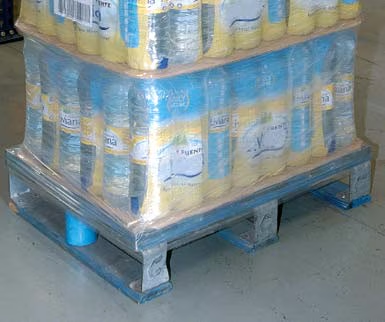
Volumetric weight turns the space your cargo occupies into equivalent kilos, and freight is billed on chargeable weight: the greater of actual and volumetric. Parcel and domestic ground divide (L × W × H in cm) by 5,000; international air by 6,000. A 60×40×40 cm carton that weighs 8 kg actual has 19.2 kg volumetric in parcel: you pay 19.2, not 8. Who packs decides how much freight you pay; who never recalculates billed volumetric pays whatever they are told.
- parcel divisor
- 5,000
- IATA air divisor
- 6,000
- kg chargeable (ex. 8 kg)
- 19.2
- guides to recalculate
- 100%
For Finance and accounts payable, volumetric is not a warehouse detail: it is spend arithmetic. Without a pack sheet and reconciliation, the provider sets your cost.
Cluster: air freight · LTL vs FTL · invoice audit
The formulas, with examples
In LTL, weight-to-volume conversion varies by provider (kg per m³ agreed). In air, IATA (International Air Transport Association) standardizes the 6,000 divisor. On dedicated FTL, volumetric does not apply: you pay the unit, and your variable is choosing equipment well.
Volumetric weight formulas
Example 60×40×40 cm, 8 kg actual: chargeable always wins.
| Channel | Formula (cm) | Example | Chargeable |
|---|---|---|---|
| Parcel | L×W×H ÷ 5,000 | 96,000 ÷ 5,000 = 19.2 | 19.2 kg |
| Intl. air | L×W×H ÷ 6,000 | 96,000 ÷ 6,000 = 16 | 16 kg |
| LTL / consolidate | By m³ or pallet | 0.096 m³ | Per rate card |
Where volumetric money leaks
Three fronts concentrate the gap: provider re-measure, inherited packaging, and misclassified pallets. Recalculating is arithmetic; at hundreds of guides a week it is machine work.
Where volumetric money leaks
Select a step to see detail
Step detail · 01
Scanner
Re-measure
The Audit Agent exists for exactly that mass reconciliation: agreed dimensions vs. billed kilos, before releasing payment.

Packaging as a freight decision
Freight cost is set in pack design: dimensions against the divisors, stackability, and density per pallet. The conversation between who designs packs and who pays freight almost never happens; when it does, the savings are structural.
Packaging as a freight decision
Freight is set months before the first shipment — in pack design.
Density
200 / 167 kg/m³
5,000 and 6,000 divisors are density references.
FTL
Does not apply
On dedicated you pay the unit; the variable is choosing equipment well.
ROI
Redesign
Few logistics investments beat redesigning your top three packs.
It is a legitimate line in the freight budget: few logistics investments beat redesigning your top three packs by volume.
How to dispute a re-measure
Without a pack sheet, the scanner wins. With your own evidence (photo, dimensions, calibrated scale), the adjustment clarifies. Also negotiate the divisor in your next tender: it is as valid a lever as the per-kilo rate.
Elige un paso para ver el detalle
Detalle del paso · 01
Standard pack sheet (L×W×H and weight)
What OCL runs
OCL Cargo is an autonomous TMS with AI agents and computer use. The Audit Agent mass-recalculates chargeable weight against your pack sheet before payment without a day-one stack migration. OCL can stamp invoices and Carta Porte. Humans handle exceptions. Finance sees the gap in pesos, not dock anecdotes.
Volumetric
Recalculate before pay
Read
Pack sheet
Compute
Chargeable
Match
Invoice
Decide
Pay / clarify
6–8 week pilot (volumetric)
Take your last 200–500 parcel or LTL guides: baseline gap between billed kilos and recalculated kilos, top packs that pay for the most air, and an annual projection for Finance. Metric: % of guides with validated volumetric and pesos recovered.
Elige un paso para ver el detalle
Detalle del paso · 01
Volumetric gap baseline
Key takeaways5 points
- Freight bills on chargeable weight: the greater of actual and volumetric.
- Parcel ÷ 5,000; international air ÷ 6,000; LTL per rate card.
- Leaks live in scanner re-measure, inherited packs, and ghost pallets.
- Dispute with your own pack sheet; without it the provider’s sensor wins.
- OCL mass-recalculates pre-pay; can stamp invoice and Carta Porte.
How many of last month’s guides had volumetric recalculated on your side?
Related reading
Frequently asked questions
They are density references (200 and 167 kg/m³): cargo less dense than that pays by volume. Divisors are industry convention; your exact one is what your contract says, and that is what you audit.
With volume, yes: a higher divisor (fewer volumetric kilos) is a negotiation lever in parcel and LTL (Less Than Truckload) as valid as the per-kilo rate, and less fought over because almost nobody watches it.
With your own evidence: dimensions and weight of your standard packs documented (photo, pack sheet, calibrated scale). Against your tech sheet, the scanner adjustment clarifies; without it, it is your word against their sensor.
On dedicated FTL (Full Truckload) it does not: you pay the unit. Your variable is choosing equipment well. Volumetric lives in parcel, air, and consolidated freight.
Both: warehouse owns real dimensions; Finance and accounts payable recalculate billed chargeable weight. Without that cross-check, you pay whatever the provider says.
The Audit Agent mass-recalculates volumetric against your pack sheet before payment. OCL can stamp invoice and Carta Porte. 6–8 week pilot without day-one TMS migration.