

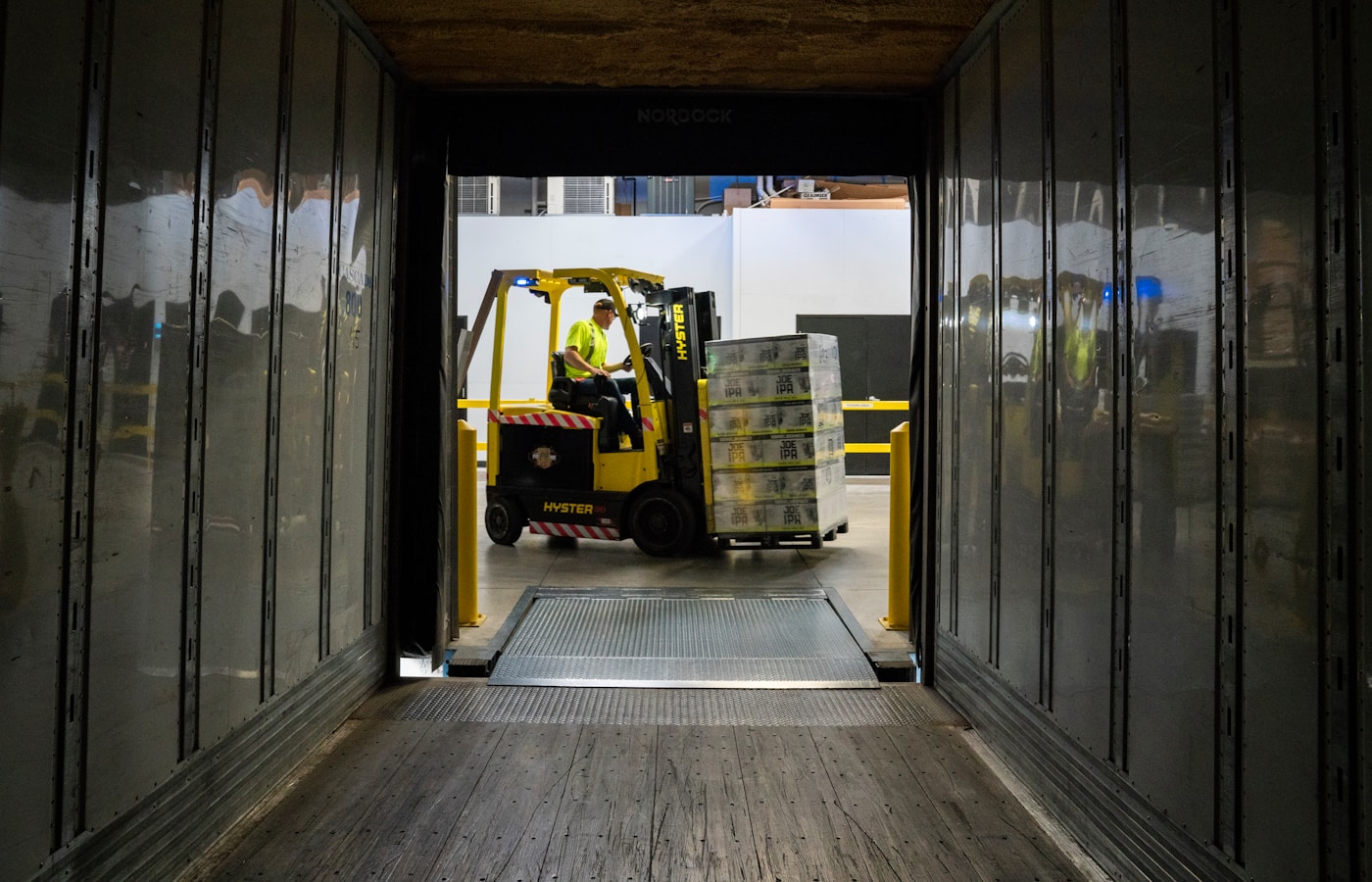
Packing in logistics is the CEDIS station that follows picking: pack, protect, and label goods for freight and outbound release. If the pick was right but packing fails, the trip inherits damage, delay, and a payment dispute.
This guide separates the packing station from ecommerce fulfillment prep, clarifies the packaging hierarchy (without calling pallets “secondary”), and shows how packing quality reaches claims, accessorials, on-time delivery (OTD), and proof of delivery (POD).
- station before the dock
- Post-pick
- primary · secondary · tertiary
- 3 levels
- typical recovery when auditing 100%
- 5–7%
- pilot without a WMS big-bang
- 6–8 wks
Cluster: picking vs packing · packaging types · warehouse functions.
What packing means in logistics
In a shipper CEDIS or warehouse, packing is the work that makes a picked order trip-ready: consolidate cartons, apply protection (void fill, film, strapping), verify SKU/quantity, and place a scannable label before the dock.
What it is not: a box catalog; ecommerce fulfillment prep for a marketplace channel; or the customs document called a packing list. Packing is a floor process · the trip needs evidence.
Ecommerce prep packing vs CEDIS outbound packing
Many ecommerce guides translate packing as “pack for ship” and stop at fulfillment prep. Useful for a B2C channel. The gap for a Mexico–U.S. shipper is different: packing feeds freight, dock appointments, POD, and pre-pay audit · not a listing.
Prep / fulfillment packing
- Pack for ship / channel prep
- Packaging hierarchy sometimes mis-mapped (pallet as “secondary”)
- Focus on sales-channel rules
- Little link to OTD, accessorials, or MX fiscal trip file
CEDIS outbound packing (this guide)
- Post-picking station before the dock
- Correct hierarchy: pallet = tertiary
- Damage · accessorials · OTD · POD photos
- WMS handoff to closed trip in AP
Packing process vs primary · secondary · tertiary packaging
This is where SERP mixes terms. The packing process is the station. The packaging hierarchy is how the product is protected and unitized. Some ecommerce guides mark the pallet as “secondary”; in the classic hierarchy the pallet / container is tertiary.
Packing process
Question it answers: Who / where / with what evidence ships?
Operable example: Station: verify pick · cartonize · wrap · label
Primary packaging
Question it answers: What touches the product / sell unit?
Operable example: Brick, blister, bottle, sealed pouch
Secondary packaging
Question it answers: How are primaries grouped?
Operable example: Master carton, display, tray
Tertiary packaging
Question it answers: What is the unit load?
Operable example: Pallet + stretch film · container
In LATAM Spanish, empaque vs embalaje often blur. Operable: empaque ≈ primary / sell unit; embalaje ≈ logistics protection (secondary + tertiary). See packaging types in Mexico logistics.
What the packing station does
The station is not “a table with tape.” It is a role with typed jobs the warehouse management system (WMS) should measure and audit.
| Job | What it does | Alert signal |
|---|---|---|
| Verify pick | Match SKU / qty / lot vs order | Mismatch vs WMS · dock rework / reprocess |
| Protect | Void fill, corner boards, film, strap | Excess void · crush damage |
| Unitize | Stable master carton or pallet | Lean pallet · overhang |
| Label | Scannable code + destination | Illegible label · SKU ≠ barcode |
| Document outbound | Remisión / internal packing slip | No trip ID · orphan PDF |
| Release dock | Staging ready to load | Missed appointment · re-handling |
Packing quality: damage, accessorials, OTD, and POD
Cheap packing is paid at the customer dock. Each typical error has a recognizable cost for operations and for accounts payable.
| Packing error | What happens on the trip | Typical cost |
|---|---|---|
| Weak carton / void without fill | In-transit damage · partial reject | Claim + replacement + freight claim |
| Unstable / poorly wrapped pallet | Re-handling · dock detention | Accessorials + yard hours |
| Illegible label or wrong SKU | Wrong destination · redelivery | Extra miles + OTD miss |
| No unit-load photo | POD disputes condition | Payment hold / chargeback |
| Invented weight / dims | Wrong tendered rate | Freight dispute vs CFDI |
| Incompatible mix in LTL | Contamination / reject | Shrink + re-ship |

Corridor money: distribution costs · OTD · POD for shippers.
Packing vs picking: the handoff that moves freight
Picking answers “what did I pull from the rack?” Packing answers “how does it travel and with what evidence?” If you merge both into one “orders ready” KPI, you hide where OTD breaks.
| Dimension | Picking | Packing |
|---|---|---|
| Question | Correct SKU and qty | Protected, labeled unit |
| Tool | WMS location · scan | Materials · film · label |
| Typical fail | Wrong item / short pick | Damage · bad label · soft pallet |
| Freight signal | Incomplete order | Claim / accessorial / weak POD |
| Typical owner | Wave / picker | Station / ship desk |
Full compare: packing vs picking difference. Prep strategies: picking · 6 strategies.
Label, barcode, SKU, and outbound documents
Without scannable evidence, packing is theater. The same code must survive WMS, dock, POD, and · when applicable · CFDI / Carta Porte.
- SKU: internal stock code · not the barcode and not ClaveProdServ. See what is an SKU.
- Barcode: scannable symbol (EAN/UPC, Code 128, GS1-128/SSCC, QR…). Guide: barcode types.
- Remisión / internal packing slip: closes CEDIS outbound · does not replace CFDI.
- Customs packing list: shipment inventory for cross-border · what is a packing list.
- Unit-load photos: condition anchor for the POD.
Cargo type and docs: warehouse cargo types · transfer CFDI guide.
Packing checklist before the dock
Use this on shift. If an item fails, it is not a “box detail”: it is claim, accessorial, or payment-hold risk.
Elige un paso para ver el detalle
Detalle del paso · 01
Pick verified
OCL closes the trip after packing (without replacing WMS)
OCL Cargo is an autonomous TMS with computer use agents: the agent operates screens (portals, email, PDFs) like your tower and leaves a trip file. It does not replace the WMS or the packing station on day one · it closes the trip after the pallet left.
When auditing 100% of the pilot flow (rate + CFDI + Carta Porte + GPS + POD), the published pattern is recovering 5–7% of audited spend. Typical pilot 6–8 weeks · rough order ~$50 MXN per shipment. Who decides exceptions? Your team.
Post-packing
From dock to trip file
Release trip
After packing
Cross docs
CFDI and Carta Porte
Validate route
GPS and geofence
Tie POD
Photo and signature
Pay or hold
With trip file
OCL can stamp invoice and Carta Porte. More context: false digitization · computer use in logistics.
Key takeaways5 points
- Packing = post-pick station: pack · protect · label for freight / CEDIS outbound · not ecommerce-prep only.
- Packing process ≠ primary/secondary/tertiary hierarchy · the pallet is tertiary (not secondary).
- Packing quality drives claims, accessorials, OTD, and POD photos that accounts payable uses to pay or hold.
- Picking pulls the SKU; packing makes it trip-ready · complementary hubs, not duplicates.
- OCL does not replace WMS: closes the trip file after the dock · your team decides exceptions · 6–8 week pilot · 5–7% pattern.
Is packing clean… while freight is disputed blind?
Related reading
Frequently asked questions
It is the CEDIS / warehouse station after picking: pack, protect, and label goods for freight / outbound. It is not just “put it in a box” and not ecommerce fulfillment prep.
No. Packing is the process (station). Primary / secondary / tertiary is the packaging hierarchy: product contact, grouping, and unit load (pallet/container). The pallet is tertiary · not secondary. Guide: packaging types.
Picking pulls the correct SKU and quantity from the rack. Packing consolidates, protects, and labels what was picked for the trip. Deep compare: picking vs packing.
Weak packing drives damage, re-handling, accessorials, and proof-of-delivery (POD) photos that do not close payment. It also breaks on-time delivery (OTD) when the dock delays for rework.
No. A packing list is the documentary inventory of the shipment · often customs-facing. Warehouse packing is the physical station. Glossary: packing list.
SKU and quantity vs pick, packaging integrity, scannable label, weight/dims if they move the rate, unit-load photos, and an outbound document tied to the trip ID.
No. The warehouse management system (WMS) still owns the station. OCL is an autonomous TMS with agents: it closes the trip file after packing/dock. Who decides exceptions? Your team. Typical pilot 6–8 weeks · published pattern 5–7% when auditing 100% · ~$50 MXN/shipment when it fits. OCL can stamp invoice and Carta Porte.